
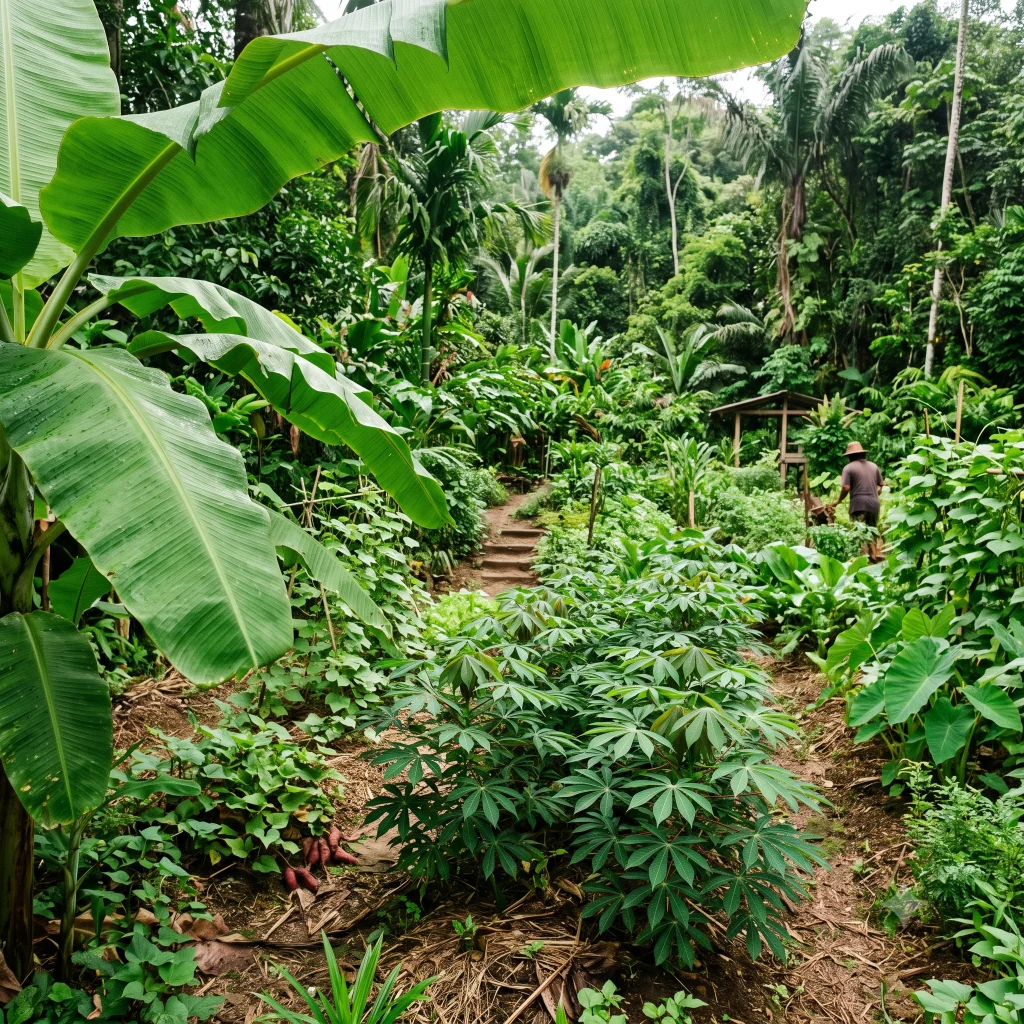
Best bets: sweet potato, rice, yardlong bean, cowpea, moringa and bitter melon. A tropical/humid zone (think Central Africa, SE Asia, the Caribbean, the Amazon Basin) offers something most other zones can't -- genuine year-round growing, with two to three harvests possible for many crops. The trade-off is humidity-driven pest and disease pressure that never really lets up, which rewards crops with real natural resilience over delicate temperate favourites.
Crops Worth Prioritising
- Sweet Potato -- a genuine calorie staple that thrives on tropical heat, tolerant of humidity and productive with minimal input.
- Rice -- naturally suited to wet-season growing patterns typical of tropical rainfall.
- Yardlong Bean -- a heat-loving legume that keeps producing through sustained warmth.
- Cowpea -- genuinely drought- and heat-tolerant, and fixes nitrogen as it grows.
- Moringa -- a fast-growing, highly nutritious perennial well suited to tropical conditions.
- Bitter Melon -- productive and genuinely at home in tropical heat and humidity.
Frequently Asked Questions
What are the best crops to grow in a tropical or humid climate?
Sweet potato, rice, yardlong bean, cowpea, moringa and bitter melon are all genuinely well-suited to tropical, humid conditions -- crops bred for temperate climates often struggle here, while these thrive on year-round warmth, tolerate humidity-driven disease pressure reasonably well, and in several cases (rice, cowpea) are specifically adapted to wet-season growing.
What's the biggest challenge growing food in a tropical zone?
Humidity-driven pest and disease pressure is usually the biggest challenge, since warm, wet conditions that suit fast plant growth suit fungal disease and many pests just as well -- constant vigilance and crops with real natural resistance to local pest and disease pressure matter more here than in drier or cooler climates.
Can I get multiple harvests a year in a tropical climate?
Yes, often two to three harvests of a given crop are realistic in a genuine tropical zone, since there's no true off-season the way temperate zones have -- the constraint shifts from day length and frost (as in cooler zones) to managing soil fertility and pest pressure across continuous cropping.