
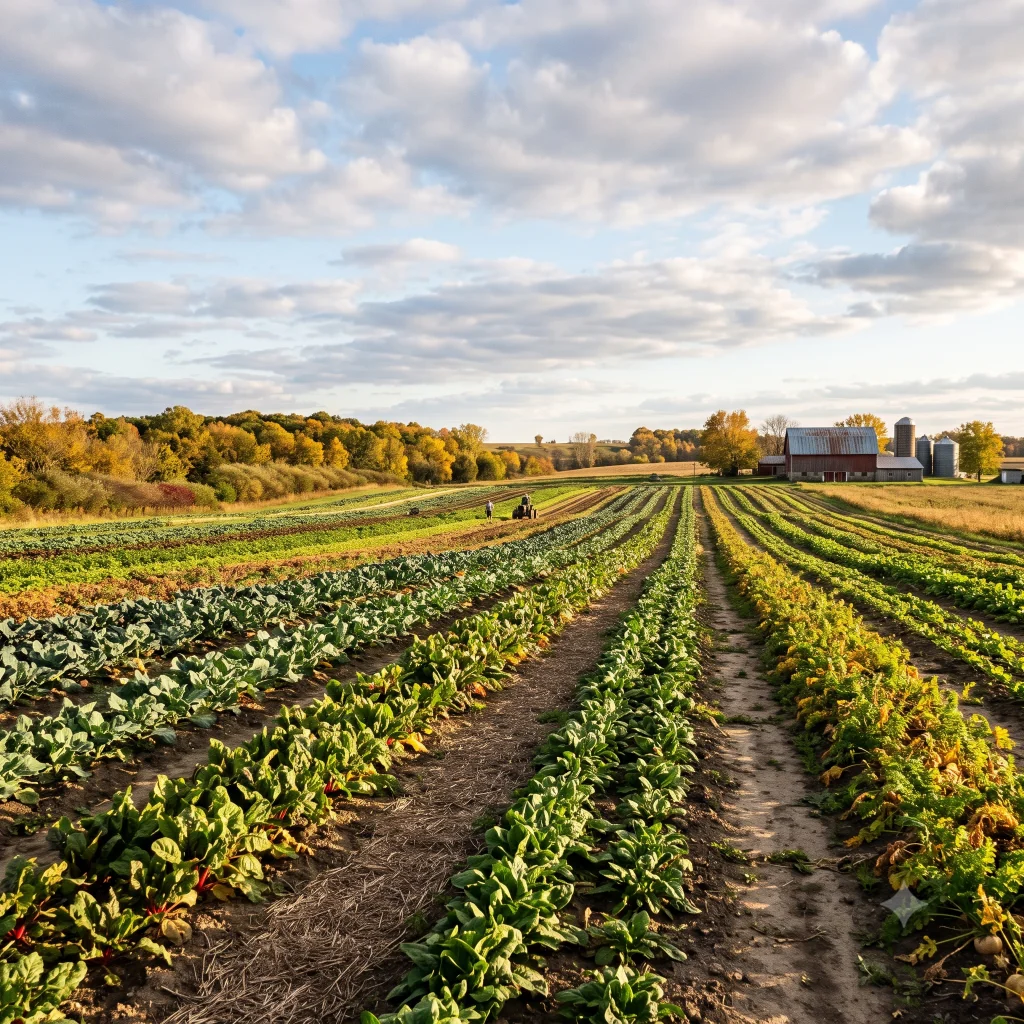
Short answer: there's no single weight, because the real starting point is calories, not kilograms. An adult needs roughly the same annual calorie total no matter which staple supplies it -- but potato, wheat and rice each provide very different calories per kilogram, so the weight required differs by crop before climate is even considered. Add in that yield per plant varies enormously by zone, and a single "you need X kg" answer would be wrong for almost everyone who reads it.
Last updated 5 November 2026
On This Page
All 18 Resilience Gardening guides in one printable 121-page PDF. See what's inside
Why Published "You Need X kg" Figures Are Usually Wrong
Search for "how much wheat do I need per person per year" and you'll find confident-sounding numbers -- usually a single figure in kilograms, presented as if it applies universally. It doesn't, for two separate reasons that stack on top of each other.
First, calorie density differs by crop. A kilogram of potato provides meaningfully fewer calories than a kilogram of wheat, because potato is mostly water by weight. So even starting from the same annual calorie target, the weight of potato needed and the weight of wheat needed to hit that target are two different numbers -- comparing them directly as if "a kilogram is a kilogram" misses the point entirely.
Second, and just as important: how much of a crop a given amount of seed actually produces depends heavily on your climate zone. The same wheat seed sown in a long, favourable growing season yields more grain than the identical seed sown in a short, marginal one. A published weight figure has to assume some climate to arrive at its number -- and unless that climate happens to be yours, the figure is wrong for your situation. This site's calculator starts from your household's real calorie need and your actual zone, and works out the real weight, seed quantity and land required for each staple crop you choose -- not a generic number borrowed from somewhere else's climate.
A Realistic Mix: Several Staples Sharing the Load
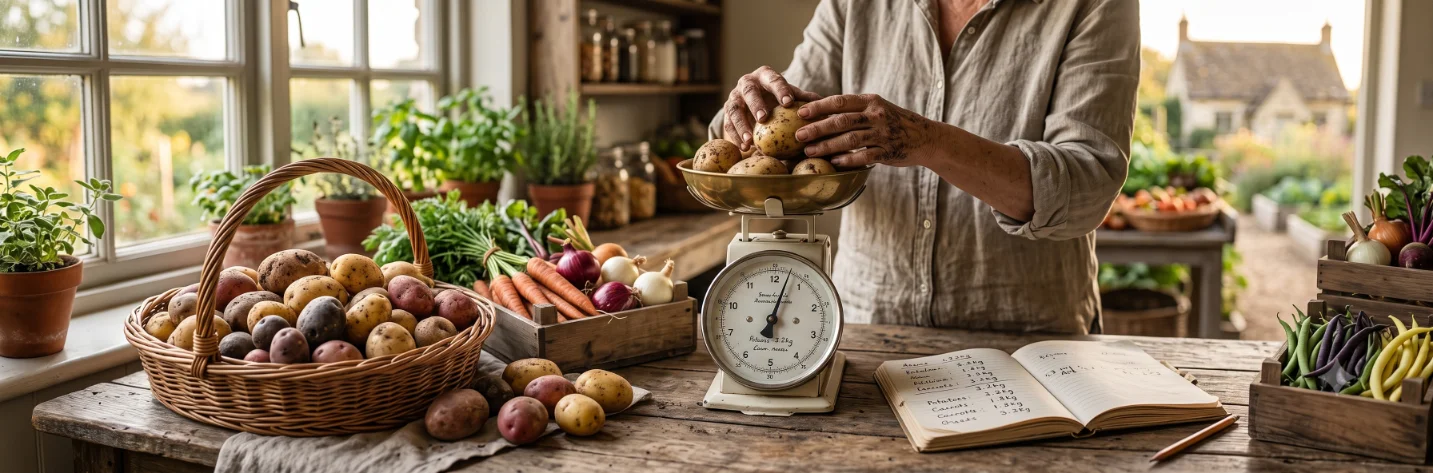
A more practical plan uses a mix of staples, with fresh vegetables, eggs and other foods on top. As an illustration, suppose one adult needs 2,250 calories a day and the staples supply about 60 percent of that, with the rest coming from vegetables, fruit, eggs, fats and other foods. That is roughly 490,000 calories a year from staples. Here is how three different splits translate into weight, per person per year:
| Split of the staple calories | Potatoes (kg) | Wheat grain (kg) | Dried beans (kg) |
|---|---|---|---|
| Potato-led: 50% potato, 30% wheat, 20% beans | 320 | 45 | 30 |
| Balanced: 35% potato, 40% wheat, 25% beans | 225 | 60 | 35 |
| Grain-led: 20% potato, 60% wheat, 20% beans | 130 | 85 | 30 |
These are illustrations, not recommendations. A cold, wet climate favours potatoes, a warm, dry one favours grain and beans, and your own tastes and land decide the rest. Notice that even in the potato-led plan, the weights of wheat and beans are small, because they are so much more calorie-dense.
Spreading across two or three staples also reduces risk: if blight hits the potatoes or the grain crop fails, you are not left with nothing. See what vegetables to grow for how staples fit into a whole plan.
What That Looks Like on a Plate
A day on the balanced plan above might look something like this, for one adult needing about 2,250 calories:
- Potatoes, about 0.45 kg (about 347 kcal)
- Wheat flour or grain, about 0.35 kg as bread, porridge or pasta (about 1,190 kcal)
- Dried beans or peas, about 0.12 kg (about 408 kcal)
- Vegetables, 0.5 kg or more, such as carrot, kale and cabbage (roughly 150 to 250 kcal)
- Fat, eggs, fruit and other foods make up the rest.
Those figures add up to roughly 2,100 calories, leaving only a little room for fat, eggs and fruit, which is why a plan built on staples and vegetables still needs a deliberate source of fat. See can you survive on vegetables alone?
How Much Seed Do You Need?
Once you know the weight you need, the next question is how much seed to plant. In the calculator's model, the harvest from each kilogram of seed (or per plant for crops grown from single plants) depends on your zone. Across the zones where each crop is viable, the figures run roughly like this:
| Crop | Harvest per kg of seed (or per plant) | Notes |
|---|---|---|
| Early potato | About 4 to 8 kg per kg of seed potato | Lower in cool and arid zones, higher in maritime and continental. |
| Maincrop potato | About 6 to 10 kg per kg of seed potato | Higher yielding, but a longer season. |
| Wheat | About 8 to 25 kg of grain per kg of seed | Wide range, from marginal zones to the best. |
| Oats | About 7 to 25 kg of grain per kg of seed | |
| Barley | About 11 to 22 kg of grain per kg of seed | |
| Rice (upland) | About 8 to 35 kg per kg of seed | Only viable in some zones. |
| Dried beans (per plant) | About 25 to 45 g of dried beans per plant | Plan on many plants for a worthwhile weight. |
For example, if you want 100 kg of wheat in a zone where the yield is 12 kg per kg of seed, you need to sow about 8 kg. The seeds for a family of four guide goes into this in more detail, and the calculator does it for your own zone.
Losses and Safety Margin
The figures above are what you need to eat, not what you need to grow. Real life takes a cut:
- Processing losses. Grain loses some weight to husks, bran and waste when it is threshed, cleaned and milled. Plan on a loss of perhaps 10 to 30 percent, depending on the crop and how finely it is milled.
- Storage losses. Rot, sprouting, mice and moisture eat into stores. See vegetables that store longest.
- Poor years. A wet summer or a late frost can cut a harvest sharply.
- Seed for next year. Keep back some of the harvest to sow.
As a rule of thumb, grow at least a fifth more than the calculation says, and more if you are new to growing. The calculator builds a buffer into its figures.
Scaling to a Household
Multiply the per-person figures by the number of people, adjusting for children, who need fewer calories, and for heavy work, which needs more. For a family of four, the balanced plan above comes to roughly 900 kilograms of potatoes, over 200 kilograms of wheat and about 150 kilograms of dried beans each year, before losses and a safety margin. At those weights, the amounts of land needed are what really decide whether the plan works.
See how much land do I need for the land side, and highest-calorie crops per square metre for which staples give the most food from the least space.
Common Mistakes
- Using a single weight for all staples. A kilogram of potato and a kilogram of wheat are not alike.
- Forgetting processing and storage losses. Plan for a margin.
- Relying on one staple. Spread the risk across two or three.
- Ignoring fat and protein. Staples supply energy, not everything else.
- Planning from another climate's figures. Yield depends heavily on your zone.
Frequently Asked Questions
How much potato, wheat or rice do I need per person per year?
There's no single universal weight, because the real starting point is calories, not kilograms -- an adult needs roughly the same annual calorie total whichever staple supplies it, but potato, wheat and rice each provide a different number of calories per kilogram, so the actual weight needed varies by crop, and the actual land and seed needed varies further still by how well that crop yields in your specific climate zone.
Why can't staple crop quantities just be looked up in a table?
Because yield -- how much a given amount of seed or seed potato actually produces -- depends heavily on climate zone, and a generic table has to either pick one climate (making it wrong for everyone else) or average across climates (making it inaccurate for everyone), so a real answer has to start from your own zone's yield figures, not a single published number.
Should I grow just one staple crop, or several?
Several is generally more resilient -- relying on a single staple crop means a single pest, disease or bad season can threaten a large share of a household's calories, while spreading staple growing across two or three different crops (for example potatoes and grain) reduces that risk, provided the zone can support more than one of them well.
How many kilograms of potatoes does one person need in a year?
If potatoes supplied all of an adult's calories, roughly 950 to 1,200 kilograms. In a realistic mixed diet where potatoes supply around a quarter to a third of the calories, it is more like 250 to 350 kilograms.
How much wheat does one person need in a year?
Roughly 215 to 270 kilograms if wheat supplied all of the calories, and much less in a mixed diet. In the illustrations on this page it comes to roughly 40 to 90 kilograms per person, plus some extra for milling losses.
Why do potato and wheat quantities differ so much?
Potatoes are mostly water, so a kilogram contains far fewer calories than a kilogram of dry grain. The same calorie target needs a much greater weight of potatoes.
How much seed do I need to sow a kilogram of grain?
It depends on your zone. In the calculator's model, a kilogram of wheat seed produces roughly 8 to 25 kilograms of grain, so you would sow about 40 to 125 grams for each kilogram you want.
How much margin should I allow?
At least a fifth extra is a sensible minimum, allowing for processing losses, storage losses and a poor year, and more if you are new to growing.
Do I need all three: potatoes, wheat and rice?
No. Choose the staples that suit your zone. Rice is viable in only some zones, and two or three staples are enough to spread the risk.
What about beans and peas?
Dried beans and peas are calorie-dense and rich in protein, and they pair well with grain. They have lower yields per plant, so plan on a good number of plants.
Where can I get a figure for my own household?
The calculator on this site works out the weight, seed and land you need for your household, zone and choice of staples.