
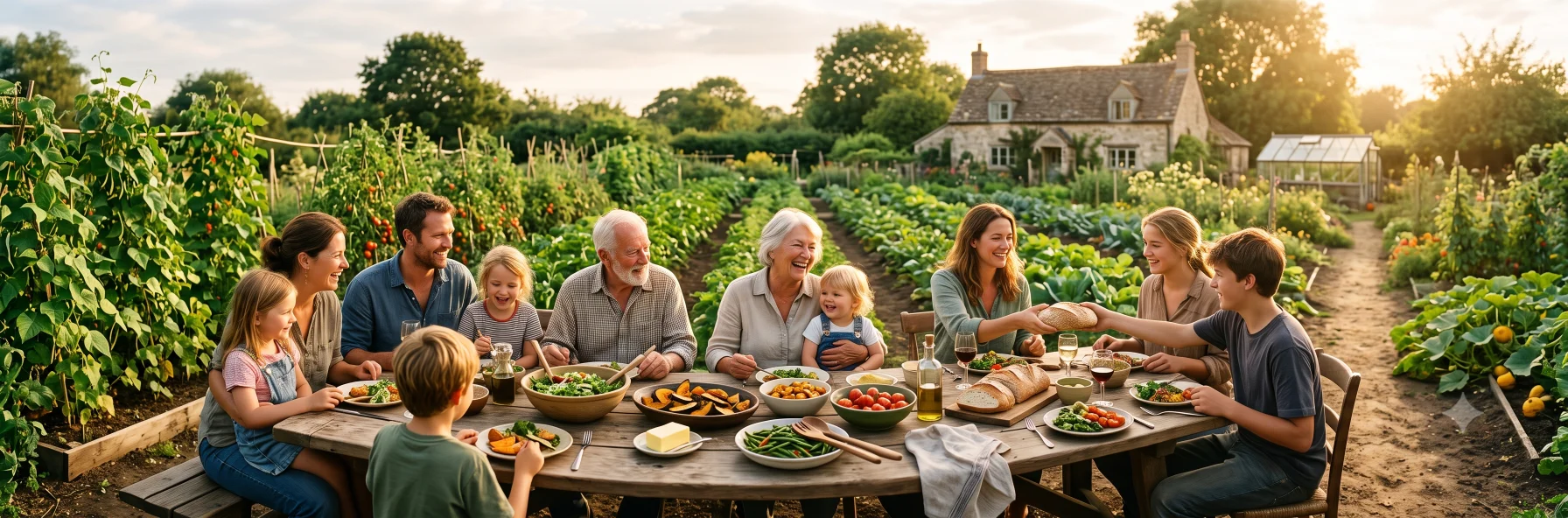
Short answer: start with calorie staples, not salad. Potatoes, grains and dried beans should come first because they carry most of a household's daily energy. Storage crops like onions, squash and cabbage come next, since they keep for months without refrigeration. Fast-growing fresh vegetables -- lettuce, spinach, radish -- round things out with nutrition and variety, but shouldn't be where the plan starts. The single most common mistake is growing a garden full of quick salad crops and running desperately short on actual calories.
The Order Matters More Than the List
Most "what to grow" advice online is really a list of easy, popular vegetables -- tomatoes, lettuce, courgettes, peppers. All genuinely useful crops, but none of them will feed a household through a winter on their own, because none of them supply much in the way of calories. A tomato plant gives you flavour and vitamin C, not the energy a body actually runs on.
The crops that actually matter for real food security are the unglamorous ones: potatoes, grains, dried beans. These are what carry a household's calorie needs, and they take real growing space to matter -- not a few plants in a corner, but a genuine share of the plot. After that, storage crops matter because they extend a harvest through the months when nothing fresh is growing. Fresh vegetables come last in priority, not because they're unimportant, but because they're the easiest part to get right and the least likely to leave a household short.
Which specific crops make sense depends entirely on your climate zone -- this site's full crop guide section covers cultivation, yield and storage for over 100 crops across all 8 zones, and the calculator turns that into an actual sowing plan for your household.
Frequently Asked Questions
What vegetables should I grow if the shops stop?
Start with calorie staples -- potatoes, grains and dried beans -- since these carry most of a household's daily energy, then add storage crops like onions, squash and cabbage that keep for months without refrigeration, and only after that round things out with fast-growing fresh vegetables for nutrition and variety. Growing only quick salad crops and skipping the staples is the single most common mistake people make.
Are leafy greens like lettuce and spinach worth growing?
Yes, but not as a primary calorie source -- they're valuable for vitamins, minerals and variety, and they grow fast enough to fill gaps between other harvests, but a diet built mainly on leafy greens will leave a household seriously short of calories no matter how much is grown.
Should the crops I grow depend on my climate zone?
Yes, significantly -- the same crop can be a reliable staple in one zone and barely viable in another, so the right crop list starts from what genuinely grows well where you are, not a generic list copied from somewhere with a different climate.