
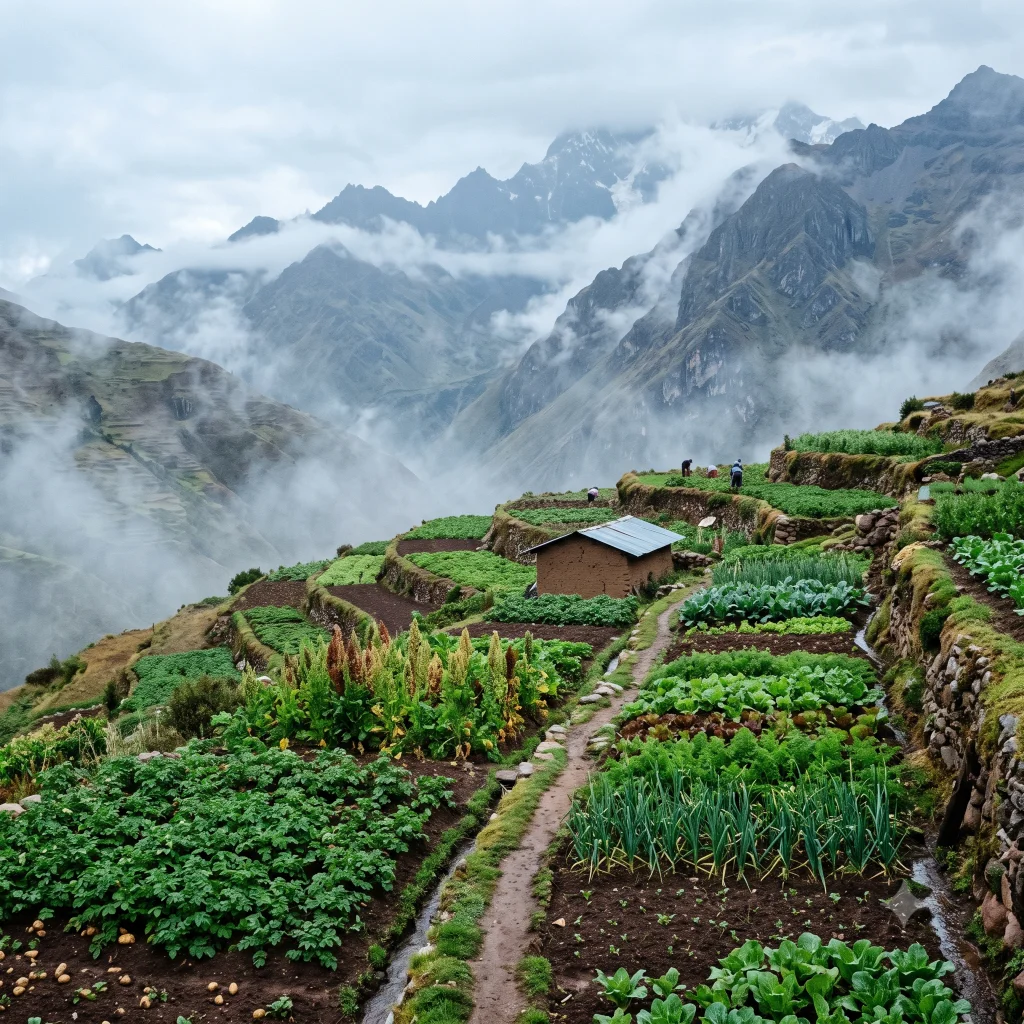
Short answer: match the crop and variety to the days you actually have, not the days a generic seed packet assumes. Fast-maturing varieties of familiar crops, naturally hardy staples like potato and barley, and leafy greens grown for repeated cut-and-come-again harvests all genuinely suit a compressed season. A short growing season isn't unique to the coldest zones, either -- a late spring, an early frost, altitude, or just a bad year can compress the window almost anywhere.
Planning Around Days, Not Assumptions
Every crop variety has a "days to maturity" figure, even if it's not always advertised prominently -- and within a single crop, that figure can vary enormously. A maincrop potato might need well over 100 days; an early variety can be ready in 70. A slow-maturing lettuce might take twice as long as a quick cut-and-come-again type. The single most effective thing a short-season grower can do is actively seek out and choose the fast end of that range, rather than defaulting to whatever variety happens to be most commonly sold.
Starting seeds indoors or under cover, then transplanting once the risk of frost has passed, effectively adds those indoor weeks onto the front of the growing season -- a genuinely reliable way to fit a longer-maturing crop into a shorter outdoor window than it would otherwise need. Succession sowing (small, repeated sowings rather than one large one) and cut-and-come-again harvesting of leafy crops both suit a compressed season too, since they deliver a harvest in weeks rather than requiring the crop to reach full, slow maturity before anything can be picked.
This isn't only relevant to the coldest zones. A gardener in an otherwise milder zone can face a short season from a late, cold spring, an early autumn frost, growing at some elevation within a broader zone, or simply one bad year -- the same fast-variety, succession-sowing strategies apply regardless of why the season is short. For the specific crops that suit a genuinely short-season climate as a rule rather than an exception, see the Cool/Boreal zone crop guide.
Frequently Asked Questions
What can I grow in a short growing season?
Fast-maturing varieties of otherwise normal crops (an early potato rather than a maincrop, a quick radish rather than a long-season root), naturally hardy staples like potato, swede and barley, and leafy greens grown for cut-and-come-again harvests all suit a short season -- the goal is matching crop choice and variety to the days you actually have, not the days a generic seed packet assumes.
Can a short growing season happen outside a Boreal or Alpine zone?
Yes -- a short season isn't only a feature of the coldest zones, it can also come from a late spring, an early autumn frost, growing at altitude within an otherwise milder zone, or simply an unusually bad year, so the same fast-crop strategies that suit a genuinely short-season zone are worth knowing even for gardeners in milder climates who occasionally face a compressed window.
Does starting seeds indoors help with a short season?
Yes, significantly -- starting seedlings indoors or under cover several weeks before the last frost effectively extends the usable season by giving plants a head start before they go outside, which is one of the most reliable ways to fit a longer-maturing crop into a season that wouldn't otherwise support it.