
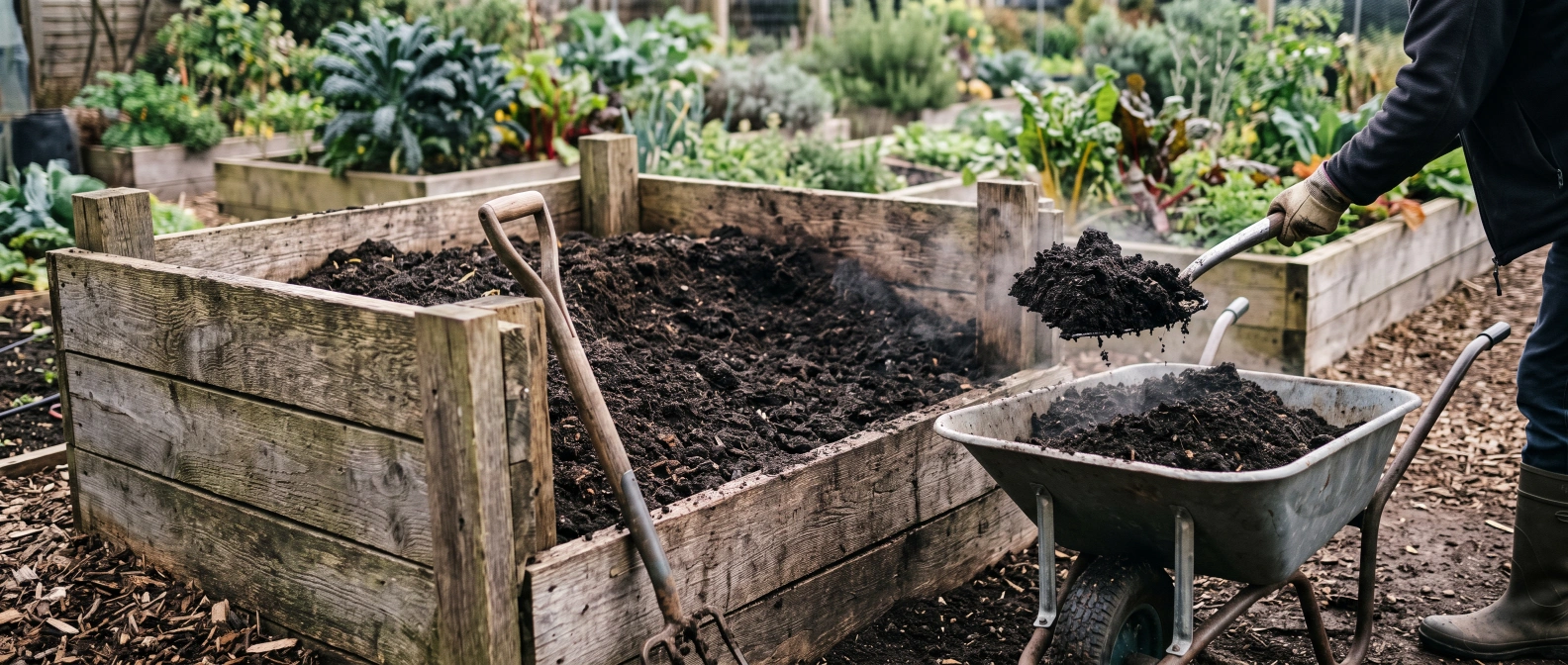
Just as the vegetables you grow feed your household, the compost you make feeds those vegetables. Looking after your soil is not optional in any long-term disruption -- neglect it and diminishing returns will follow, and with them the food security of everyone who depends on that ground. But how you make good compost depends enormously on where you are: a technique that works perfectly in a cool, wet maritime climate can fail completely in an arid one, and vice versa. This section covers composting properly, zone by zone, rather than pretending one method fits everywhere.
Choose Your Climate Zone
Pick the zone that matches where you actually grow -- the same 8 zones used throughout this site's calculator.
Frequently Asked Questions
Why does compost matter for food self-sufficiency?
Compost is the only source of fertility that costs nothing and never runs out, because it's made entirely from what a household and garden already produce -- kitchen scraps, garden waste, manure, even the household's own biological output, safely processed. A seed calculator tells you how much to grow; compost is what makes growing it possible year after year without buying in fertiliser.
Does composting really work differently depending on climate?
Genuinely, yes. The core biology is the same everywhere -- carbon, nitrogen, moisture, oxygen -- but what that means in practice changes enormously. A heap in a cool, wet maritime climate needs insulation and rain protection; the same heap built the same way in an arid climate would simply dry out and stop working. Generic composting advice glosses over this. This section doesn't.
Which climate zone guide should I use?
The same 8 climate zones used throughout this site's calculator -- pick whichever one matches where you actually grow. If you're not sure which zone you are, the climate zone step of the calculator has full descriptions and example regions for each.