
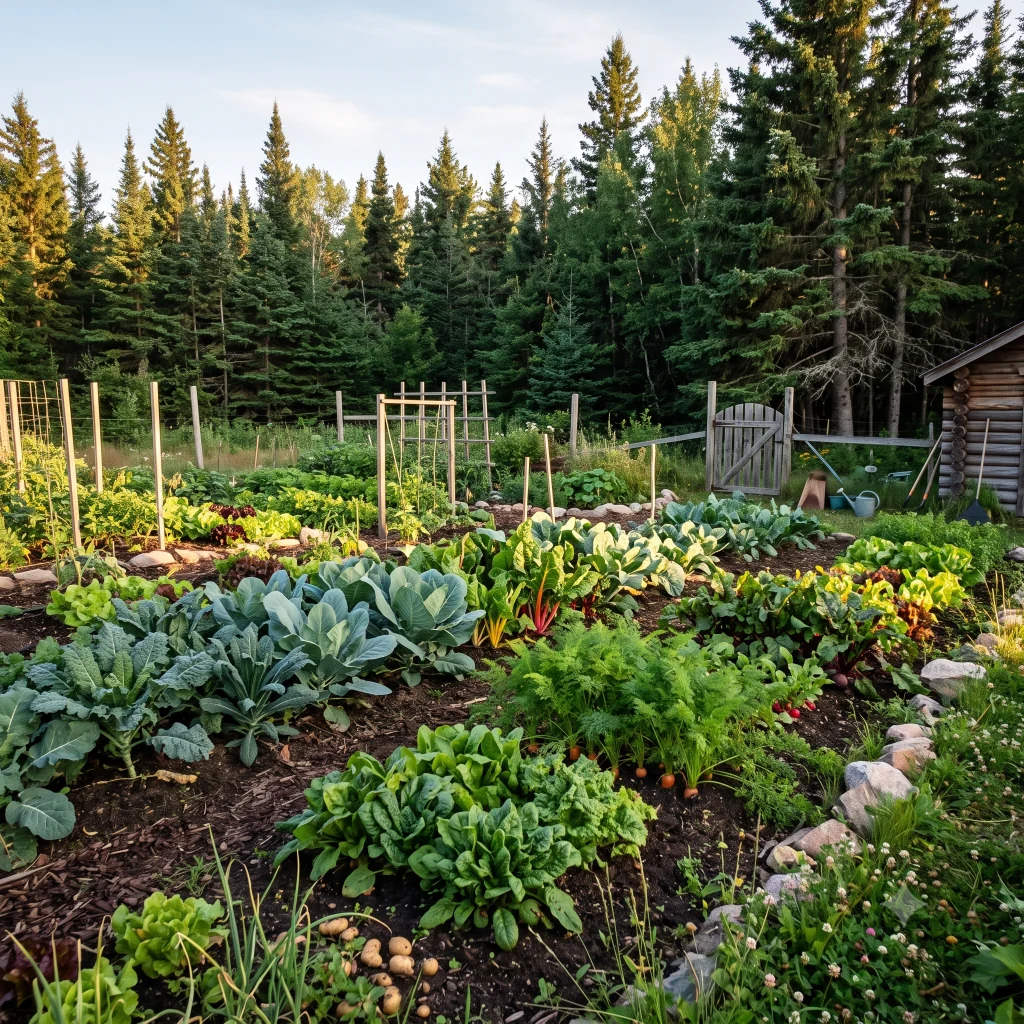
Best bets: potato, swede, turnip, kale, barley and oats. A cool/boreal zone (N. Scandinavia, Canada, Alaska, N. Russia) has by far the shortest growing season of any zone -- just 3-5 months of genuinely intense summer growth. That rules out slow, heat-hungry crops entirely and rewards fast-maturing, cold-hardy ones that can make the most of a tight window and keep producing right up to the first frosts.
Crops Worth Prioritising
- Potato -- genuinely reliable even in a short season, a classic boreal-zone staple.
- Swede -- hardy, dependable, and well suited to the short, cool growing window.
- Turnip -- fast-maturing enough to fit comfortably within the available season.
- Kale -- genuinely frost-hardy, often still productive after the first frosts have ended other crops.
- Barley -- one of the few grains that reliably matures within a boreal season.
- Oats -- another hardy, fast-maturing grain well suited to a short, cool season.
Frequently Asked Questions
What are the best crops to grow in a cool or boreal climate?
Potato, swede, turnip, kale, barley and oats are all genuinely well-suited to a cool/boreal climate -- these crops either mature fast enough to fit inside a short 3-5 month season, or are hardy enough to keep producing right up to and even through the first frosts, which matters enormously when the growing window is this tight.
How short is the growing season in a boreal climate, really?
Typically just 3-5 months of genuinely intense summer growth, by far the shortest of any of the 8 zones -- this rules out slow-maturing, heat-hungry crops entirely and puts a real premium on fast varieties, cold-hardy types, and careful timing to make full use of every available week.
Can staple calorie crops actually be grown in a boreal zone?
Yes, but the choices narrow considerably -- potato is genuinely reliable even in a short boreal season, and hardy grains like barley and oats can mature within the available window, whereas longer-season staples like maize typically can't reach maturity before the season ends, making crop selection even more critical than in a milder zone.