
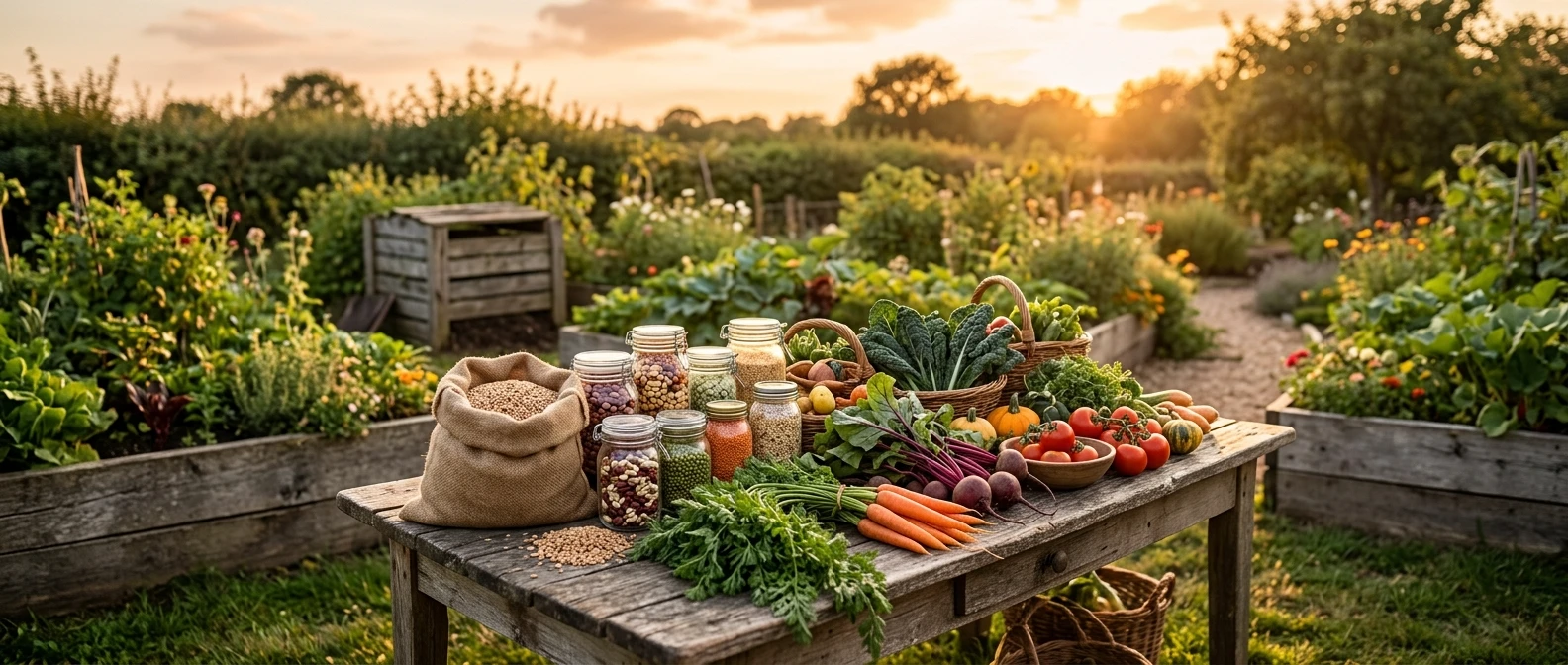
Short answer: the same methods people used for thousands of years before refrigeration existed. Root vegetables packed in slightly damp sand, onions and squash cured and kept somewhere cool and dry, and traditional structures like root cellars and clamps -- all of these genuinely work, because they're built on physics (temperature, humidity, darkness, airflow) rather than technology. The trick isn't a single universal method; it's matching each crop to the storage approach that actually suits it.
Storage Is Physics, Not Technology
A refrigerator does two things: it keeps food cool, and it keeps humidity somewhat controlled. Neither of those requires electricity to achieve -- they require the right physical conditions, which traditional storage methods have always provided. A cellar dug into the ground stays naturally cool year-round because soil is an excellent insulator against surface temperature swings. A clamp -- a mound of root vegetables layered with straw and topped with soil -- does the same job above ground, insulating against frost while letting excess moisture escape so the crop doesn't rot.
The details matter by crop. Root vegetables like carrots and beetroot do best packed in slightly damp sand, which holds just enough moisture to stop them shrivelling without so much that they rot -- too dry and they go limp, too wet and they spoil. Onions, garlic and winter squash need the opposite: they need to be properly cured (dried and hardened) first, then kept somewhere cool, dry and well-ventilated, since damp conditions are exactly what causes them to rot in storage.
What doesn't store well without refrigeration are high-water-content, soft-tissue crops -- lettuce, tomatoes, most leafy greens. These were never suited to long-term storage even with modern refrigeration; they're better handled through drying, fermenting, canning, or simply eating fresh and growing more in succession. Every crop guide on this site includes a dedicated storage and preservation section with the specific method and expected storage life for that crop.
Frequently Asked Questions
How do you store vegetables without a fridge or electricity?
Through methods that predate refrigeration entirely and still genuinely work -- packing root vegetables in slightly damp sand in a cool, dark place, curing and storing onions, garlic and winter squash somewhere cool and dry, and using a root cellar, clamp or simply the coolest, darkest part of a building instead of mechanical cooling. Each method suits different crops, and matching the crop to the right method matters more than the method itself.
What is a clamp, and does it still work today?
A clamp is a traditional outdoor storage mound -- root vegetables piled on straw, covered with more straw and then a layer of soil, insulating them from frost while letting excess moisture escape -- and it still works exactly as well today as it did before electricity existed, since the physics of insulation and moisture control haven't changed.
Do all vegetables store equally well without refrigeration?
No -- root vegetables, winter squash, onions and garlic store well with the right traditional method, while soft, high-water-content crops like lettuce and tomatoes were never designed by nature to store for long periods and are better preserved by other means (drying, fermenting, canning) or simply eaten fresh.