
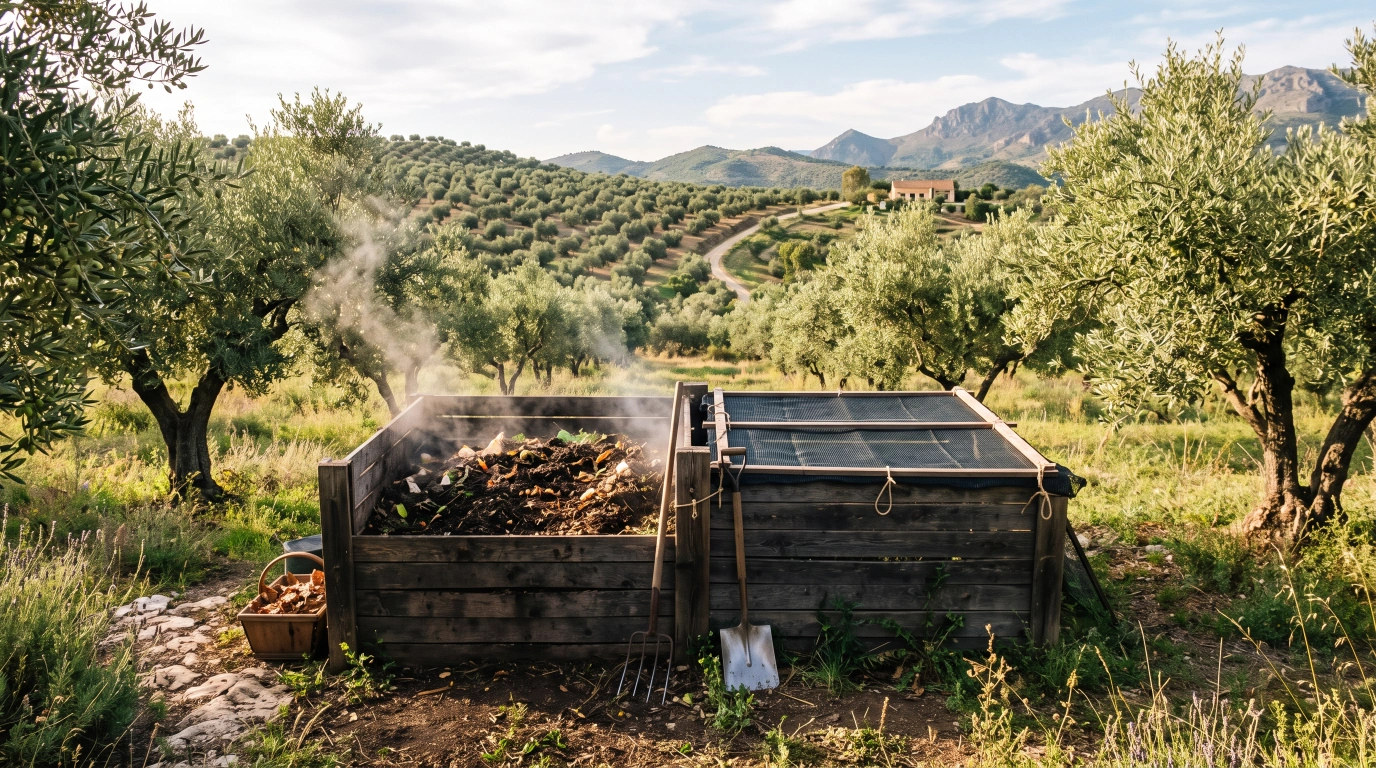
A Mediterranean climate -- the mild-winter, dry-summer regions found around the Mediterranean basin itself, coastal and inland California, central Chile, South Africa's Western Cape, and South Australia -- is genuinely a two-season climate, not simply a warm one. Real rain falls through a mild winter, then stops almost entirely for a long, hot summer. The golden rule here: work hard and fast through the wet season, protect and preserve what you've built through the dry one, and never assume one set of techniques covers both halves of the year.
The Challenges
- A long, essentially rainless summer can dry out and stall an unprotected heap for months at a time, just as surely as any true arid climate.
- Seasonal nitrogen availability means fresh green material is abundant in the mild wet season but genuinely scarce through summer.
- Thin, often calcareous soils, worked by agriculture for thousands of years in much of this zone, start from a lower baseline of organic matter than younger soils elsewhere.
- Occasional heavy winter downpours after a dry summer can cause real runoff and erosion, especially on the sloped terrain common in this climate.
The Advantages
- A genuinely active, mild wet season drives real plant growth without the deep freeze of a boreal winter or the extremes of a true monsoon.
- Low fungal disease pressure through the warm, dry summer months, compared to consistently humid climates.
- Abundant olive, grape and orchard prunings provide a reliable, characteristic carbon input across most of this zone, coastal or inland.
- A genuine rest-and-turn rhythm that suits the two-chamber composting method particularly well, feeding one chamber through the wet season while the other finishes through the dry one.
19 Chapters, In Order
Each builds on the last, but every chapter also stands alone if you're looking for something specific.
Frequently Asked Questions
What's the single biggest composting challenge in a Mediterranean climate?
The long, hot, essentially rainless summer. A heap that's working well through the mild wet season can dry out and stall almost completely across summer if it isn't deliberately shaded, mulched and given at least some water. Almost every technique in this section, from siting to the two-chamber system itself, exists to work with this genuine two-season rhythm rather than fight it.
What real advantages does this climate have for composting?
Genuinely several. The mild wet season drives real plant growth without the extremes of a true monsoon or the deep freeze of a boreal winter, giving a heap a long, workable active period with abundant fresh green material. Warm, dry summers also mean low fungal disease pressure, and the region's characteristic olive, grape and orchard prunings provide a reliable, abundant carbon input most other climates don't have in the same quantity.
Does composting here really need a different approach to a simple warm climate?
Yes, because it isn't simply warm, it's seasonally extreme in both directions. A method built only around summer heat would fail to make the most of the wet season's growth, and a method built only around winter rain would leave a heap to dry out and die every summer. This section is built around the genuine swing between the two, not an average of them.