
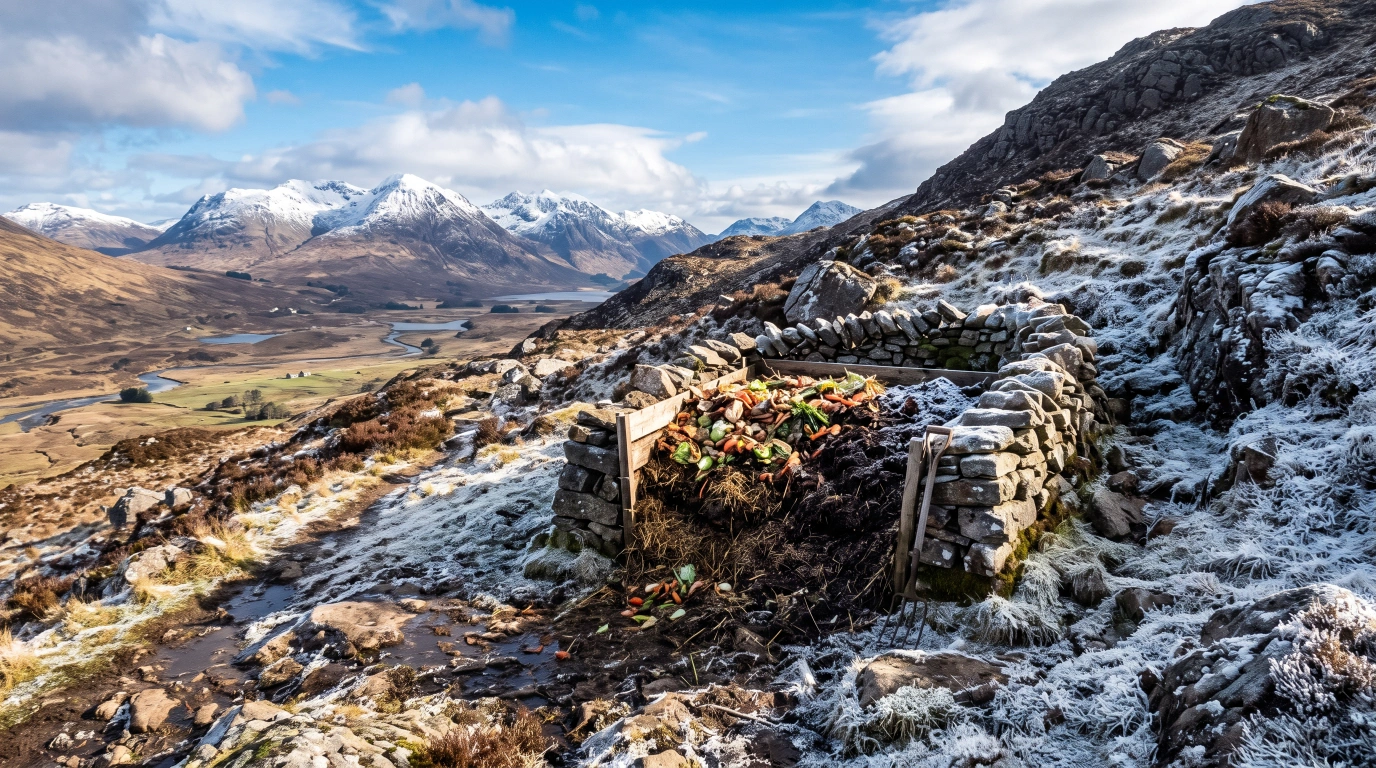
A highland or alpine climate -- the high-altitude growing regions of the Alps, the Andes, the Himalayan foothills, the Rockies, and the Ethiopian and East African highlands -- is defined by elevation rather than latitude. That difference matters: thin air, intense UV exposure, relentless wind and a growing season that's short not because of long polar nights but because frost can arrive on any given night, even in mid-summer. The golden rule here: shelter from the wind, protect against a freeze-thaw cycle that can repeat daily, and make every day of a genuinely short season count.
The Challenges
- Daily freeze-thaw cycling can hit a heap overnight and again by midday, a genuinely different problem to a seasonal freeze elsewhere in this guide.
- Relentless wind strips heat and moisture from an exposed heap far faster than the same conditions would at lower elevation.
- A short, frost-bounded growing season limits both the material available and the time a heap has to work each year.
- Thin, rocky, often sloped soils mean a lower baseline of organic matter to build from than most other climates in this guide.
The Advantages
- Intense daytime sun, once harnessed with proper shelter, can drive real warmth into a well-sited heap despite the thin, cold air.
- Lower pest and disease pressure than a warm lowland climate, thanks to consistently cool conditions and cold nights.
- Genuinely abundant meadow hay and livestock manure across long-established mountain pastoral farming traditions worldwide.
- A real payoff for consistency -- thin mountain soils respond significantly to even modest, well-protected compost applied patiently over years.
19 Chapters, In Order
Each builds on the last, but every chapter also stands alone if you're looking for something specific.
Frequently Asked Questions
What's the single biggest composting challenge at high altitude?
The swing within a single day. Most climates in this guide deal with a seasonal extreme, a cold winter, a dry summer, but a heap at real altitude can freeze solid overnight and then sit under intense, thin-air sunshine by midday, every single day through the growing season. Almost every technique in this section, from terraced shelter to daily moisture checks, exists to help a heap survive that repeated daily cycle, not just one seasonal extreme.
What real advantages does this climate have for composting?
Genuinely a few, though this is a harder climate overall than most in this guide. Intense daytime sun, once harnessed rather than fought, can drive real warmth into a well-sited, sheltered heap. Cold nights and generally cooler conditions mean lower pest and disease pressure than a warm lowland climate, and long mountain pastoral traditions mean livestock manure and meadow hay are often genuinely abundant and free where grazing is part of local life.
Is composting even realistic in a climate with such a short growing season?
Yes, though it demands real discipline about timing and protection. A heap here won't work year-round, and it needs real shelter from wind and real protection from daily freeze-thaw to make progress at all. But the payoff is significant, since mountain soils are often thin, rocky and genuinely short of organic matter, so even a modest amount of well-protected compost, applied consistently over years, makes a real difference to what can be grown.