
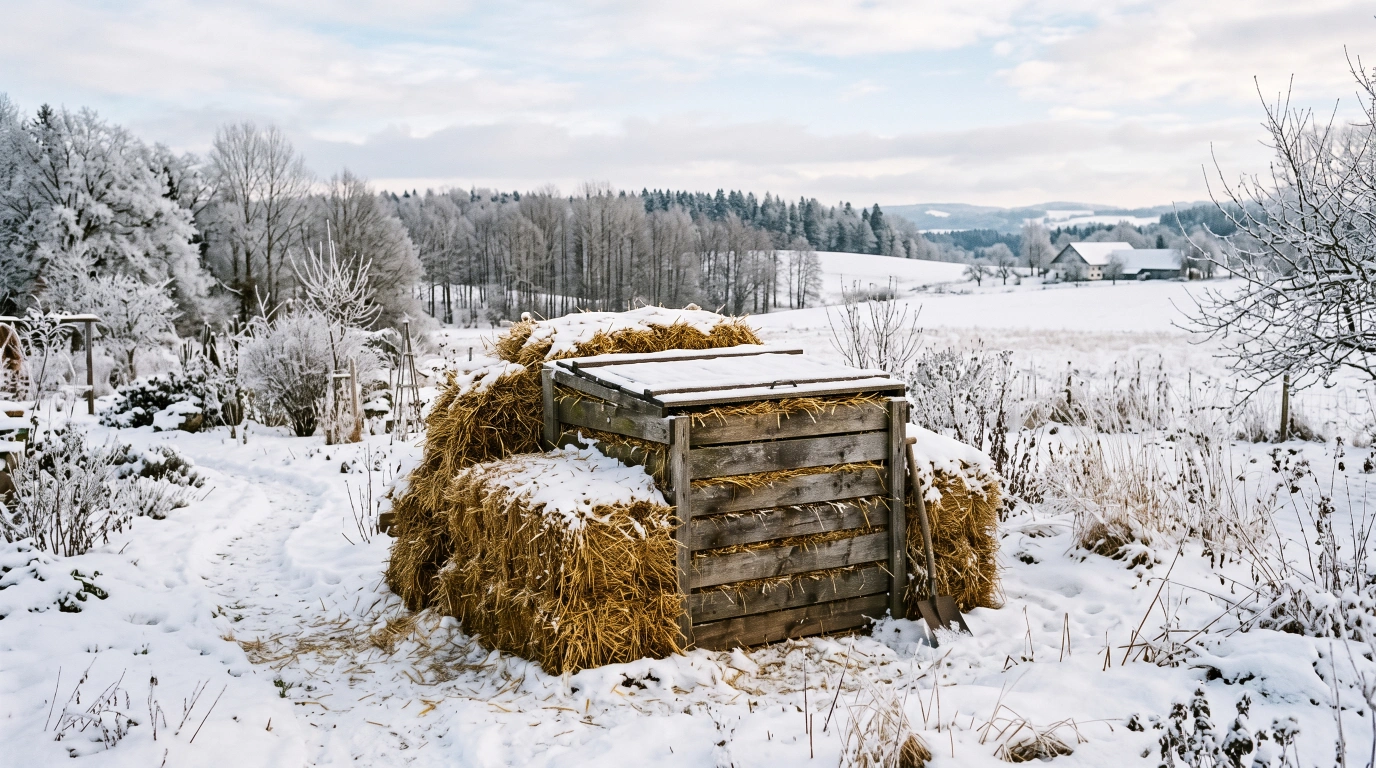
A cool or boreal climate -- the short-summer, hard-winter regions of Scandinavia, Alaska, much of Canada, and Russia's boreal belt -- takes the temperate maritime climate's cold-weather challenge and pushes it much further. This isn't a climate that's merely cool for part of the year, it's one where composting has a genuine on-season and a genuine off-season, and treating them as the same thing is the single most common mistake. The golden rule here: insulate seriously, work fast and hard in the short window you have, and let the heap rest through winter without panicking about it.
The Challenges
- Months of hard freeze stop microbial activity almost completely, not just slow it, meaning a heap can sit dormant for a large part of the year.
- A short, compressed growing season means fresh nitrogen-rich material is only available in a brief window rather than spread across most of the year.
- Freeze-thaw cycles at the shoulders of winter can waterlog a heap or heave soil in ways a milder climate never has to deal with.
- Very slow decomposition even in the active season means longer processing times overall -- especially important when handling humanure safely.
The Advantages
- Long summer daylight hours drive intense plant growth and give an active heap real warmth and abundant fresh material to work with.
- Low pest and disease pressure compared to warmer climates, since cold winters knock back much of what would otherwise trouble a heap or a garden.
- Abundant wood ash from wood-burning heat, close to universal in this climate, provides a genuinely free and plentiful compost input most other zones lack.
- Naturally abundant carbon material -- conifer needles, birch bark and leaves, straw -- gives a heap plenty of bulking material to work with once nitrogen is found.
19 Chapters, In Order
Each builds on the last, but every chapter also stands alone if you're looking for something specific.
Frequently Asked Questions
What's the single biggest composting challenge in a cool or boreal climate?
Months of hard freeze. Below a certain temperature, microbial activity doesn't just slow down, it stops almost completely, and a heap can sit frozen solid for a large part of the year. Almost every technique in this section, from insulated bins to deliberate winterizing, exists to either delay that shutdown, protect the heap while it's dormant, or make the most of the short window when the heap can actually work.
What real advantages does this climate have for composting?
Genuinely several. Summer days are long, often with far more daylight hours than a temperate climate gets, which drives intense plant growth and gives a heap a real burst of warmth to work with. Cold winters also mean very low pest and disease pressure compared to warmer climates, and wood-burning for heat, close to universal here, produces wood ash as a free, abundant compost input most other climates don't have in the same quantity.
Is it even worth composting somewhere the ground freezes solid for months?
Yes, and the payoff is arguably larger here than almost anywhere, because boreal soils are naturally acidic and nutrient-poor and benefit enormously from consistent organic matter addition. A heap doesn't need to work year-round to be worthwhile, it needs to be built, insulated and managed well enough to make real progress in the season it can work, then protected properly through the months it can't.