
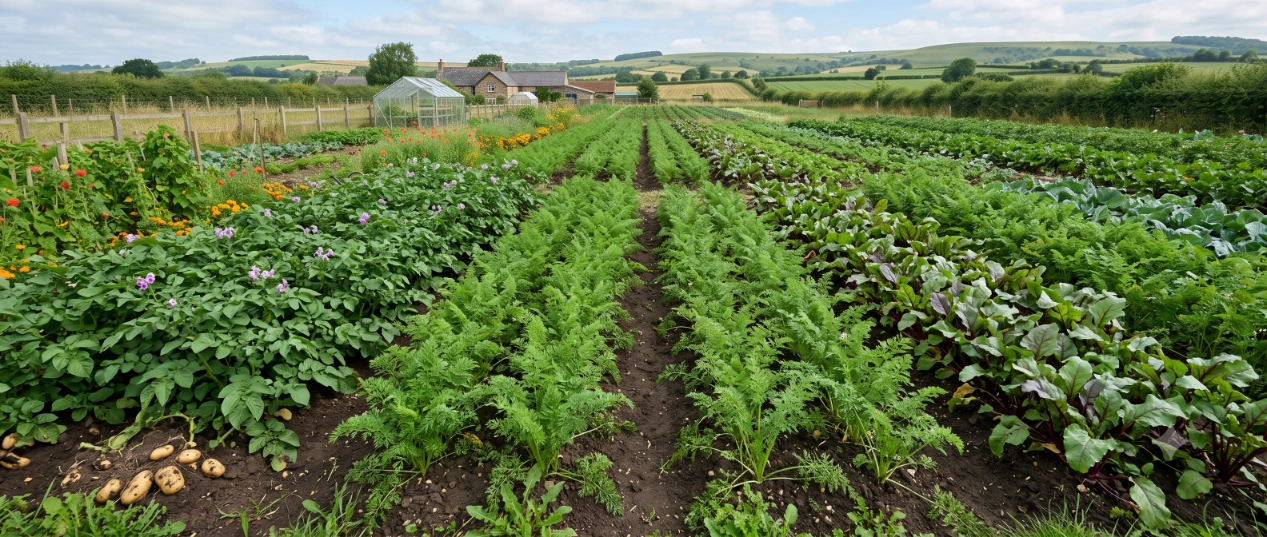
Grouped here because they're all grown mainly for what's happening underground, not because they're related -- potatoes, sweet potatoes, carrots, beetroot and the rest come from entirely different plant families, so what applies to one rarely applies to the others. Seed-saving in particular varies enormously across this group: some regrow from a piece of root or tuber rather than true seed at all, and cross-pollination risk (where it exists) is specific to each crop's own family, not shared across the category the way it is with brassicas.
Which root vegetable should you grow?
Root vegetables are the backbone of a store-cupboard garden: they pack a lot of food into a small area and many keep for months. They are not one family, though, and each wants slightly different treatment. Which to grow depends on your soil, your space and what you want from them.
Best for beginners
Beetroot and radish are forgiving and quick, and early potatoes are very hard to fail with. Carrots look easy but are fussier about soil and carrot fly.
Most calories
Potatoes are the heavyweight, giving more food from a bed than almost anything else you can grow. Jerusalem artichokes and sweet potatoes also deliver. See the highest-calorie crops per square metre.
Best for storage
Carrots, beetroot, swede and maincrop potatoes keep well once lifted and stored cool and dark. Our guide to vegetables that store longest goes into detail.
Stay in the ground all winter
Parsnips, swede, celeriac, salsify and Jerusalem artichokes can wait in the soil and be lifted as needed, which saves storage space.
Quick crops and gap fillers
Radishes can be ready in four weeks, and baby turnips and beetroot are quick too. They fit between slower crops, or can mark the rows of slow-germinating parsnips.
Leave until later
Celeriac needs a long season and a lot of feeding, sweet potato needs real warmth, and salsify is slow and unfamiliar. Learn on beetroot and potatoes first.
Root vegetables compared
Every crop on this hub side by side. Calories and storage come from the same data as our calculator and change with your climate zone, so pick yours. Calories are for one planted unit, shown underneath each figure. A carrot seed and a seed potato are very different things, so compare like with like. Click a crop for its full guide.
| Crop | Months to harvest | Calories per planted unit | Keeps (weeks) | Difficulty | Plant family |
|---|---|---|---|---|---|
| Potato | 3 | 7,700per kg of seed potatoes | 24 | Moderate | Solanaceae |
| Sweet potato | 5 | 169per slip | 3 | Hard | Convolvulaceae |
| Carrot | 4 | 102per seed | 20 | Moderate | Apiaceae |
| Beetroot | 3 | 150per seed | 16 | Easy | Amaranthaceae |
| Parsnip | 6 | 188per seed | 16 | Moderate | Apiaceae |
| Swede / Rutabaga | 5 | 259per seed | 16 | Easy | Brassicaceae |
| Turnip | 2 | 70per seed | 12 | Easy | Brassicaceae |
| Celeriac | 6 | 252per seed | 16 | Hard | Apiaceae |
| Salsify | 6 | 139per seed | 14 | Moderate | Asteraceae |
| Radish | 1 | 11per seed | 2 | Easy | Brassicaceae |
| Jerusalem artichoke | 6 | 912per tuber | 16 | Easy | Asteraceae |
How root vegetables grow: what they have in common
The family tree differs, but the way you treat the soil and the seed bed is much the same. Get the ground right and most roots are straightforward.
Soil. Tap roots (carrots, parsnips, salsify, celeriac) want deep, loose, stone-free soil. Stones and clods make them fork, and fresh manure makes them fork too, so give the bed a manured crop the year before, not this year. Potatoes and Jerusalem artichokes, in contrast, love rich, well-fed soil and will break up new ground. Our guides to building healthy soil and making your own compost help you prepare.
Sowing and planting. Tap roots hate being transplanted, so sow them where they are to grow, thinly and shallowly, and keep the surface moist while they germinate. Parsnip and carrot seed can take weeks to appear, and parsnip seed loses vigour fast, so always sow fresh. Potatoes and artichokes grow from tubers, sweet potatoes from rooted slips, and all three are planted rather than sown. Thin roots early to give the survivors room, and firm back any soil you disturb.
Watering and timing. Even moisture matters more than lots of water. A long dry spell followed by a downpour makes roots split, and drought makes radishes hot and woody. Sow the quick crops (radish, turnip, baby beetroot) little and often, and sow main crops for storage in early to mid summer so they are mature but not oversized when the cold arrives.
The usual pests and diseases
- Carrot fly: maggots tunnel into carrots, parsnips and celeriac. A mesh barrier at least 60 cm high is the most reliable defence.
- Potato blight: a fast-spreading disease in warm, humid weather that blackens the foliage and rots tubers. Grow resistant varieties, favour earlies and lift early if it strikes.
- Slugs and wireworm: bore into potatoes and other roots, especially on new ground. Lifting maincrop potatoes promptly cuts the damage.
- Flea beetle: peppers young radish and turnip leaves with tiny holes. Fine mesh and steady watering help.
- Scab and canker: scab marks potato skins in dry soil, and canker rots parsnip crowns. Both are cosmetic or minor if you rotate and choose resistant varieties.
Why roots go wrong
- Forked or hairy roots: stones, compaction or fresh manure.
- Split roots: uneven watering, especially a downpour after a dry spell.
- Bolting to flower: a cold snap after sowing too early, or long days in summer. Beetroot and radish are most prone.
- Woody or hot roots: slow growth, drought or leaving crops in too long.
- Green potatoes: tubers exposed to light. Earth up well and do not eat green ones, as they can make you ill.
When to sow and harvest root vegetables
Pick your climate zone to see the sowing (or planting) and harvest months for every root crop on this page. It is drawn from the same data as the calculator and shows the main window for each crop. The months are for the northern hemisphere; in the southern hemisphere, shift everything by six months.
| Crop | Jan | Feb | Mar | Apr | May | Jun | Jul | Aug | Sep | Oct | Nov | Dec |
|---|---|---|---|---|---|---|---|---|---|---|---|---|
| Potato | ||||||||||||
| Sweet potato | ||||||||||||
| Carrot | ||||||||||||
| Beetroot | ||||||||||||
| Parsnip | ||||||||||||
| Swede / Rutabaga | ||||||||||||
| Turnip | ||||||||||||
| Celeriac | ||||||||||||
| Salsify | ||||||||||||
| Radish | ||||||||||||
| Jerusalem artichoke |
Rotation and companion planting
In a classic four-bed rotation, root crops form their own group, and potatoes usually get a bed of their own. Rotation breaks the cycle of pests and disease and spreads the demand on the soil.
Rotation
- Before roots: brassicas or a manured crop in the previous year. The soil is then fertile but not freshly manured, which suits carrots and parsnips.
- After roots: potatoes or legumes. Peas and beans leave the soil in good heart for the next crop.
- Potatoes are best on their own, kept at least three years away from the same spot, and never planted where tomatoes grew, because they share blight.
- Swede, turnip and radish are brassicas, so count them as brassicas for clubroot when planning.
Friendly neighbours
- Onions, leeks and chives grown alongside carrots can help to confuse carrot fly, and the carrots in turn may deter onion fly.
- Radishes sown in the same row mark slow germinators such as parsnips and carrots, and are harvested before the roots need the space.
- Beetroot gets on well with onions and garlic.
- Keep apart: dill and fennel from carrots (they are close relatives and can stunt or cross), and potatoes from tomatoes.
Storing and preserving root vegetables
Roots are some of the best keepers in the garden, but each wants slightly different handling.
Leave them in the ground. Parsnips, swedes, celeriac, salsify and Jerusalem artichokes can stay put through winter. Cover the bed with a deep mulch of straw or leaves, so you can still lift them in a hard frost, and watch for slugs and voles.
Lift and store cool, dark and slightly damp. Carrots, beetroot, swede and turnips keep for weeks to months in boxes of damp sand or sawdust in a frost-free, cool shed, garage or cellar. Twist off the tops (do not cut) and store only undamaged roots. Check them regularly and eat any that soften first.
Cure potatoes first. Let freshly lifted maincrop potatoes dry for a few hours, then store them in the dark in paper or hessian sacks, in a cool, frost-free place. Light turns them green, and frost makes them sweet and mushy. Check often and remove any that start to rot. Our guides to storing food without a fridge and root cellar alternatives show how to set up a store.
Pickle, ferment or freeze. Beetroot pickles beautifully, carrots and radishes ferment well into a sour, crunchy relish, and carrots, parsnips and swede freeze well once blanched. These methods are useful when a harvest outruns what you can store fresh.
Saving root vegetable seed: what crosses with what?
Seed-saving varies widely across this group because the crops come from several families. Potatoes, sweet potatoes and Jerusalem artichokes are grown from tubers or slips, so there is no cross-pollination to worry about at all. Most of the rest are biennials: they only flower and set seed in their second year, so the roots have to survive the winter. The table shows what each crop can cross with. For details, see our pages on carrot, beetroot, parsnip, celeriac, radish, turnip, swede and salsify, and which vegetables cross-pollinate.
| Crop | Grown from | Crosses with |
|---|---|---|
| Potato, sweet potato, Jerusalem artichoke | Tubers or slips | Nothing relevant: clones of the parent plant |
| Carrot | Seed, biennial | Other carrots and wild carrot (Queen Anne's lace) |
| Parsnip | Seed, biennial | Other parsnips and wild parsnip |
| Celeriac | Seed, biennial | Other celeriac and celery |
| Beetroot | Seed, biennial | Other beetroot, chard, sea beet and sugar beet (wind-pollinated, so needs long isolation) |
| Turnip | Seed, biennial | Other turnips, pak choi, mizuna and Chinese cabbage (Brassica rapa) |
| Swede | Seed, biennial | Other swedes and some kales (Brassica napus), not cabbage or broccoli |
| Radish | Seed, annual | Other radishes and wild radish, not turnips or brassicas |
| Salsify | Seed, biennial | Other salsify and wild goat's-beard |
Root vegetable questions, answered
Why are my carrots forked or misshapen?
Forking is almost always down to the soil. Stones, compacted ground, or fresh manure dug in this season make the root split as it hunts for a way down. Grow carrots, parsnips and other tap roots in deep, loose, stone-free soil that was not manured for them this year, or choose short, round or stump-rooted varieties for heavy or stony ground.
Can I grow root vegetables in clay or stony soil?
Yes, but choose the right crops. Potatoes, Jerusalem artichokes, beetroot, turnips, radishes and swedes cope far better with heavy ground than long carrots or parsnips. Potatoes actually help to break up new, compacted ground. If you want long roots, grow them in a deep raised bed filled with a loose mix of soil and compost, or in large containers.
When are parsnips ready to harvest?
They can be lifted from autumn, but they taste best after a few hard frosts. Cold weather turns some of the starch to sugar and makes them noticeably sweeter. Leave them in the ground through winter and lift as you need them, but lift the last of them before the ground thaws and the new growth starts, when the roots turn woody.
Can I leave root vegetables in the ground over winter?
Many keep happily in the soil. Parsnips, swedes, Jerusalem artichokes, celeriac and salsify all tolerate frost, and a thick mulch of straw or leaves helps protect the roots and keeps the ground from freezing solid. Carrots and beetroot also keep this way in mild climates, but in cold or very wet ground it is safer to lift them in autumn and store them. Watch for slugs and voles, which feast on roots left in the ground.
How do I avoid carrot fly?
Carrot fly maggots tunnel into the roots, and the flies are attracted by the smell of carrots, especially when you thin them. Sow thinly so you do not need to thin, avoid bruising the foliage, and protect the crop with a barrier of fine mesh or a fleece, at least 60 cm high, because the flies fly low. Growing carrots away from sheltered, still spots helps, and so does sowing after the first egg-laying flush in late spring.
What is the difference between early and maincrop potatoes?
Early (first and second early) potatoes are planted in early spring and lifted in early summer as small, tender "new" potatoes. They are quick, tend to escape blight, but do not keep. Maincrop potatoes are planted a little later, grow for longer, give a much bigger yield and, once cured, store through the winter. If you only have room for one type and want food in storage, grow maincrop; if you want something quick and tasty, grow earlies.
Which root vegetables suit your climate?
Potatoes thrive nearly everywhere, while sweet potatoes and celeriac are far choosier. Pick your zone to see every crop that suits it, ranked by how well it grows there.
How many potatoes and roots do you actually need?
Roots and potatoes can supply a large share of a household's calories, but most people underestimate the quantity. The calculator works out how much to grow for your household and climate, and our guide to potato, wheat and rice shows the scale.