
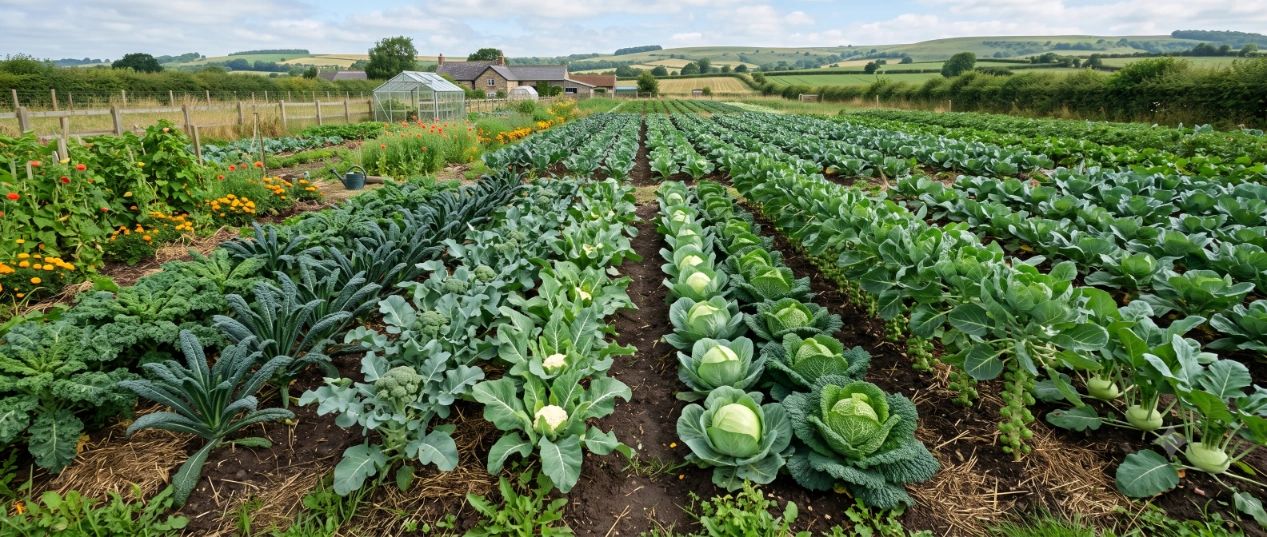
Kale, cabbage, broccoli, cauliflower, Brussels sprouts, kohlrabi and purple sprouting broccoli are all one species underneath the very different vegetables they've been bred into -- eight crops in one same-species cluster, the biggest on this whole site, which matters more than most crop families if you're saving your own seed. Pak choi, mizuna and Chinese cabbage are a second, separate cluster (plus turnip, on the Root Vegetables & Tubers hub) -- genuinely different species from the first group, so no crossing between the two. Mustard greens sits apart from both -- a third species again, and the safest seed-saving choice on this hub.
Kale & Cavolo Nero
Guide available
Broccoli / Calabrese
Guide available
Cauliflower
Guide available
Cabbage (summer)
Guide available
Cabbage (winter / Savoy)
Guide available
Brussels sprouts
Guide available
Kohlrabi
Guide available
Purple Sprouting Broccoli
Guide available
Pak Choi
Guide available
Mizuna
Guide available
Chinese Cabbage / Napa
Guide available
Mustard Greens
Guide available
Eight of these crops can cross-pollinate with each other -- kale, cabbage (both), broccoli, cauliflower, Brussels sprouts, kohlrabi and purple sprouting broccoli are all Brassica oleracea underneath. If you're saving seed from more than one, you'll need real isolation distance or to only let one flower per season. A ninth crop belongs to this same cluster too: nine star broccoli, filed under Perennial Vegetables for its multi-year cropping habit but genuinely the same species underneath.
Pak choi, mizuna and Chinese cabbage are a separate cluster -- Brassica rapa. These three cross with each other and with turnip (Root Vegetables & Tubers hub), but NOT with the oleracea group above.
Mustard greens is its own species, Brassica juncea, and crosses with neither cluster. It's genuinely one of the safest seed-saving choices on this hub. Full cross-pollination detail is on each crop's own page.