
No-dig gardening means the same thing everywhere: building fertility on the surface with compost and mulch rather than digging it in, and disturbing the soil as little as possible. What no-dig protects against, and why it matters, changes by climate -- here, it's about shielding soil life from extreme freeze-thaw cycles.
Protecting Soil Life Through Freeze-Thaw Cycles
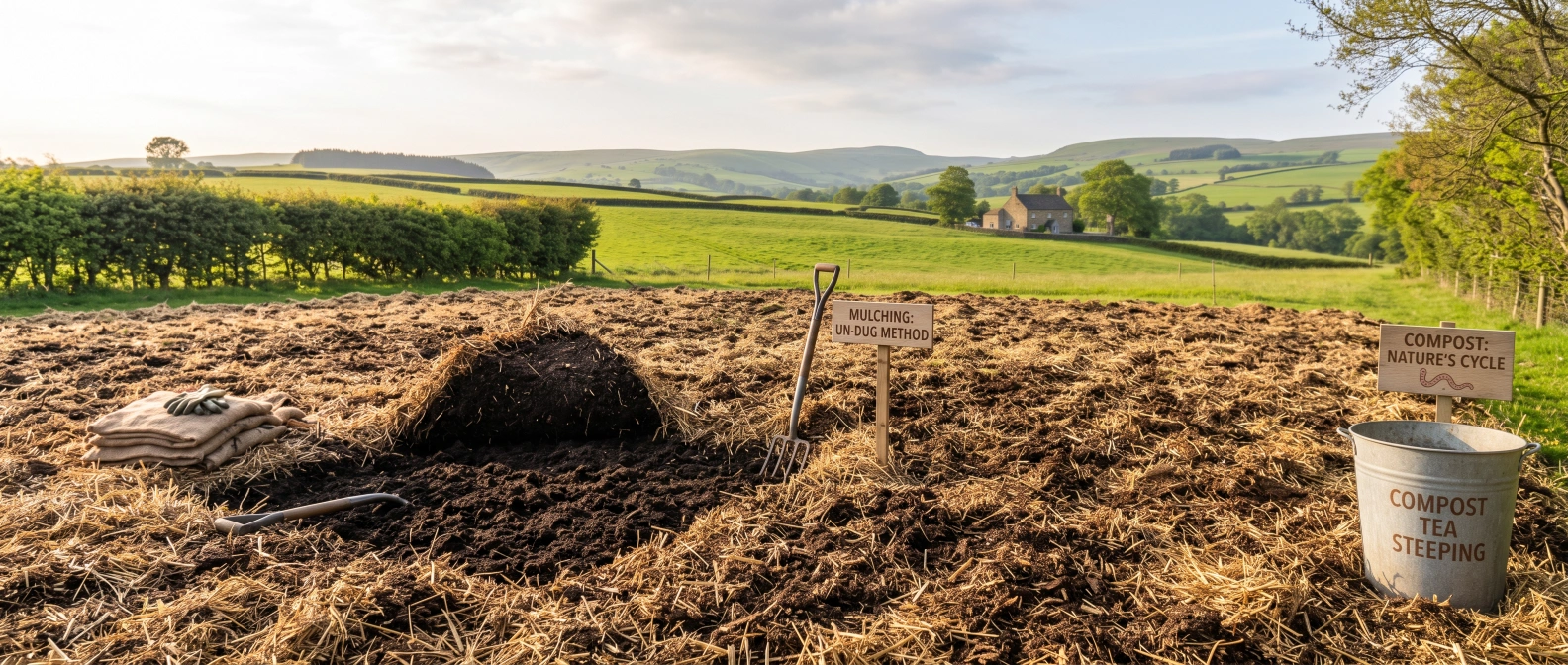
In other climates, no-dig is argued for mostly on moisture retention or erosion and leaching grounds. Here, the central case is different: an undisturbed, mulched bed insulates the soil organisms and roots living within it against the most extreme temperature swings this climate produces, rather than leaving bare, dug soil directly exposed to biting air temperatures and repeated freezing and thawing at the surface. A mulch layer can also help the soil thaw and warm slightly faster in spring, since it reduces frost penetration depth and moderates surface temperature swings compared to bare soil left open to the sky.
The Method
The core method doesn't change: lay cardboard directly over the bed to suppress weeds and existing growth, then apply a thick layer of compost and mulch on top. Plant directly into that surface layer rather than digging it in. Worms and soil organisms do the work of incorporating it over time, exactly as they would anywhere else, just more slowly given how much of the year they're dormant here.
The Spring Timing Trade-Off
There's a nuance here that matters more than it would in a warmer climate. A very thick mulch layer insulates against the sun's warming effect in spring just as effectively as it insulates against winter's cold, so leaving it on right through the critical early planting window can actually delay the soil warming and drying enough to plant into. The practical fix is to pull mulch back briefly in early spring, letting the sun reach bare soil to warm and dry it, then replace the mulch once planting is underway. In a warmer climate this trade-off barely registers; here it can cost real weeks of an already short season.
Stretching Limited Compost With Mulch
Because compost takes so long to accumulate here, given the short active season each heap gets to work with, it's rarely available in the quantity a fully mulched no-dig system would ideally use. Use dried leaves and straw generously alongside whatever compost you do have to stretch limited supply across more bed area. Arid climates face the same generous-mulch principle for a different reason, material scarcity from sparse vegetation, and Tropical climates for a different reason again, protecting soil from erosion and nutrient leaching. Here, the constraint is time, not material or rainfall, but the practical answer, mulch generously and don't rely on compost alone, ends up much the same.
Frequently Asked Questions
Why does no-dig matter specifically in a cool or boreal climate?
Here the main benefit is protecting soil life through extreme freeze-thaw cycles rather than retaining moisture or preventing erosion. An undisturbed, mulched bed insulates soil organisms and roots against the most severe temperature swings, and reducing frost penetration depth can even help the soil thaw and warm slightly faster in spring compared to bare dug soil directly exposed to the air.
Can a thick mulch layer actually slow down spring warming?
Yes, and it's a real timing trade-off in this climate specifically. A very thick mulch layer insulates against the sun's warming effect just as it insulates against frost, so it's worth pulling mulch back briefly in early spring to let the soil warm and dry before the critical early planting window, rather than leaving a thick layer on right through it.
I never have enough compost here to mulch generously. What do I do?
Stretch it with other mulch material, dried leaves and straw work well alongside whatever compost you do have. Compost takes a long time to accumulate here given the short active season, so using mulch generously alongside it, rather than relying on compost alone, is standard practice in this climate.