
Biochar is charcoal produced specifically for incorporation into soil. Unlike organic matter which breaks down over months or years, biochar is chemically stable and persists in soil for centuries -- perhaps thousands of years. It's the secret ingredient behind the extraordinary fertility of Amazonian terra preta soils, entirely producible with nothing more than woody material and fire.
Why Biochar Matters in a Maritime Climate
- Permanent structure -- doesn't decompose, every gram added stays indefinitely.
- Nutrient retention -- biochar's porous structure and large surface area carries a negative charge that attracts and holds positively charged nutrient ions (potassium, calcium, magnesium, ammonium); in a high-rainfall climate where nutrients leach rapidly downward, this is particularly valuable.
- Water retention -- the same porous structure holds water in dry periods while improving drainage in wet ones, genuinely useful in the feast-or-famine rainfall pattern of Atlantic climates.
- Microbial habitat -- pore structure provides protected habitat for bacteria and fungi, acting like a permanent village for soil microorganisms.
- pH buffering -- biochar tends to be slightly alkaline, helping counteract the natural acidification of high-rainfall soils.
Making Biochar Without Power Tools
The Trench or Pit Method
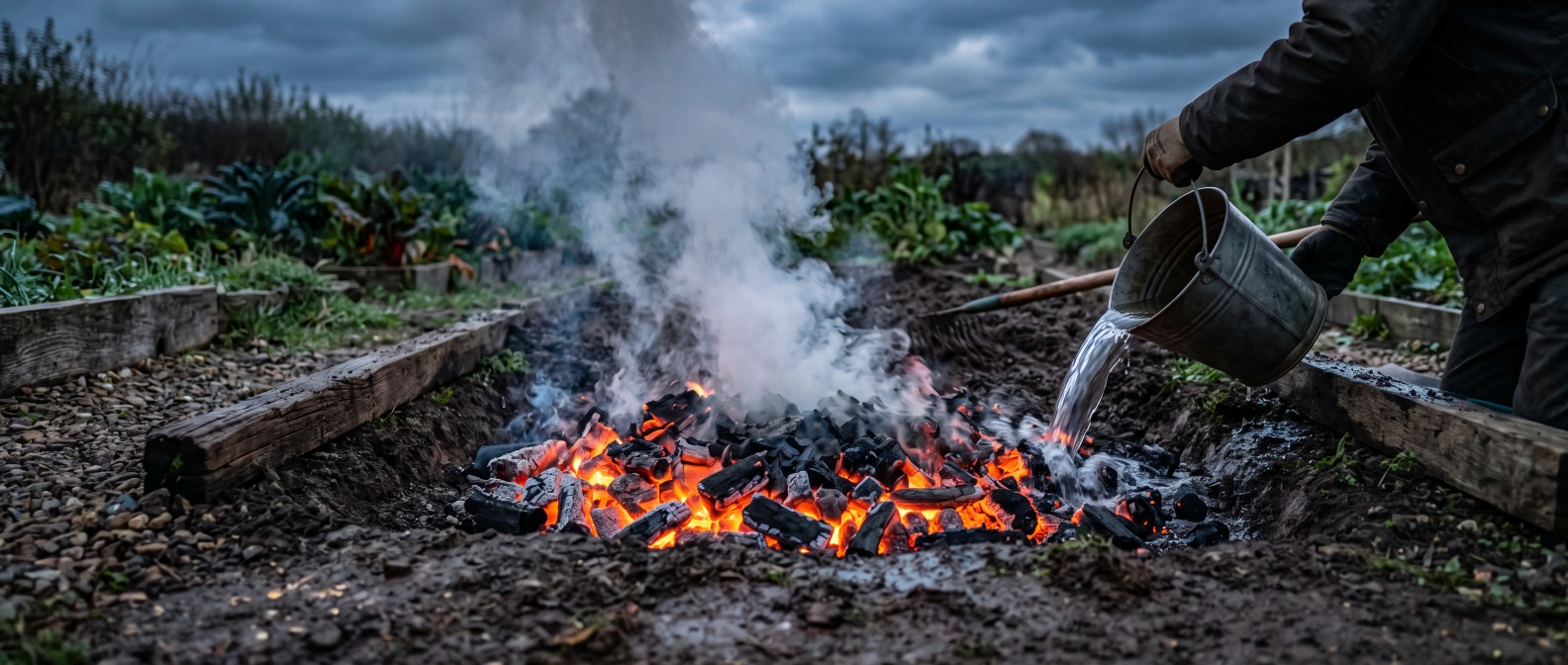
Dig a trench or pit roughly 30cm deep, as long as convenient. Build a wood fire in the trench using dry hardwood, fruit wood or any dense woody material. Once burning well, gradually add more wood on top, keeping the fire intense. When the wood has reduced to glowing orange coals -- but before it turns to grey ash -- extinguish immediately by covering completely with soil or pouring water over it. The key is stopping at the charcoal stage, not letting it burn to ash. Leave to cool, then dig out the resulting biochar. Soft/resinous woods (pine, willow) produce less stable biochar than hardwoods; fruit woods (apple, cherry) and oak are excellent.
The Retort or Kiln Method
A metal bin or drum with a small air hole at the base and a lid produces more consistent, higher-quality biochar with less smoke. Use an old metal dustbin or oil drum with a lid; punch a few small holes near the base. Pack tightly with dry woody material (small diameter pieces, 2-5cm work best). Light a fire underneath or beside the bin; the wood inside pyrolyses from the heat without full combustion as oxygen is restricted. When smoke from the top changes from white (steam/volatiles) to thin and blue (near complete pyrolysis), the process is almost done. Seal the bin completely and allow to cool overnight before opening. Produces very consistent biochar and much less smoke than open burning.
Charging Biochar Before Use
Fresh biochar is essentially sterile and will initially absorb nutrients from the soil rather than contribute them -- it needs to be "charged" first.
- Mix with compost -- easiest method, combine biochar with finished compost at roughly 1 part biochar to 4 parts compost, leave several weeks before applying.
- Steep in liquid feed -- soak in comfrey/nettle liquid, seaweed solution, or diluted urine for 2-4 weeks.
- Add to the compost heap -- biochar added during processing is naturally charged over the composting period, the simplest and most integrated approach.
Application Rates
- Start conservatively -- 1-5% of soil volume, roughly one to two buckets per square metre dug into the top 20cm.
- Apply once and it stays -- unlike compost, no need to reapply annually, build up over several years.
- Mix into compost rather than applying raw to soil.
- Particularly valuable in sandy/light soils that drain rapidly; less critical but still beneficial in heavier clay soils.
Frequently Asked Questions
Why does biochar need to be 'charged' before use?
Fresh biochar is essentially sterile and will initially absorb nutrients from the soil rather than contribute them, so it needs to be charged first. Mixing it with compost, steeping it in liquid feed, or adding it during the composting process all let biochar's porous structure fill with nutrients and microbial life before it goes into the ground.
Can I make biochar without buying special equipment?
Yes. The trench method needs nothing but a spade and a fire -- burn wood down to glowing coals, then extinguish by covering with soil or water before it turns to ash. The retort method uses an old metal dustbin or oil drum with a few holes punched near the base, producing more consistent, less smoky biochar. Both are entirely achievable without power tools.
How much biochar should I add to my soil?
Start conservatively at 1-5% of soil volume, roughly one to two buckets per square metre dug into the top 20cm. Because biochar is permanent and doesn't need reapplying annually like compost, it's best mixed into compost first and built up gradually over several years rather than applied all at once.