
For anyone within reasonable distance of the coast, seaweed is one of the finest compost inputs available -- used by coastal farmers across northwest Europe, the British Isles, and the Atlantic coast of France and Ireland for thousands of years. If you have access to it, it deserves a central place in your composting routine.
Why Seaweed Is So Valuable
- Mineral richness -- over 60 trace elements absorbed from seawater (iodine, magnesium, boron, manganese, zinc and more), many depleted from agricultural soils.
- Natural growth stimulants -- alginic acid, mannitol, and natural plant hormones including cytokinins that stimulate root growth and improve stress resistance.
- Soil conditioner -- alginates decompose into compounds that bind soil particles into stable aggregates, improving structure in both sandy and clay soils.
- Microbial food -- a superb food source for soil bacteria and fungi; applications noticeably increase biological activity.
- Natural pest deterrent -- some evidence seaweed applications deter slugs and improve resistance to certain fungal diseases, highly relevant in wet maritime climates.
Collecting Seaweed
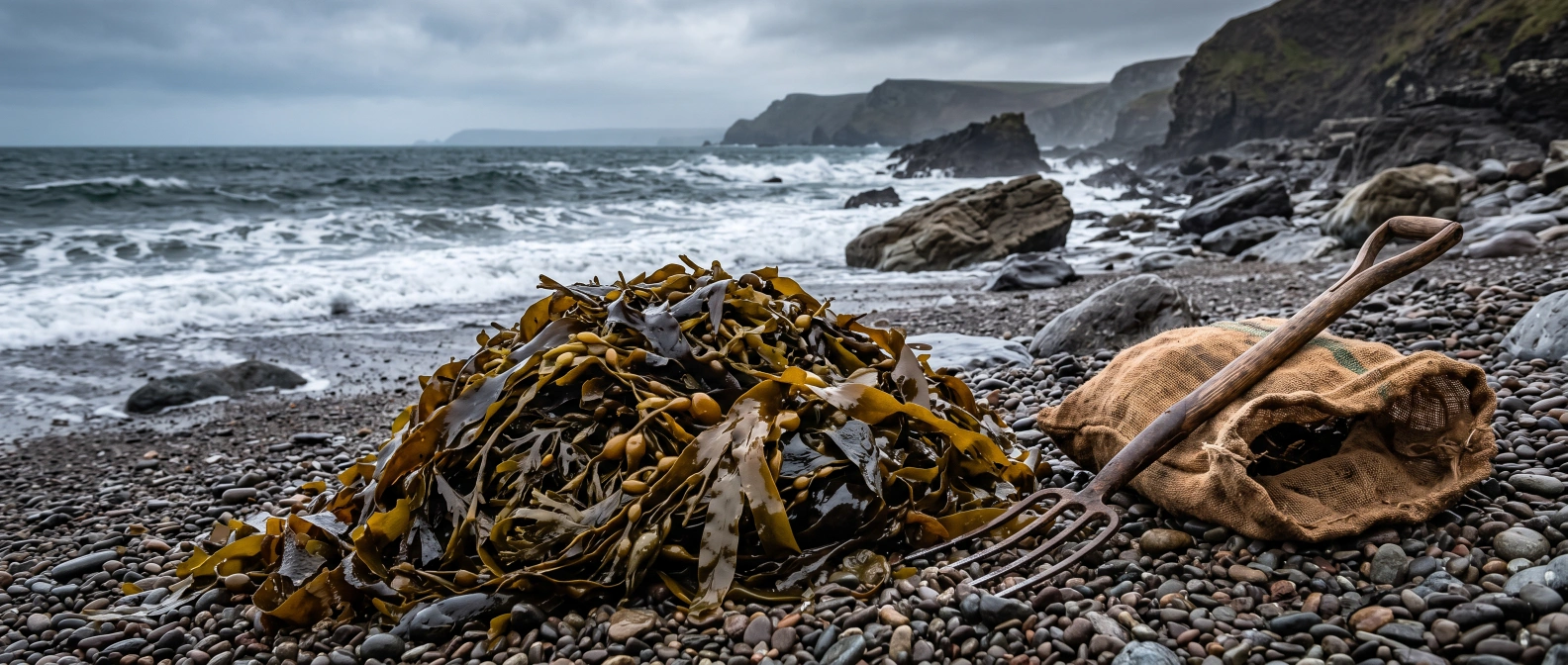
Collect freshly cast seaweed from the high tide line rather than cutting living plants from rocks -- it's better for marine ecosystems, and cast seaweed is already beginning to break down. In most maritime jurisdictions, collecting cast seaweed for personal use is legal, but check local regulations first. It's best collected after storms, when large quantities are cast ashore at once. All the common types are useful -- kelp (most abundant), bladderwrack, sea lettuce, dulse, carrageen. Transport it in breathable sacks or a trailer, as it's heavy when wet. You can collect year-round, but spring and autumn storms often produce the best quantities.
Rinsing -- To Rinse or Not?
- For compost heap addition -- rinse lightly if very fresh and salty, but composting naturally dilutes and neutralises salt over time; thick kelp and wrack need rinsing more than light sea lettuce.
- For direct soil mulching -- always rinse, or allow heavy rain to wash it first; alternatively leave it uncovered through a period of rainfall, since a week of maritime rain does the job naturally.
- Dried seaweed -- much of the salt is lost during drying, so it's less of a concern.
How to Use Seaweed
- Add directly to the compost heap in layers alternating with carbon material -- its moisture makes it a good activator in dry periods, and it breaks down quickly, heating the heap noticeably.
- Make a seaweed liquid feed -- fill a bucket or barrel with seaweed, cover with water, and steep for 4-6 weeks; the resulting dark liquid, diluted 10:1, is an exceptional foliar feed and soil drench. Use it within a few weeks of straining.
- Direct mulch -- lay rinsed seaweed 5-8cm deep around brassicas, leeks and potatoes; worms pull it into the soil rapidly, suppressing weeds and feeding the ground simultaneously (a traditional Irish and Hebridean practice).
- Dry and store -- seaweed dried in summer sun can be stored and added through winter when fresh material is scarce; it becomes brittle and easy to crumble.
- Dig in directly -- fresh seaweed dug into beds in autumn will have fully decomposed by spring planting.
Frequently Asked Questions
Do I need to rinse the salt off seaweed before composting it?
For the compost heap, not necessarily -- rinse lightly if the seaweed is very fresh and salty, but composting naturally dilutes and neutralises salt over time, so thick kelp or wrack benefit from a rinse more than light sea lettuce does. For direct soil mulching it's a different story: always rinse first, or leave the seaweed uncovered through a period of rain, since a week of maritime weather will wash the salt out naturally before it touches growing beds.
What's the best way to collect seaweed for composting?
Collect freshly cast seaweed from the high tide line rather than cutting living plants from rocks -- it's better for marine ecosystems, and cast seaweed is already beginning to break down, which is exactly what you want. It's best collected after storms, when large quantities wash ashore at once, and all the common types (kelp, bladderwrack, sea lettuce, dulse, carrageen) are useful. Transport it in breathable sacks or a trailer, since it's heavy when wet.
Which type of seaweed is best for which crops?
Kelp, the large brown seaweed, is particularly rich in potassium, making it ideal for fruiting crops like tomatoes, squash and beans. Sea lettuce, the bright green type, is highest in nitrogen and is best used as a heap activator rather than a direct feed for any one crop.