
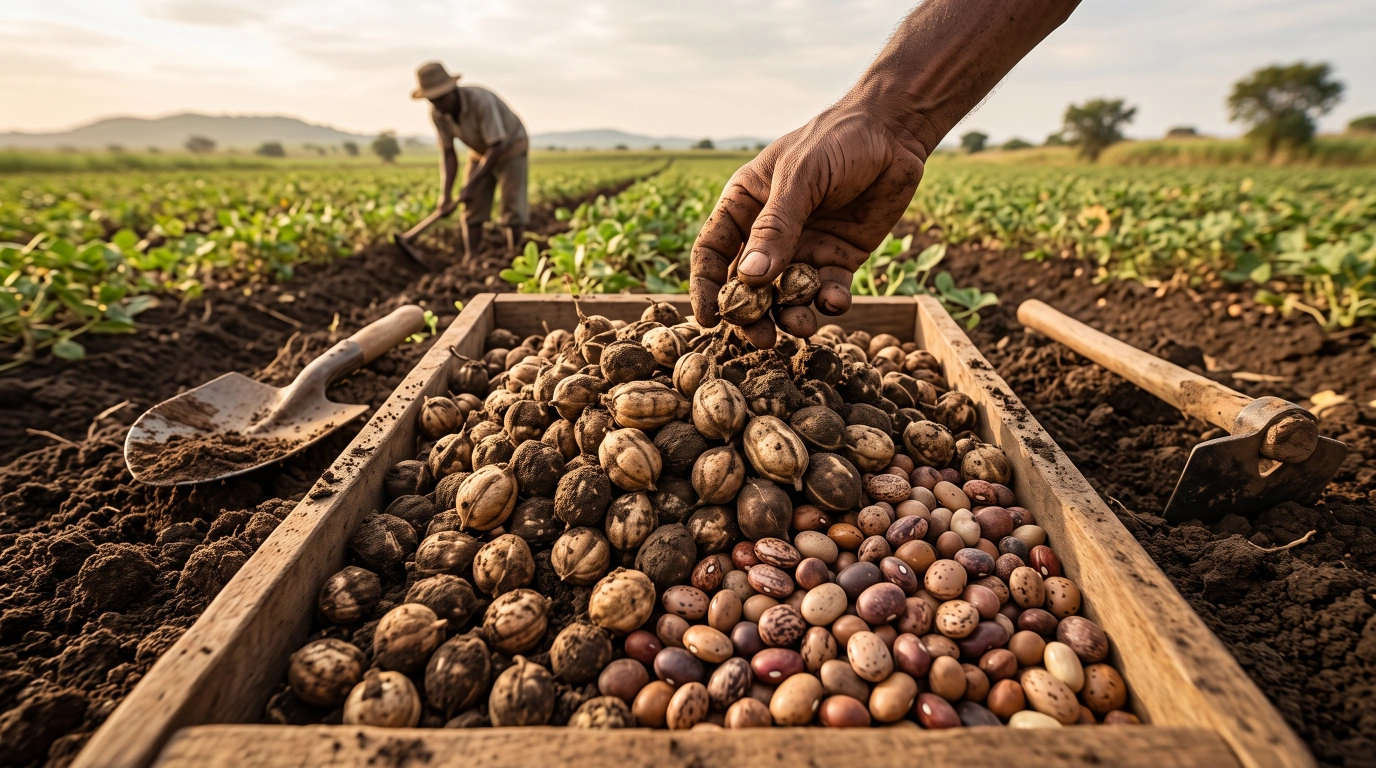
Bambara groundnut shares peanut's unusual habit of forming pods underground after self-pollination, even though the two are different genera -- which makes it just as low-risk and straightforward for home seed saving.
New to terms like isolation distance or outcrossing? See the Seed-Saving Glossary.
Seed-Saving Difficulty
✓
Safe to Save
Very low crossing risk.
How It's Pollinated
Self-pollinating
(Very low crossing risk)
Scientific name: Vigna subterranea
Domestic Crops It Can Cross With
- Minimal crossing between varieties -- flowers self-pollinate before the pod-forming stalk buries itself underground, much like peanut
Wild Relatives & Feral Species
- Wild Vigna subterranea exists in parts of Africa but is not a practical concern outside that range
Separation Distances Required
Minimum: A few metres is generally sufficient
Recommended: Not usually needed
Strict: Not usually needed
Seed-Saving Strategies
- Similar to peanut -- pods form and mature underground after self-pollination
- Allow plants to die back naturally before lifting
- Dig the whole plant and let pods dry attached for a week or two
- Shell and dry further before storing -- viable 3-4 years