
Common beans (Phaseolus vulgaris) are excellent for home seed saving. They are mostly self-fertile, meaning different varieties can grow reasonably close together without significant crossing risk. The seed is housed inside mature dried pods, making harvest and storage simple. Learn about common beans' pollination method, crossing risks, isolation distances, and seed-saving techniques below.
New to terms like isolation distance or outcrossing? See the Seed-Saving Glossary.
Seed-Saving Difficulty
How It's Pollinated
Mostly self-pollinating (minimal insect transfer)
(Low crossing risk)
Scientific name: Phaseolus vulgaris
Domestic Crops It Can Cross With
- French bean, Borlotti, Haricot, Kidney bean (all same species)
- Black bean, Pinto bean, Navy bean, Cannellini bean -- all also Phaseolus vulgaris and will cross with any variety on this list
- Keep separate from mung bean, runner bean, lima bean (different species)
Wild Relatives & Feral Species
Common wild relatives:
- Wild Phaseolus species (rarely present in gardens)
⚠️ Check your local area for wild relatives before saving seed.
Separation Distances Required
Minimum isolation: 5-10m between varieties (low crossing risk)
Recommended: 15-20m for increased purity
Strict (guaranteed pure seed): 50m for complete isolation
Zone notes: All zones - separation needs are modest
Seed-Saving Strategies
- Most self-fertile - overlap between varieties is usually acceptable
- Allow some pods to mature fully for seed harvest
- Separate different varieties if 100% purity required
- Harvest dry pods when fully mature and papery
Why Common Beans are Easy to Save
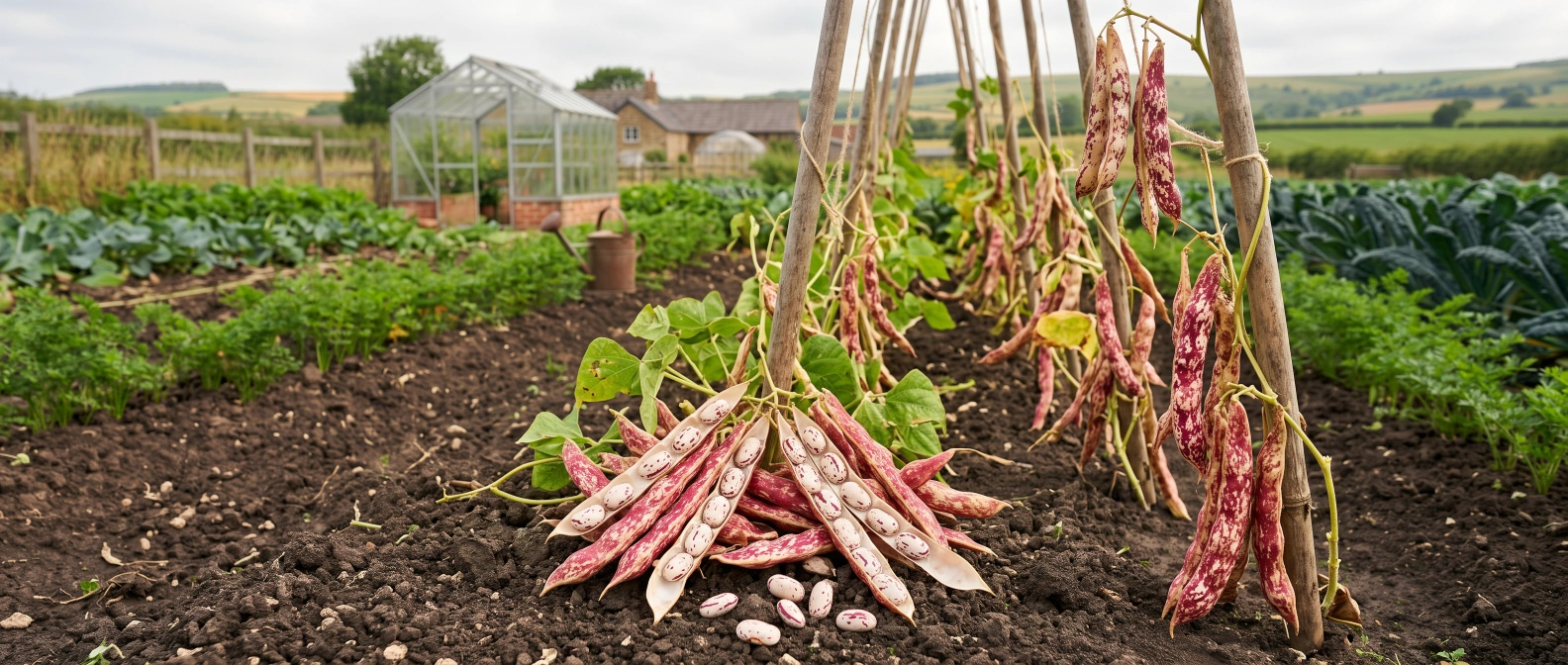
Common beans are perfect for seed saving. Simply leave some pods on the plant to mature fully until they turn dry and papery. Then harvest the pods, shell them to extract the dried seeds, and store in a cool, dry place. The seeds keep well for years, and different varieties rarely cross due to beans' strong self-pollinating nature.