
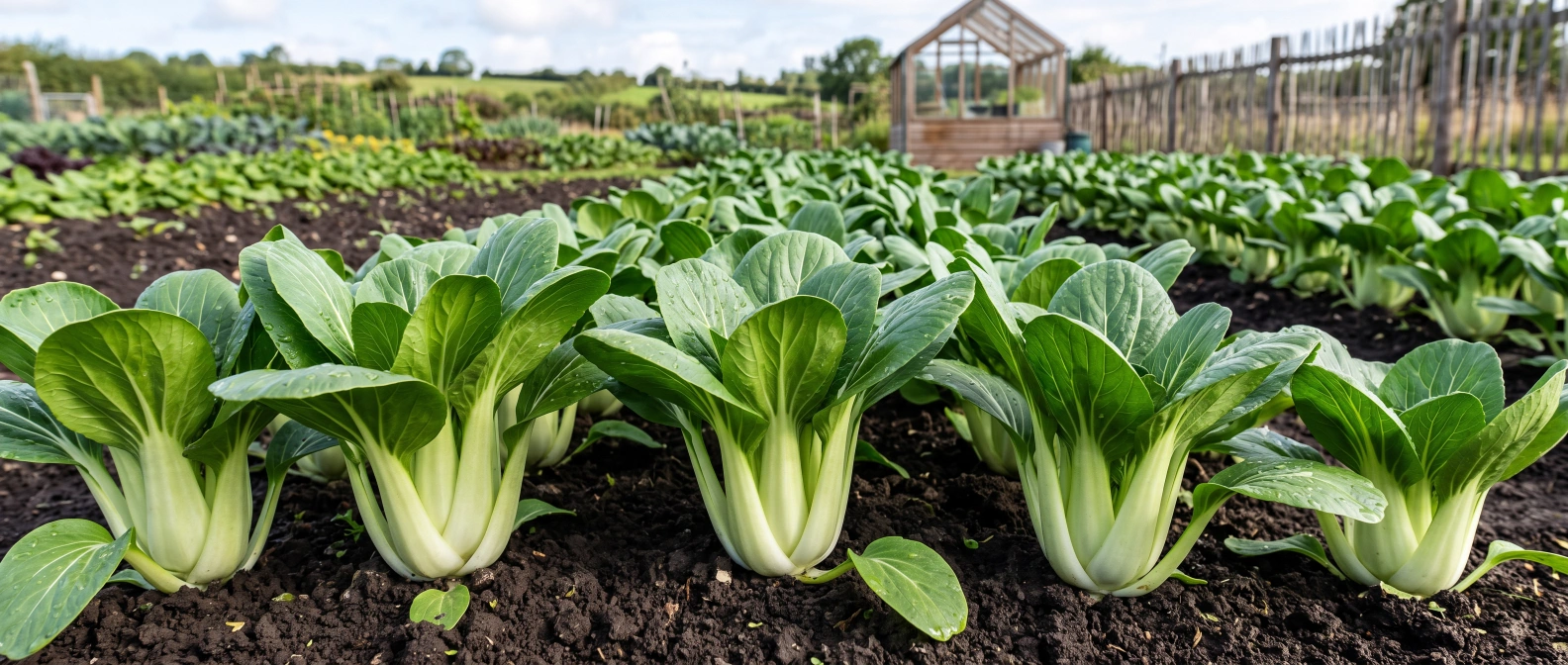
Pak choi, mizuna, Chinese cabbage and turnip look like unrelated vegetables -- a leafy Asian green, a salad leaf, a dense cabbage, and a root crop -- but they're all the same species, Brassica rapa, and will cross-pollinate freely with each other if allowed to flower nearby. This is a completely different species group from the cabbage/kale/broccoli family (Brassica oleracea, covered on our Brassica page) -- the two groups don't cross with each other at all. Learn which vegetables share this species, isolation distances, and seed-saving strategies below.
New to terms like isolation distance or outcrossing? See the Seed-Saving Glossary.
Vegetables Covered by This Guide
These are all Brassica rapa and will cross with each other if allowed to flower nearby:
Turnip has its own dedicated page (linked above) since it's usually grown as a distinct root crop, but it's the same species as everything else here and needs the same isolation from them. Komatsuna and tatsoi, if you grow them, are also B. rapa and belong in this group too. This group does not cross with cabbage, kale, broccoli or Brussels sprouts (B. oleracea), swede (B. napus), or mustard greens (B. juncea) -- all different species despite the shared "Brassica" name.
Seed-Saving Difficulty
How It's Pollinated
Insect-pollinated (bees, hoverflies -- high outcrossing)
(High crossing risk)
Scientific name: Brassica rapa
Domestic Crops It Can Cross With
- Any other B. rapa crop flowering nearby -- pak choi will cross with turnip, mizuna with Chinese cabbage, and so on
- Different varieties within the same vegetable (two pak choi varieties, two turnip varieties)
- Does not cross with cabbage, kale, broccoli, swede or mustard greens -- different species
Wild Relatives & Feral Species
- Feral turnip and wild B. rapa populations can occur near farmland
- Field mustard/wild turnip growing as an arable weed in some regions is also B. rapa and will cross
Separation Distances Required
Minimum: 500m between flowering B. rapa crops
Recommended: 800m-1km for reliable purity
Strict / small gardens: Isolation cages or hand-pollination of bagged flower heads
Seed-Saving Strategies
- Most are biennial -- overwinter the plant (mild zones) or lift and store, replant in spring
- Leafy types (pak choi, mizuna, Chinese cabbage) are usually harvested before flowering -- leave a few plants uncut to bolt and flower instead
- Grow only one B. rapa crop to seed per season, or cage/bag flower heads and hand-pollinate
- Allow seed pods to dry brown on the plant before harvesting
- Thresh pods and store seed somewhere cool and dry -- viable 4-5 years