
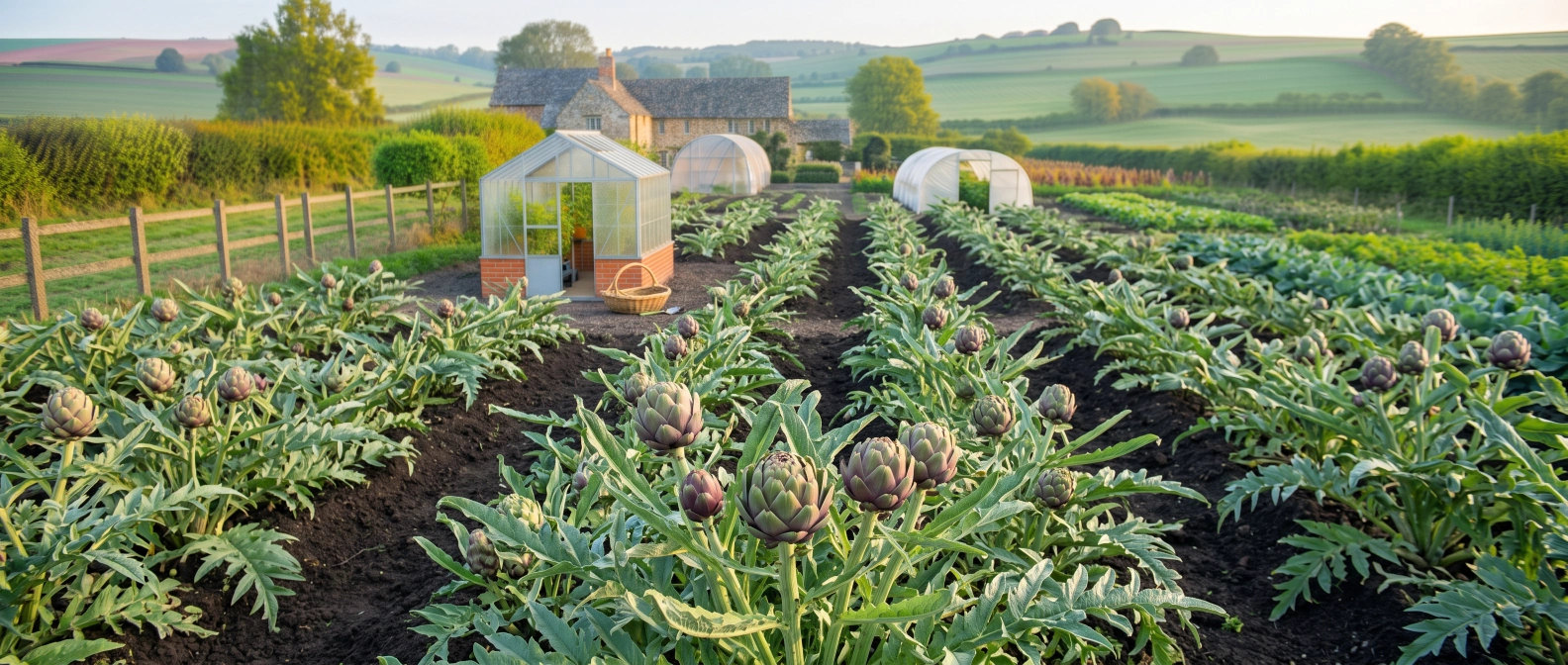
Globe artichoke and cardoon are the same species grown for different parts of the plant, and both cross-pollinate readily by bee -- most growers propagate artichoke by dividing offsets instead of seed, which is the only way to guarantee a true-to-type plant anyway. See our Vegetative Propagation guide for the general technique, shared with potato, sweet potato, and several other crops.
New to terms like isolation distance or outcrossing? See the Seed-Saving Glossary.
Seed-Saving Difficulty
●
Difficult
High crossing risk
How It's Pollinated
Insect-pollinated (bees -- high outcrossing)
(High crossing risk)
Scientific name: Cynara cardunculus var. scolymus
Domestic Crops It Can Cross With
- Other globe artichoke varieties
- Cardoon -- same species (Cynara cardunculus), different variety group, and will cross freely
Wild Relatives & Feral Species
- Wild cardoon populations exist in some Mediterranean regions and will cross if present nearby
Separation Distances Required
Minimum: 500m between varieties
Recommended: 1km for reliable purity
Strict: Bag flower heads and hand-pollinate for guaranteed purity
Seed-Saving Strategies
- Perennial -- most gardeners propagate by offset division for true-to-type plants rather than seed
- If saving seed: allow a few flower heads to open fully and go to seed rather than harvesting for eating
- Let the thistle-like down dry fully before collecting
- Store dry -- viable 5+ years