
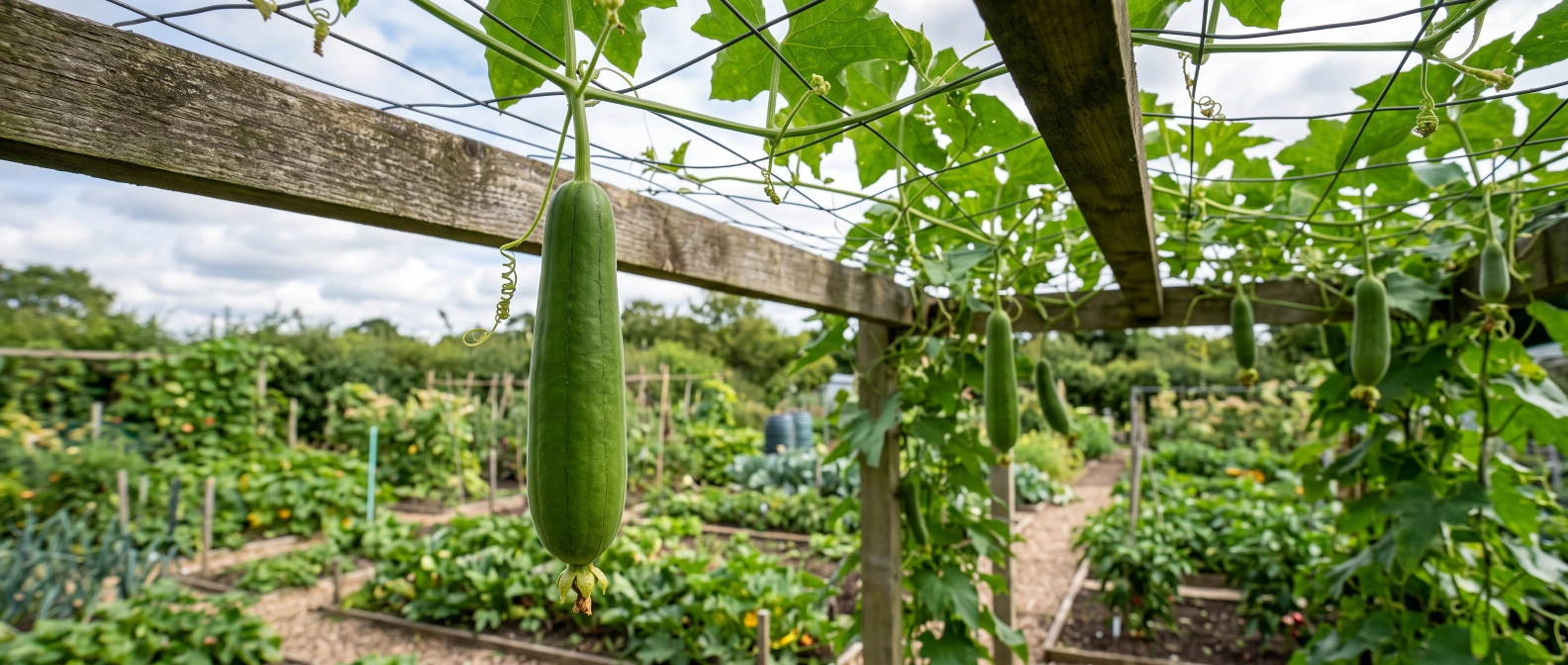
The fibrous sponge everyone knows luffa for is actually the dried, mature fruit -- which means letting a few fruits go well past edible size and dry naturally on the vine does double duty, giving you both a sponge and a full batch of seed.
New to terms like isolation distance or outcrossing? See the Seed-Saving Glossary.
Seed-Saving Difficulty
●
Moderate Difficulty
Moderate to high crossing risk within species.
How It's Pollinated
Insect-pollinated (monoecious -- separate male/female flowers)
(Moderate to high crossing risk within species)
Scientific name: Luffa aegyptiaca / acutangula
Domestic Crops It Can Cross With
- Other luffa varieties of the same species flowering at the same time
- Smooth luffa (L. aegyptiaca) and ridged/angled luffa (L. acutangula) are different species and cross with each other only rarely
Wild Relatives & Feral Species
- No significant wild relatives in most home garden regions
Separation Distances Required
Minimum: 300m between varieties
Recommended: 500m for reliable purity
Strict: Hand-pollinate for guaranteed purity in small gardens
Seed-Saving Strategies
- Leave fruit on the vine well past the edible stage until the skin turns brown, dry and papery
- The fibrous interior becomes the familiar "loofah" sponge as it dries
- Crack open the dried fruit and shake out the seeds
- Store dry -- viable 3-5 years