
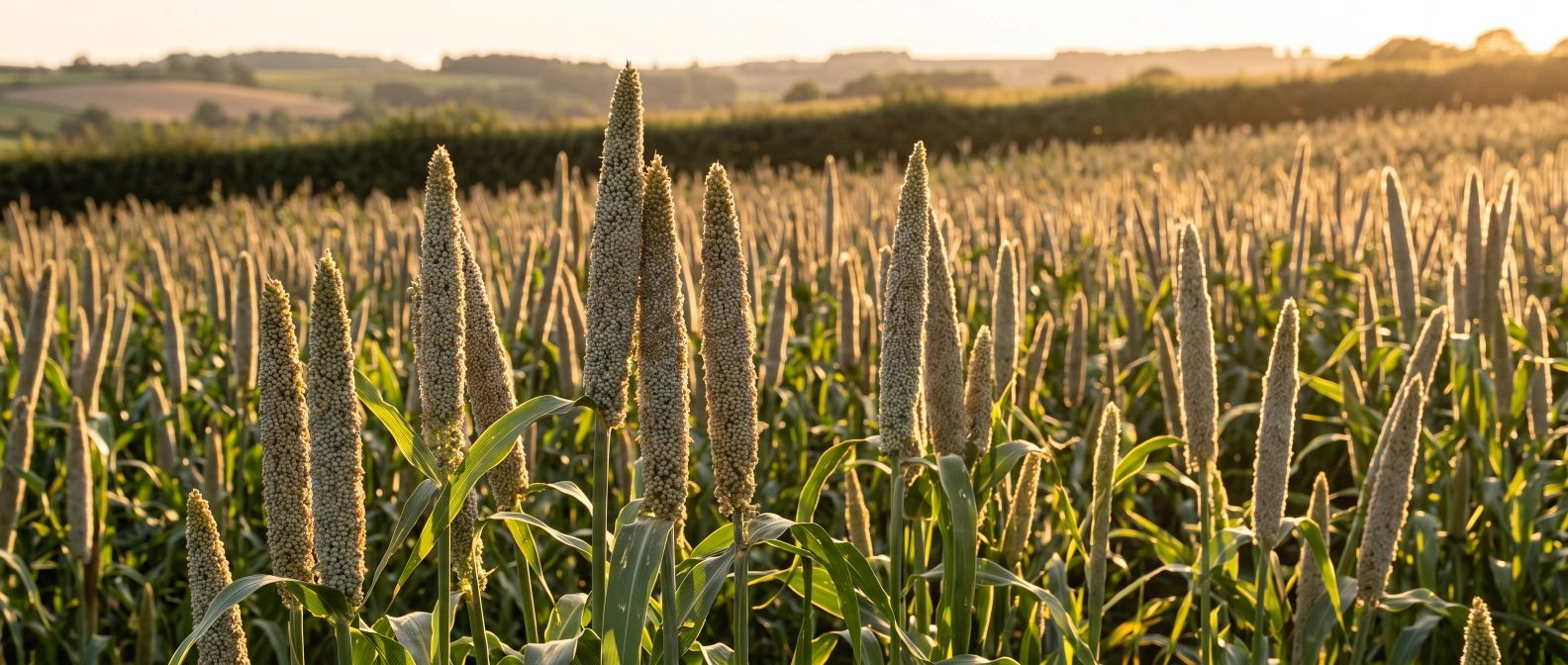
Unlike most small grains on this site, pearl millet is wind-pollinated and its flowering structure -- female flowers receptive before the male pollen on the same head sheds -- actively encourages cross-pollination between plants, making isolation more important here than for oats, wheat or barley.
New to terms like isolation distance or outcrossing? See the Seed-Saving Glossary.
Seed-Saving Difficulty
●
Moderate Difficulty
Moderate to high crossing risk.
How It's Pollinated
Wind-pollinated -- and protogynous (female flowers open before male on the same head, favouring cross-pollination)
(Moderate to high crossing risk)
Scientific name: Pennisetum glaucum
Domestic Crops It Can Cross With
- Any other pearl millet variety flowering at the same time
Wild Relatives & Feral Species
- Wild and weedy pearl millet relatives (shibra) exist in parts of Africa and can cross where present -- not a practical concern outside that range
Separation Distances Required
Minimum: 200m between varieties
Recommended: 400m for reliable purity
Strict: Bag flower heads and hand-pollinate for guaranteed purity
Seed-Saving Strategies
- Grow a block of plants rather than a single row for good pollination
- Allow heads to fully mature and dry, turning from green to tan
- Harvest before birds strip the heads -- netting may be needed
- Thresh and store dry -- viable 2-3 years