
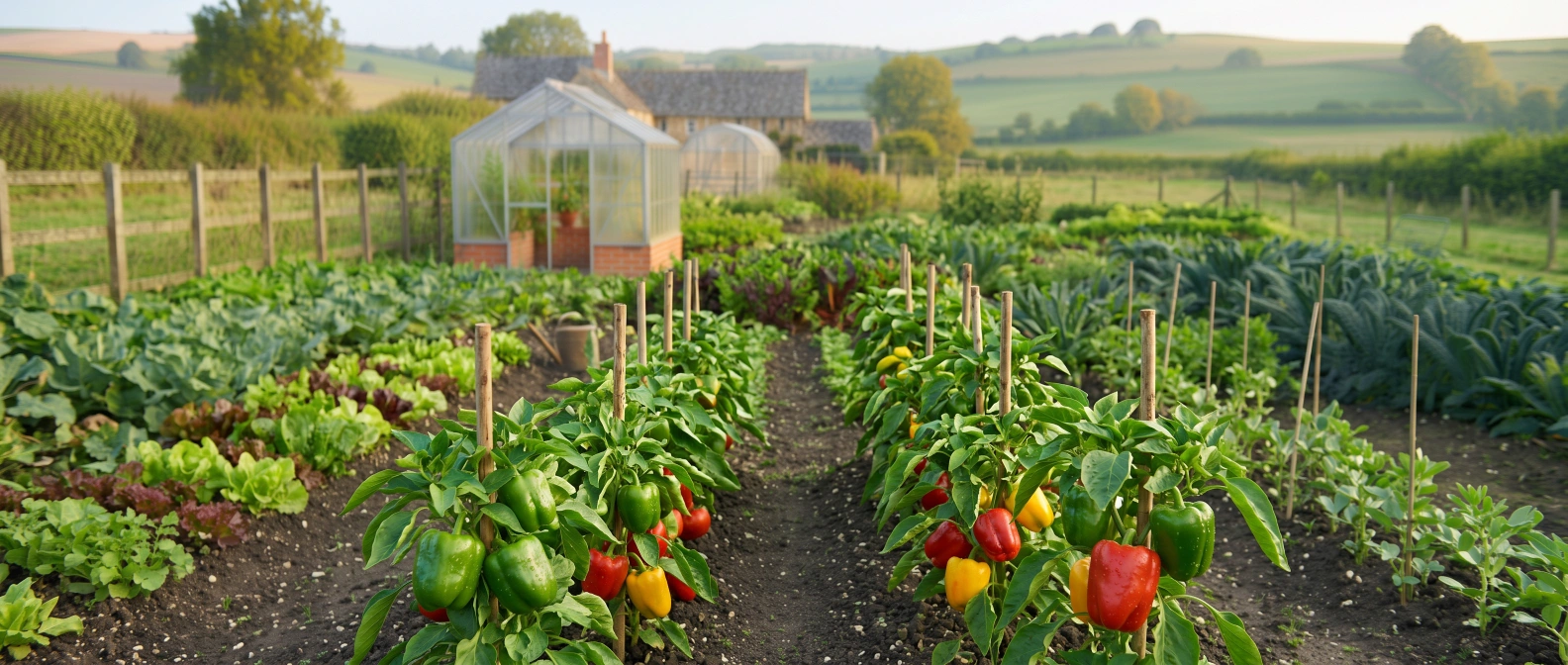
Sweet peppers and most chillies you'd find at a garden centre are the same species, Capsicum annuum, and will cross with each other -- but the fieriest habanero-type chillies usually belong to a different species entirely, which changes the isolation maths considerably.
New to terms like isolation distance or outcrossing? See the Seed-Saving Glossary.
Pepper Species Covered by This Guide
Crossing risk depends on species, not heat level -- a mild bell pepper and a hot jalapeño are the same species and will cross, while a habanero usually won't cross with either:
If you're unsure which species a variety belongs to, treat it as a full isolation risk with anything else you're growing until you've confirmed otherwise -- it costs nothing and avoids an unpleasant surprise next season.
Seed-Saving Difficulty
How It's Pollinated
Mostly self-pollinating, with some insect-carried outcrossing
(Low to moderate crossing risk)
Scientific name: Capsicum annuum (mostly)
Domestic Crops It Can Cross With
- Other sweet and hot pepper varieties within Capsicum annuum -- this includes bell peppers, jalapeño, cayenne, and most common chillies
- Does not cross with habanero, Scotch bonnet or most superhots -- these are usually Capsicum chinense, a different species
Wild Relatives & Feral Species
- No significant wild relatives in most home garden regions
Separation Distances Required
Minimum: 10-20m between varieties
Recommended: 50m for extra security
Strict: Bag flower clusters and hand-pollinate for guaranteed purity
Seed-Saving Strategies
- Let fruit fully ripen and change to its final colour -- flavour and seed maturity both improve
- Extract seeds, rinse briefly, and dry on a plate (not paper, which sticks)
- Wear gloves when handling hot varieties -- capsaicin transfers easily to eyes and skin
- Store dry -- viable 3-4 years