
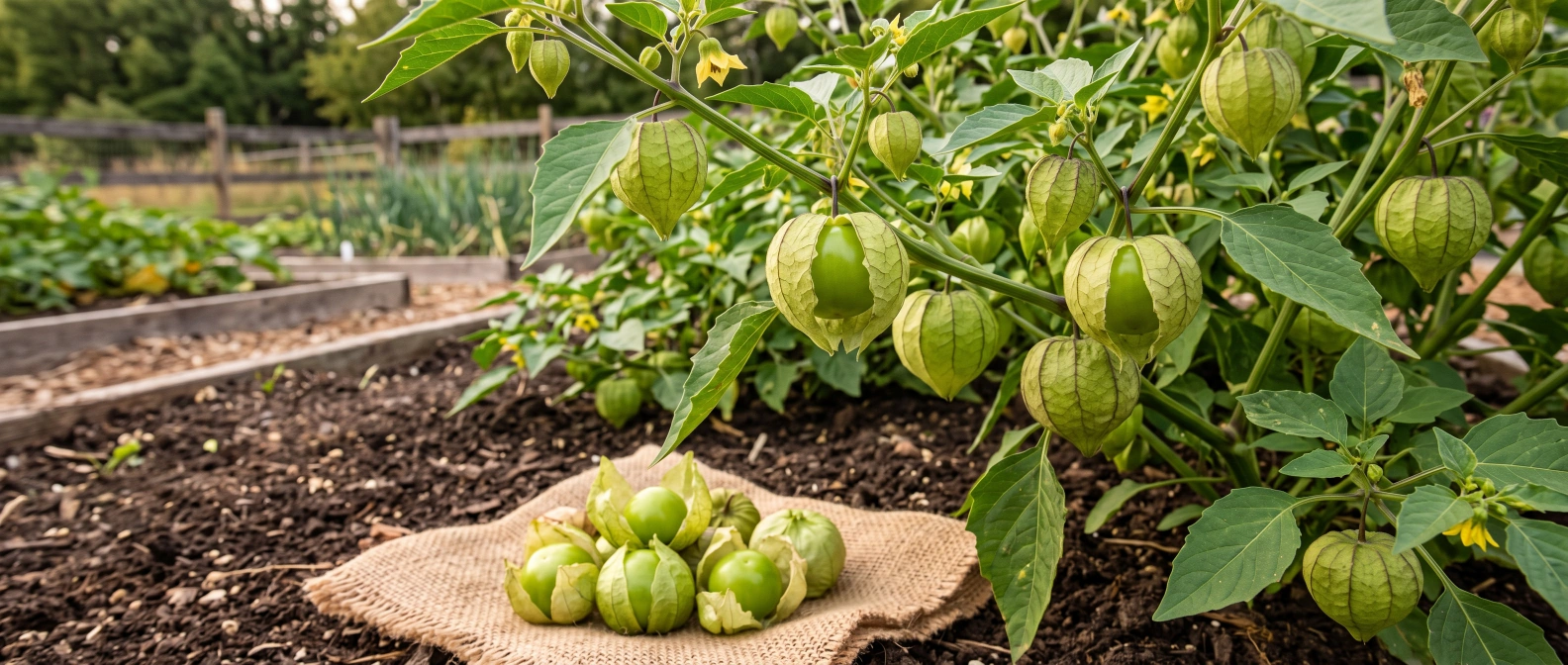
Tomatillo and ground cherry are close relatives -- both Physalis, both grown for a fruit wrapped in a papery husk -- but they're different species and won't reliably cross with each other. Tomatillo has an unusual quirk of its own: unlike almost everything else on this site, it's self-incompatible, so a single plant won't set fruit at all without a second one nearby to cross-pollinate with.
New to terms like isolation distance or outcrossing? See the Seed-Saving Glossary.
Crops Covered by This Guide
Both are Physalis, husk-fruited relatives of tomato, but different species:
Tomatillo and ground cherry are different species and do not reliably cross with each other -- but different varieties within each species will cross with others of the same species.
Seed-Saving Difficulty
How It's Pollinated
Mostly self-pollinating -- except tomatillo, which is self-incompatible and needs a second plant
(Low crossing risk between species, but tomatillo needs multiple plants to fruit at all)
Domestic Crops It Can Cross With
- Other tomatillo varieties cross with each other -- and since tomatillo is self-incompatible, you need at least two plants just to get fruit at all
- Other ground cherry varieties cross with each other
- Tomatillo and ground cherry generally do not cross with each other despite sharing a genus
Wild Relatives & Feral Species
- Wild ground cherry (various Physalis species) grows as a weed in many regions and can cross with cultivated ground cherry if present nearby
Separation Distances Required
Minimum: 10-20m for ground cherry between varieties
Recommended: 50m for tomatillo, and always grow at least 2 plants
Strict: Bag flower clusters and hand-pollinate for guaranteed purity
Seed-Saving Strategies
- Allow fruit to fully ripen until it drops naturally from the papery husk
- The husk turns tan and papery, and fruit often splits it as it swells
- Mash the pulp in water, let seeds settle, then rinse and dry
- Store dry -- viable 3-4 years
- Remember: tomatillo needs a second plant nearby to set fruit at all, unlike most self-pollinating crops on this site