
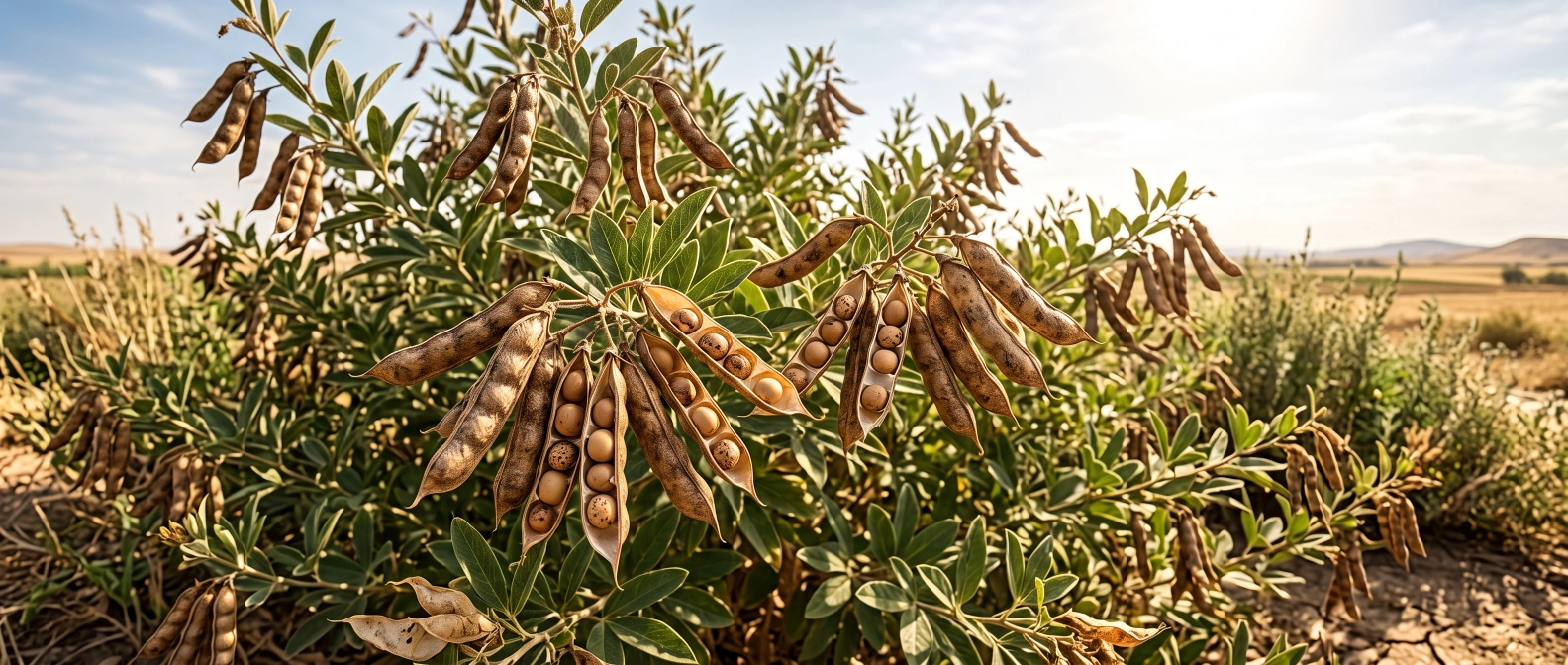
Pigeon pea looks like a typical self-pollinating legume but isn't quite as reliable as beans or peas in that regard -- its flowers are visited by insects often enough that meaningful crossing between varieties is a real possibility, not just a theoretical one.
New to terms like isolation distance or outcrossing? See the Seed-Saving Glossary.
Seed-Saving Difficulty
●
Moderate Difficulty
Moderate crossing risk.
How It's Pollinated
Mostly self-pollinating, but with a notably higher rate of insect-carried outcrossing than most legumes
(Moderate crossing risk)
Scientific name: Cajanus cajan
Domestic Crops It Can Cross With
- Other pigeon pea varieties flowering at the same time -- outcrossing rates can run higher here than in beans or peas
Wild Relatives & Feral Species
- Wild Cajanus relatives exist in its native range but are not a practical concern elsewhere
Separation Distances Required
Minimum: 50m between varieties
Recommended: 100m for reliable purity
Strict: Bag flower clusters for guaranteed purity
Seed-Saving Strategies
- Perennial shrub in frost-free climates, grown as an annual elsewhere
- Allow pods to mature and dry fully on the plant
- Harvest before pods split, then thresh
- Store dry -- viable 3-4 years