
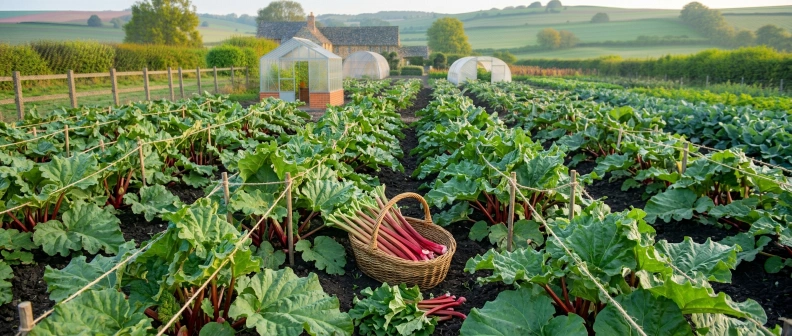
Rhubarb is the clearest case on this list for skipping seed altogether -- named varieties are propagated by dividing the crown, because seedlings are so variable that even a perfectly isolated plant won't reliably reproduce the parent's colour or flavour. See our Vegetative Propagation guide for the general technique, shared with potato, sweet potato, and several other crops.
New to terms like isolation distance or outcrossing? See the Seed-Saving Glossary.
Seed-Saving Difficulty
●
Difficult
High crossing risk; seedlings rarely true to type
How It's Pollinated
Insect and wind-pollinated -- and highly variable from seed
(High crossing risk; seedlings rarely true to type)
Scientific name: Rheum rhabarbarum
Domestic Crops It Can Cross With
- Other rhubarb varieties flowering nearby -- and even without crossing, seed-grown plants rarely match the parent
Wild Relatives & Feral Species
- No significant wild relatives in most home garden regions
Separation Distances Required
Minimum: Not practical to isolate reliably
Recommended: N/A
Strict: N/A
Seed-Saving Strategies
- This crop is almost always propagated by dividing the crown, not by seed -- lift and split an established plant every 4-5 years, replanting healthy sections
- Named varieties (colour, stalk thickness, flavour) will not come true from seed even in isolation
- Only save seed if you're happy with unpredictable results or are deliberately breeding new variants