
Rice, like wheat, oats and barley, is self-pollinating -- but unlike those grains, its seed doesn't store as long, so it's worth planning to grow out and refresh your saved rice seed more often than other grains.
New to terms like isolation distance or outcrossing? See the Seed-Saving Glossary.
Seed-Saving Difficulty
How It's Pollinated
Self-pollinating
(Very low crossing risk)
Scientific name: Oryza sativa
Domestic Crops It Can Cross With
- Minimal crossing between rice varieties -- flowers are self-fertile and rarely cross even grown side by side
Wild Relatives & Feral Species
- Wild rice relatives (Oryza rufipogon and others) exist in parts of Asia and can cross where present -- not a practical concern in most home garden regions
Separation Distances Required
Minimum: 3-5m between varieties
Recommended: 10m for extra security
Strict: Not usually needed
Seed-Saving Strategies
- Allow panicles to fully mature and droop as grain fills
- Harvest when grain is hard and straw has turned golden
- Thresh to separate grain from the panicle
- Dry thoroughly and store -- viable 2-3 years, shorter than most grains so use or resow promptly
Why Rice Seed Doesn't Last as Long as Other Grains
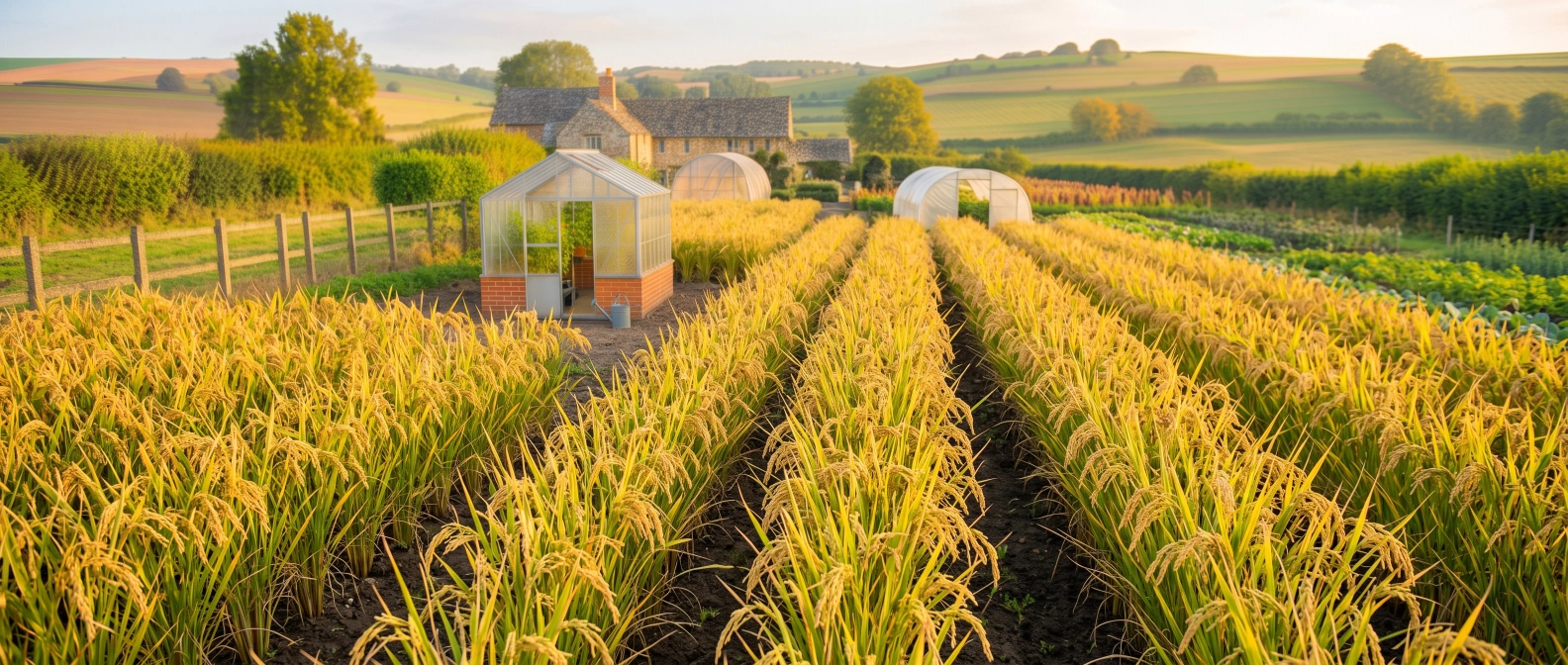
Wheat, oats and barley can all sit in storage for 5-10 years and still germinate well; rice typically drops off after 2-3. The difference comes down to the grain's structure and moisture sensitivity -- rice seed is simply more perishable in storage than most cereal grains. If you're building a long-term seed store, treat rice as a crop to actively cycle through and resow rather than one to bank for the long term.