
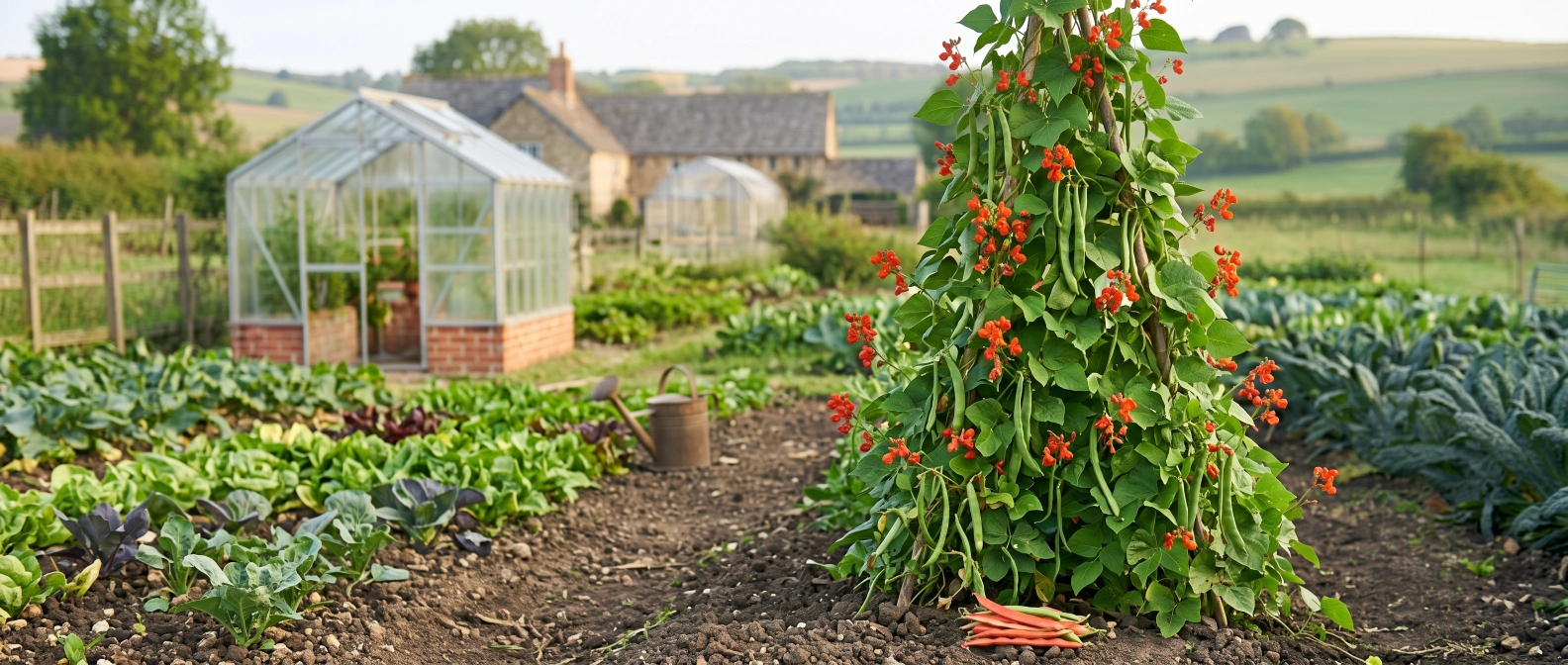
Runner beans (Phaseolus coccineus) are a distinct species requiring moderate isolation for pure seed. They're insect-pollinated and can cross with other runner bean varieties. Learn about crossing risks, isolation distances, and seed-saving techniques below.
New to terms like isolation distance or outcrossing? See the Seed-Saving Glossary.
Seed-Saving Difficulty
●
Moderate Difficulty
This crop needs some isolation or special handling. Insect-pollinated types require planning or separation distances.
How It's Pollinated
Insect-pollinated (high outcrossing)
(Moderate to high crossing risk)
Scientific name: Phaseolus coccineus
Domestic Crops It Can Cross With
- All runner bean varieties cross freely
- Keep separate from common beans and other Phaseolus species
Wild Relatives & Feral Species
Common wild relatives:
- Wild Phaseolus species (rarely present)
Separation Distances Required
Minimum: 10-20m between varieties
Recommended: 50m for increased purity
Strict: 200m+ for guaranteed isolation
Seed-Saving Strategies
- Insect-pollinated - requires isolation distance
- Grow only one variety for seed per year
- Allow pods to mature fully on plant
- Harvest when pods are dry and brown