
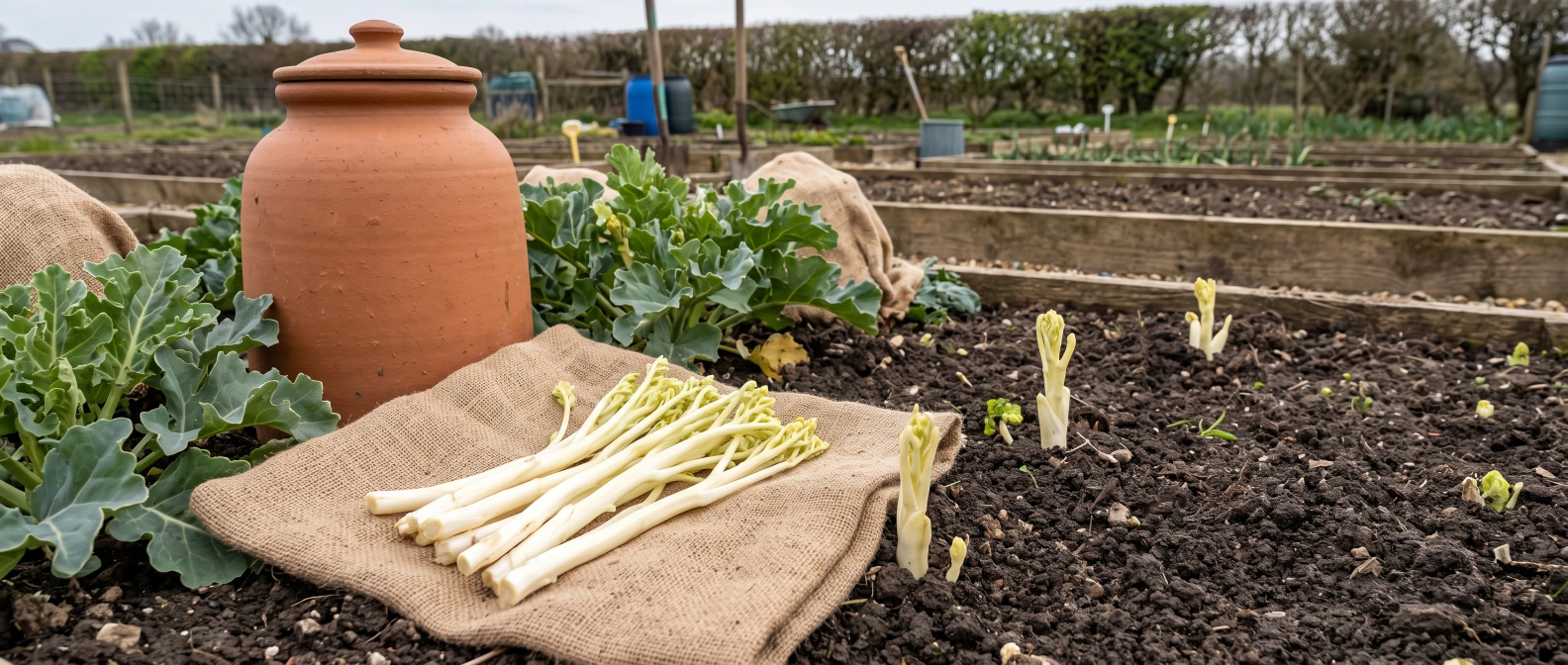
Sea kale shares the Brassicaceae family with cabbage and kale but belongs to a completely different genus, so it won't cross with them -- though most growers propagate it from root cuttings rather than seed anyway, since that's the more reliable way to keep a named variety true. See our Vegetative Propagation guide for the general technique.
New to terms like isolation distance or outcrossing? See the Seed-Saving Glossary.
Seed-Saving Difficulty
●
Moderate Difficulty
Moderate crossing risk.
How It's Pollinated
Insect-pollinated -- a different genus from Brassica, so it does not cross with cabbage, kale or other true brassicas
(Moderate crossing risk)
Scientific name: Crambe maritima
Domestic Crops It Can Cross With
- Other sea kale plants, if more than one distinct variety is grown
Wild Relatives & Feral Species
- Wild sea kale grows on shingle beaches around the UK and parts of Europe and will cross if present nearby
Separation Distances Required
Minimum: 200m between varieties or from wild populations
Recommended: 400m for reliable purity
Strict: Bag flower heads for guaranteed purity
Seed-Saving Strategies
- Perennial -- most gardeners propagate named varieties by root cuttings ("thongs") rather than seed for reliably true plants
- If growing for seed: allow the corky seed pods to dry fully on the plant
- Collect pods whole -- each contains a single seed inside a hard casing
- Store dry -- viable 2-3 years