
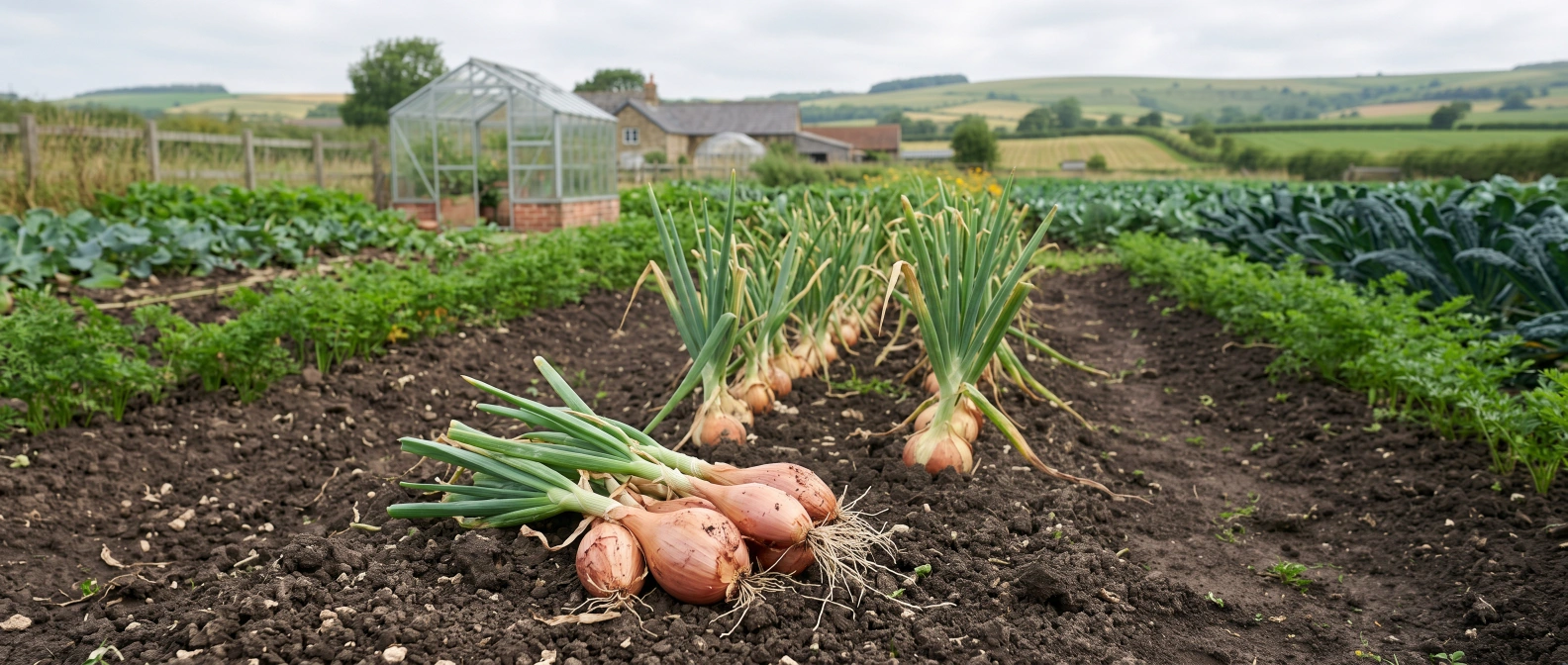
Shallot is usually propagated by saving and replanting bulb offsets rather than true seed -- which sidesteps the crossing-risk question entirely, since division simply clones the parent plant. If you do let it flower, remember it's the same species as onion and will cross with it. See our Vegetative Propagation guide for the general technique, shared with potato, sweet potato, and several other crops.
New to terms like isolation distance or outcrossing? See the Seed-Saving Glossary.
Seed-Saving Difficulty
How It's Pollinated
Insect-pollinated (when grown from seed -- most shallots are propagated by bulb division)
(Moderate crossing risk if flowering)
Scientific name: Allium cepa var. aggregatum
Domestic Crops It Can Cross With
- Onion -- same species (Allium cepa) and will cross freely
- Other shallot varieties
Wild Relatives & Feral Species
- No significant wild relatives in most home garden regions
Separation Distances Required
Minimum: 200m between varieties
Recommended: 400m for reliable purity
Strict: Bag flower heads for guaranteed purity
Seed-Saving Strategies
- Most shallots are grown from saved bulbs (offsets), not seed -- simply keep back your best bulbs at harvest to replant
- If growing true seed: biennial, overwinter bulbs, allow flower heads to dry and seed to turn black
- Store spare bulbs somewhere cool, dry and well-ventilated