
True winter squash -- Hubbard, Kabocha, Buttercup, Turban -- belong to Cucurbita maxima, a different species from zucchini (C. pepo) and butternut (C. moschata). That means they won't cross with either of those, but they will cross freely with each other and with most large pumpkins, which are also usually C. maxima. Learn which varieties share a species, crossing risk, isolation distances, and hand-pollination technique below.
New to terms like isolation distance or outcrossing? See the Seed-Saving Glossary.
Varieties Covered by This Guide
All of these are typically Cucurbita maxima and will cross with each other:
Pumpkin variety labels are inconsistent -- check the species before assuming two pumpkins will or won't cross. Butternut and other moschata types are covered on a separate page, and zucchini-type squash on the summer squash page -- neither crosses with true C. maxima.
Seed-Saving Difficulty
How It's Pollinated
Insect-pollinated (bees -- separate male/female flowers)
(High crossing risk within species)
Scientific name: Cucurbita maxima
Domestic Crops It Can Cross With
- Any other C. maxima variety flowering at the same time (see list above)
- Most large decorative and giant show pumpkins
- Does not cross with C. pepo (zucchini, acorn, spaghetti squash) or C. moschata (butternut)
Wild Relatives & Feral Species
Common wild relatives:
- No significant wild C. maxima populations in most home garden regions
- Volunteer seedlings from compost are the main practical risk -- unpredictable crosses from mixed kitchen scraps
Pull up volunteer squash seedlings from compost before they flower.
Separation Distances Required
Minimum: 300m between flowering C. maxima varieties
Recommended: 500m for reliable purity
Small gardens: Hand-pollination is far more practical than isolation distance
Seed-Saving Strategies
- Hand-pollinate: tape male and female flowers shut the evening before they open, then transfer pollen yourself the next morning
- Leave fruit on the vine as long as possible -- flavour and seed quality both improve with full maturity
- Cure whole fruit 2-4 weeks in a warm, dry spot before extracting seed
- Scoop out seeds, rinse off pulp, and dry fully before storing -- viable 4-6 years
Why Winter Squash Rewards Patience
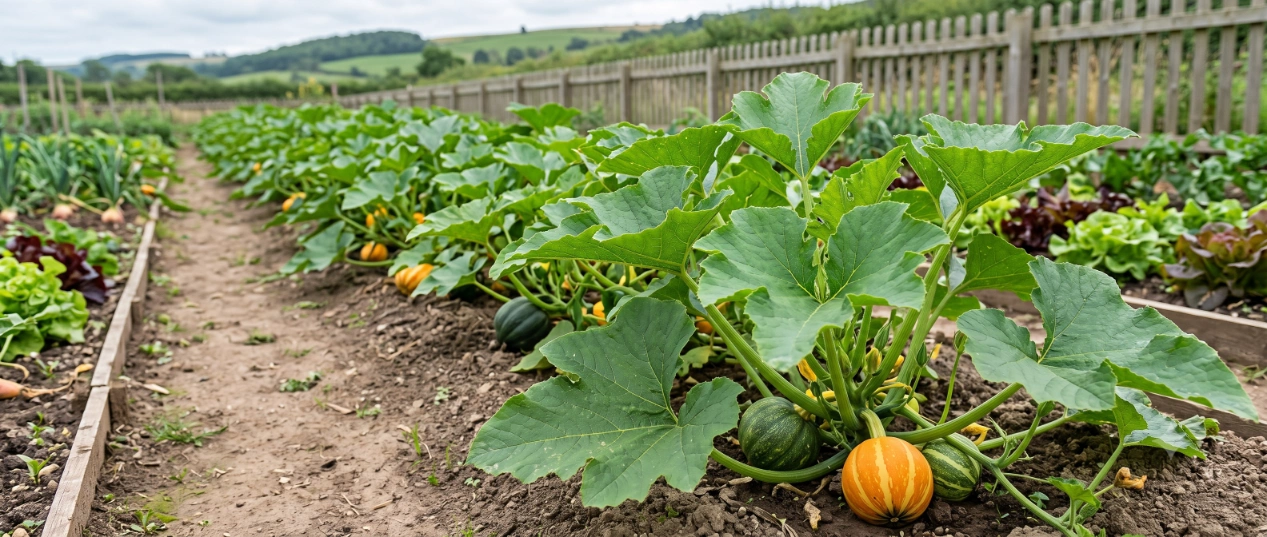
C. maxima is a cleaner species boundary than summer squash's C. pepo group -- it won't cross with your zucchini or your butternut, only with other true winter squash and large pumpkins. The main challenge is practical: these are sprawling vines that flower over a long season, making distance isolation awkward in an average garden. Hand-pollination solves that in a few minutes per flower, and because the fruit stores for months once cured, you can let it fully mature on the vine without any rush to harvest -- which is exactly what produces the best, most viable seed.