
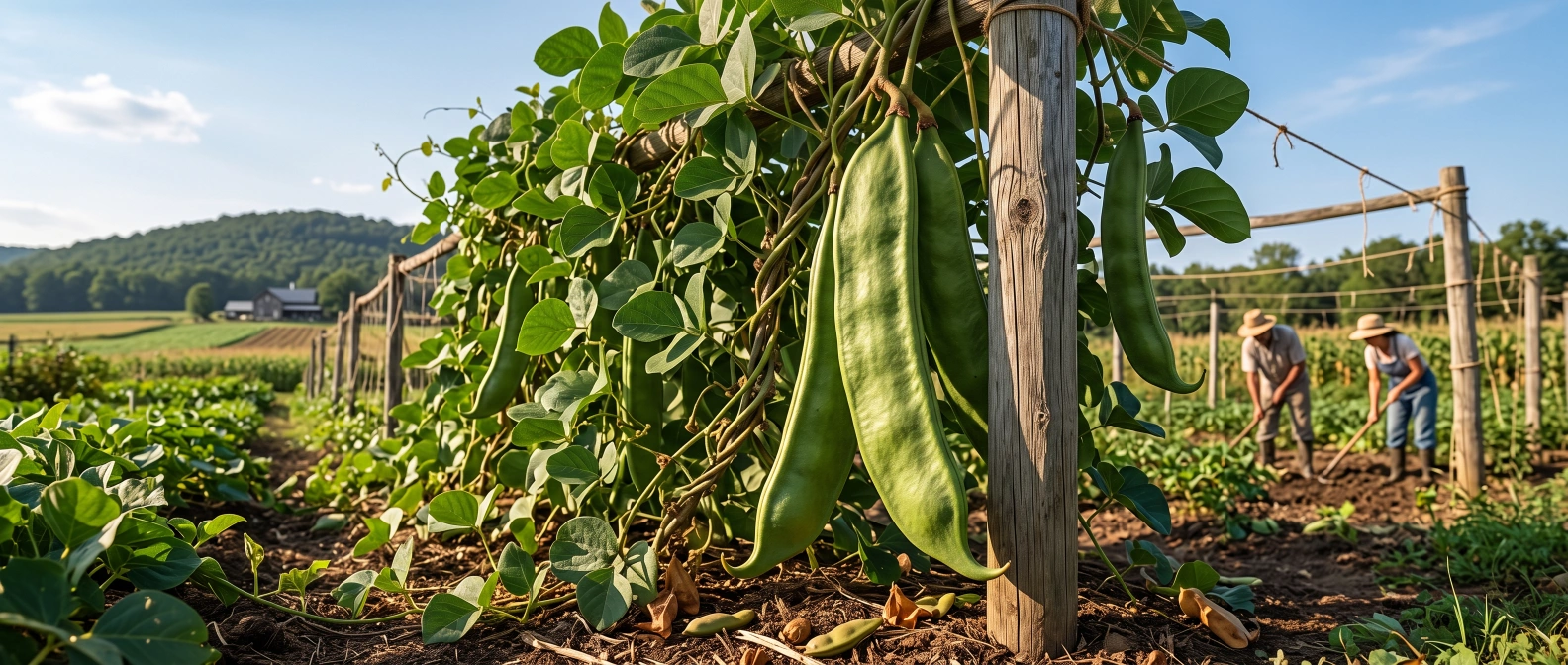
Sword bean produces some of the largest pods and seeds of any legume on this site, and its big, conspicuous flowers draw more pollinator attention than most self-pollinating beans -- worth a little more isolation caution than common bean as a result.
New to terms like isolation distance or outcrossing? See the Seed-Saving Glossary.
Seed-Saving Difficulty
●
Moderate Difficulty
Low to moderate crossing risk.
How It's Pollinated
Mostly self-pollinating, with some insect visitation to its large, showy flowers
(Low to moderate crossing risk)
Scientific name: Canavalia gladiata
Domestic Crops It Can Cross With
- Other sword bean varieties flowering at the same time
Wild Relatives & Feral Species
- Wild Canavalia relatives exist in some tropical regions but are not a practical concern in most home gardens
Separation Distances Required
Minimum: 20-30m between varieties
Recommended: 50m for extra security
Strict: Bag flower clusters for guaranteed purity
Seed-Saving Strategies
- Allow the large pods to fully mature and dry on the vine
- Shell once pods are dry and brittle -- seeds are unusually large
- Dry seed thoroughly before storing
- Store dry -- viable 3-4 years