
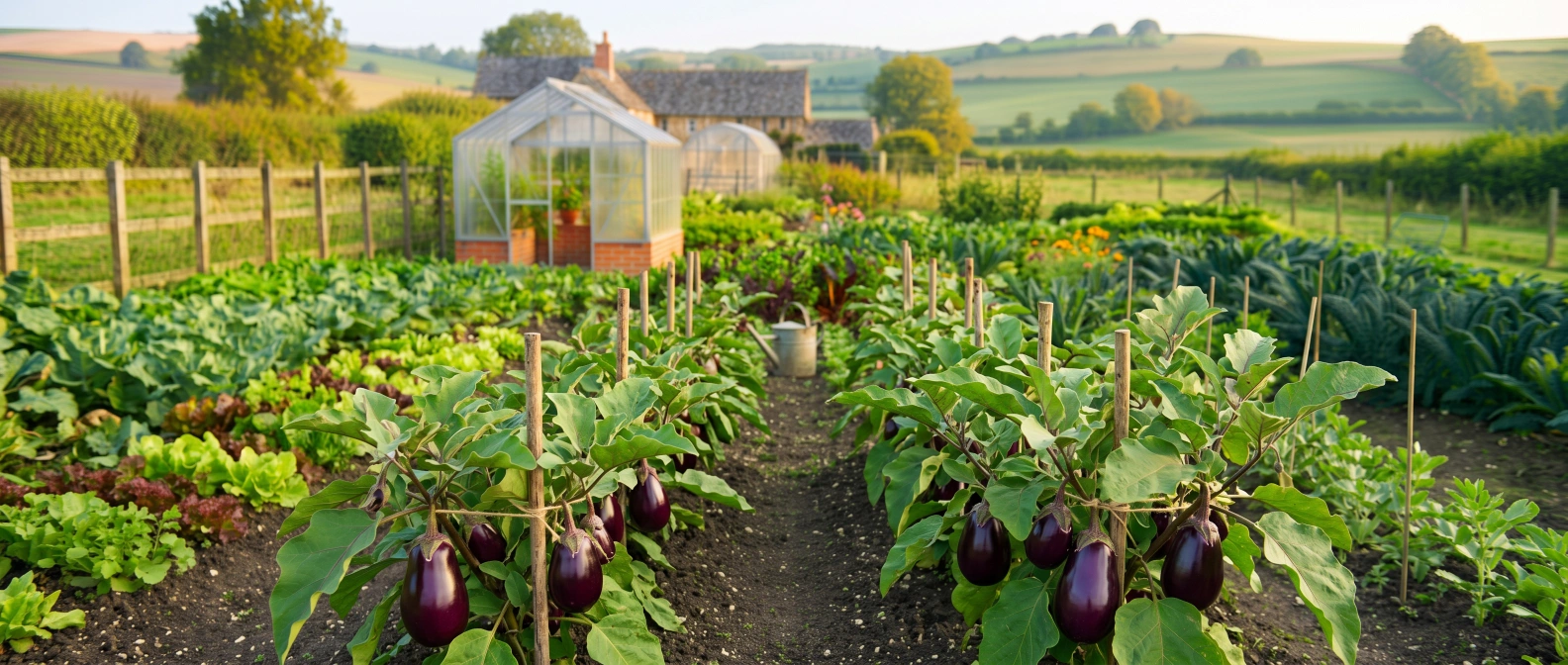
Aubergine shares the nightshade family with tomato and potato but is a different species from both and doesn't cross with either. Its real story is heat: the crop database is blunt that it needs a greenhouse or polytunnel in almost any temperate zone, making it the most heat-demanding crop covered in this category so far -- genuinely more heat-hungry than tomato or sweet pepper, and simply not viable at all in this site's coldest zones regardless of protection.
Water need
Consistent moisture supports steady fruit development, especially important given how much heat this crop is already coping with.
Calories at a glance
250 kcal/kg -- ahead of tomato and cucumber, still well below any calorie staple (scale is log-based across all 55 crops in the calculator).
Temperature Range by Month
Month on the bottom, temperature up the side. The pale green background is what the plant can survive at all -- fatal above or below it, labelled directly on the chart where that applies to your zone. The coral band is its ideal range, and only fades in during the months this zone would actually have the crop in the ground -- reusing the exact same sowing/harvesting data as the calendar further down the page. The blue line is real monthly climate data (not a modelled estimate) for a representative rural/agricultural location in this zone -- a small farming town or agricultural research station rather than a major city, to avoid the warmer bias city weather stations have. For the actual verdict on how well this crop does in your zone, see the badge at the top of the page -- that's based on the site's own researched yield figures, not this chart.
Quick Start: Sowing to Harvest
- Start under cover, early. Sow seed under cover in February or March -- aubergine is a genuine long-season crop and needs every extra week of warmth an early start provides.
- Plan for protection in most temperate zones. Unless you're in a genuinely warm zone, plant into a greenhouse or polytunnel rather than outdoors -- aubergine needs more sustained heat than tomato or sweet pepper to crop reliably.
- Plant out only once it's genuinely warm. Aubergine has no frost tolerance and even non-frost cold checks it badly -- wait until night temperatures are reliably above about 15-16°C.
- Keep watering even. Consistent moisture supports steady fruit development, especially important given how much heat this crop is already coping with.
- Harvest while the skin is still glossy. Pick fruit while the skin is firm and glossy -- a dulling skin means the fruit is over-mature and turning bitter and seedy.
Sowing & Harvesting Calendar
Pick your zone under "Temperature Range by Month" above and this updates too. Notice Boreal and Alpine show no window at all -- this is the most heat-demanding crop in this category, and neither zone provides enough sustained warmth even under cover.
Calories & Yield
Aubergine is a modest calorie crop at about 250 kcal per kg. Subtropical zones give the best yields here, and Boreal and Alpine aren't viable at all.
| Climate Zone | Yield per plant | Calories per plant | Viability |
|---|---|---|---|
| Tropical / Humid | 1.5 kg | 375 kcal | Viable |
| Subtropical | 2.0 kg | 500 kcal | Viable -- best yield |
| Mediterranean | 1.5 kg | 375 kcal | Viable |
| Temperate Maritime | 0.8 kg | 120 kcal | Viable -- challenging, protection needed |
| Temperate Continental | 1.2 kg | 300 kcal | Viable |
| Cool / Boreal | -- | -- | Not viable |
| Arid / Semi-Arid | 1.2 kg | 300 kcal | Viable |
| Highland / Alpine | -- | -- | Not viable |
Figures per plant, from the site's own crop database. Maritime's yield already reflects the 60% penalty the calculator applies where the zone is rated "challenging" rather than fully viable.
Varieties Worth Knowing
Aubergine varieties differ mainly in fruit shape, skin colour and how mild or bitter the flesh is. All the varieties below are open-pollinated (OP), meaning seed saved from them breeds true and is worth keeping under this site's seed-saving approach; none are F1 hybrids.
Seed Saving -- Quick Guide
Aubergine is mostly self-pollinating like tomato, but its more open flowers attract more insect visits, so it crosses somewhat more readily between varieties -- still low-risk compared to most insect-pollinated crops on this site.
SERVINGS, NOT DAILY CALORIES This works out plate-sized servings of aubergine from your seed during its fresh harvest window only, not your group's full daily calorie needs. For that, use the main calculator.
Estimated for your selected zone above, using this site's own germination, loss and yield figures for aubergine -- a helping is roughly what you'd put on a plate as part of a meal with other veg. Treat it as a planning estimate, not a promise.
Storage & Preservation
Aubergine isn't described as a storage crop in the site's own crop data -- it's grown to be picked while the skin is still glossy and eaten fresh, since quality drops quickly once fruit passes its peak.
For banking a surplus, aubergine freezes reasonably well after cooking or blanching, and can be preserved in oil once roasted or grilled -- practical ways to use up a glut rather than long-term staple storage.
Growing Aubergine Without Bought Inputs
Red spider mite is the main pest to watch for under cover, where warm, dry conditions favour it -- fine webbing and stippled, discoloured leaves are the usual first signs.
Regular misting or damping down in a greenhouse or polytunnel raises humidity enough to discourage red spider mite without any bought treatment.
Aphids also affect aubergine similarly to pepper and chilli -- encouraging natural predators like ladybirds works just as well here.
Frequently Asked Questions
Does aubergine cross-pollinate with tomato or potato?
No -- despite sharing the nightshade family (Solanaceae) with tomato and potato, aubergine (Solanum melongena) is a different species from both, and different species don't cross under normal garden conditions.
Why does the crop database say aubergine needs a greenhouse in any temperate zone?
Because aubergine's comfortable growing temperature runs several degrees hotter than tomato's, and it stops growing well below about 15-16°C -- a threshold most temperate outdoor summers dip below often enough to genuinely check the crop, making protected growing the reliable default rather than an optional extra.
How cold and hot can aubergine survive?
Roughly 2°C to 40°C, with real heat tolerance up to 40-45°C given enough humidity -- genuinely more heat-hungry than tomato or sweet pepper. Frost is fatal, and even non-frost cold below about 10°C can cause lasting damage the plant may never recover from.
Why is aubergine not viable in Boreal or Alpine zones on this site?
Neither zone offers the sustained heat aubergine needs, even under cover -- this is the most heat-demanding crop in this category, and the coldest zones this site models simply can't provide it regardless of protection.
Is aubergine a good calorie crop for self-sufficiency?
Modest -- around 250 kcal per kg, ahead of tomato and cucumber but still well below any calorie staple. Its value is culinary variety and a genuinely long, productive harvest window in a warm enough zone.