
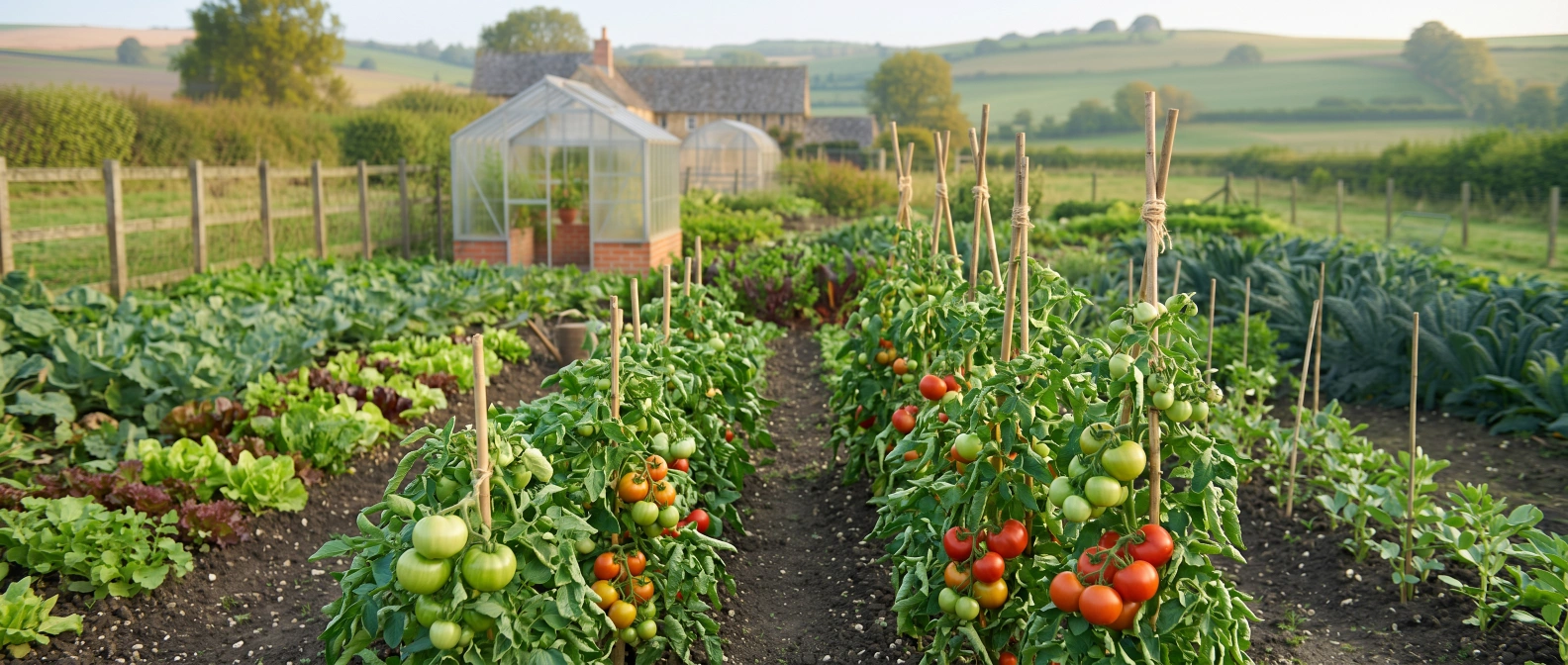
Tomato is one of the lowest-risk crops on this whole site for seed saving -- its flowers are almost entirely self-pollinating, and despite sharing the nightshade family with potato and aubergine, it doesn't cross with either. Its real question isn't genetics but infrastructure: this page covers both outdoor and greenhouse tomato together, since the crop database's own numbers show a genuine gap between them opening up fast the further a zone sits from tomato's comfortable warm-season range.
Water need
Consistent moisture prevents blossom end rot and fruit splitting -- irregular watering is the most common cause of both.
Calories at a glance
180 kcal/kg -- one of the lowest-calorie crops on this entire site (scale is log-based across all 55 crops in the calculator).
Temperature Range by Month
Month on the bottom, temperature up the side. The pale green background is what the plant can survive at all -- fatal above or below it, labelled directly on the chart where that applies to your zone. The coral band is its ideal range, and only fades in during the months this zone would actually have the crop in the ground -- reusing the exact same sowing/harvesting data as the calendar further down the page. The blue line is real monthly climate data (not a modelled estimate) for a representative rural/agricultural location in this zone -- a small farming town or agricultural research station rather than a major city, to avoid the warmer bias city weather stations have. For the actual verdict on how well this crop does in your zone, see the badge at the top of the page -- that's based on the site's own researched yield figures, not this chart. This chart shows the greenhouse variant's temperature comfort zone -- outdoor tomato is noticeably less forgiving outside it.
Quick Start: Sowing to Harvest
- Start under cover. Sow seed under cover in late winter or early spring, earlier for greenhouse cordon varieties than for outdoor bush types -- tomato needs real warmth to germinate and establish.
- Choose the right type for your setup. Bush (determinate) varieties are the more reliable choice outdoors; cordon (indeterminate) varieties give higher yields but need staking, side-shooting and the protection of a greenhouse or polytunnel in cooler zones.
- Plant out once all frost risk has passed. Tomato has essentially no frost tolerance at any stage -- wait until night temperatures are reliably above about 10°C before planting out.
- Keep watering even. Consistent moisture prevents blossom end rot and fruit splitting -- irregular watering, especially a dry spell followed by heavy rain, is the most common cause of both.
- Harvest as fruit ripens. Pick tomatoes as they ripen through summer and early autumn -- a heavy glut is common, and freezing, drying or turning a surplus into passata is a practical way to bank it rather than let it go to waste.
Sowing & Harvesting Calendar
Pick your zone under "Temperature Range by Month" above and this updates too. This calendar reflects the greenhouse/protected variant's wider window -- outdoor-only growers in cooler zones should treat the early and late edges of this window with real caution, and lean on the zone-fit badge above for the honest yield picture rather than the calendar alone.
Calories & Yield
Tomato is a low-calorie but genuinely high-yielding crop at about 180 kcal per kg. Subtropical and Mediterranean zones give the best yields here, and the gap between outdoor and greenhouse growing widens sharply in cooler zones.
| Climate Zone | Yield per plant (best method) | Calories per plant | Viability |
|---|---|---|---|
| Tropical / Humid | 4.0 kg | 720 kcal | Viable |
| Subtropical | 5.0 kg | 900 kcal | Viable -- best yield |
| Mediterranean | 5.0 kg | 900 kcal | Viable -- best yield |
| Temperate Maritime | 4.0 kg | 720 kcal | Viable |
| Temperate Continental | 4.5 kg | 810 kcal | Viable |
| Cool / Boreal | 1.2 kg | 216 kcal | Viable -- challenging, greenhouse only (60% yield) |
| Arid / Semi-Arid | 3.0 kg | 540 kcal | Viable |
| Highland / Alpine | 1.2 kg | 216 kcal | Viable -- challenging, greenhouse only (60% yield) |
Figures per plant, from the site's own crop database, taking whichever of outdoor or greenhouse yields higher in each zone. In Boreal and Alpine, only the greenhouse variant is viable at all, and even then only as "challenging."
Varieties Worth Knowing
Tomato varieties fill genuinely different niches -- fresh eating, sauce-making, or storage -- and vary hugely in flavour. All the varieties below are open-pollinated (OP), meaning seed saved from them breeds true and is worth keeping under this site's seed-saving approach; none are F1 hybrids.
Seed Saving -- Quick Guide
Tomato is mostly self-pollinating with very low crossing risk between varieties -- one of the easiest and most forgiving seeds to save on this site.
SERVINGS, NOT DAILY CALORIES This works out plate-sized servings of tomato from your seed during its fresh harvest window only, not your group's full daily calorie needs. For that, use the main calculator.
Estimated for your selected zone above, using this site's own germination, loss and yield figures for tomato -- a helping is roughly what you'd put on a plate as part of a meal with other veg. Treat it as a planning estimate, not a promise.
Storage & Preservation
Tomato isn't described as a storage crop in the site's own crop data -- it's grown to be picked as it ripens and eaten fresh, though a heavy glut is genuinely common with a productive plant.
For banking a surplus, tomato preserves well several ways: frozen whole for later cooking, dried (sun or low oven) for a concentrated, shelf-stable product, or cooked down into passata or sauce and canned or frozen -- all genuinely practical ways to carry a summer glut into winter.
Growing Tomatoes Without Bought Inputs
Blight (a fungal disease thriving in damp, humid conditions) is the main risk for outdoor tomato in wet zones, capable of devastating a crop within days once established.
Choosing a blight-resistant variety is the single most effective input-free defence where this is a real risk -- far more reliable than trying to manage humidity around outdoor plants.
Watering at the base, not overhead, and good airflow between plants both reduce the damp-leaf conditions blight and other fungal problems need to take hold.
Crop rotation alongside potato matters here too, since they share the same family and some of the same soil-borne disease pressure -- avoid growing tomato where potato grew the previous year.
Frequently Asked Questions
Does tomato cross-pollinate with potato or aubergine?
No -- potato (Solanum tuberosum) is actually the same genus as tomato (Solanum), but a different species, and different species don't cross under normal garden conditions. Aubergine (Solanum melongena) is also a different species again. None of them cross with tomato.
Why is outdoor yield so much lower than greenhouse yield in cooler zones?
Because tomato genuinely needs sustained warmth to set and ripen fruit well, and a greenhouse or polytunnel buys several extra degrees and blocks wind and rain-driven blight -- the crop database's own numbers show greenhouse tomato out-yielding outdoor by a wide margin in Boreal and Alpine zones specifically, where outdoor tomato barely performs at all.
How cold and hot can tomato survive?
Roughly 0°C to 35°C, though that survivable range hides a much narrower comfortable one -- growth stops below about 10°C, and blossom drop starts around 35°C well before the plant itself is actually damaged. Tomato is a genuinely warm-season crop with very little cold tolerance at any stage.
Why do wet zones need blight-resistant varieties specifically?
Because tomato blight is a fungal disease that thrives in damp, humid conditions and can devastate an outdoor crop within days once established -- choosing a resistant variety is the single most effective input-free defence available in a zone where that risk is real.
Is tomato a good calorie crop for self-sufficiency?
No -- at around 180 kcal per kg it's one of the lowest-calorie crops on this site. Its real value is vitamin C, flavour, and a genuinely high yield per plant that makes it worth growing anyway, plus real potential for preserving a surplus as passata or dried tomatoes.