
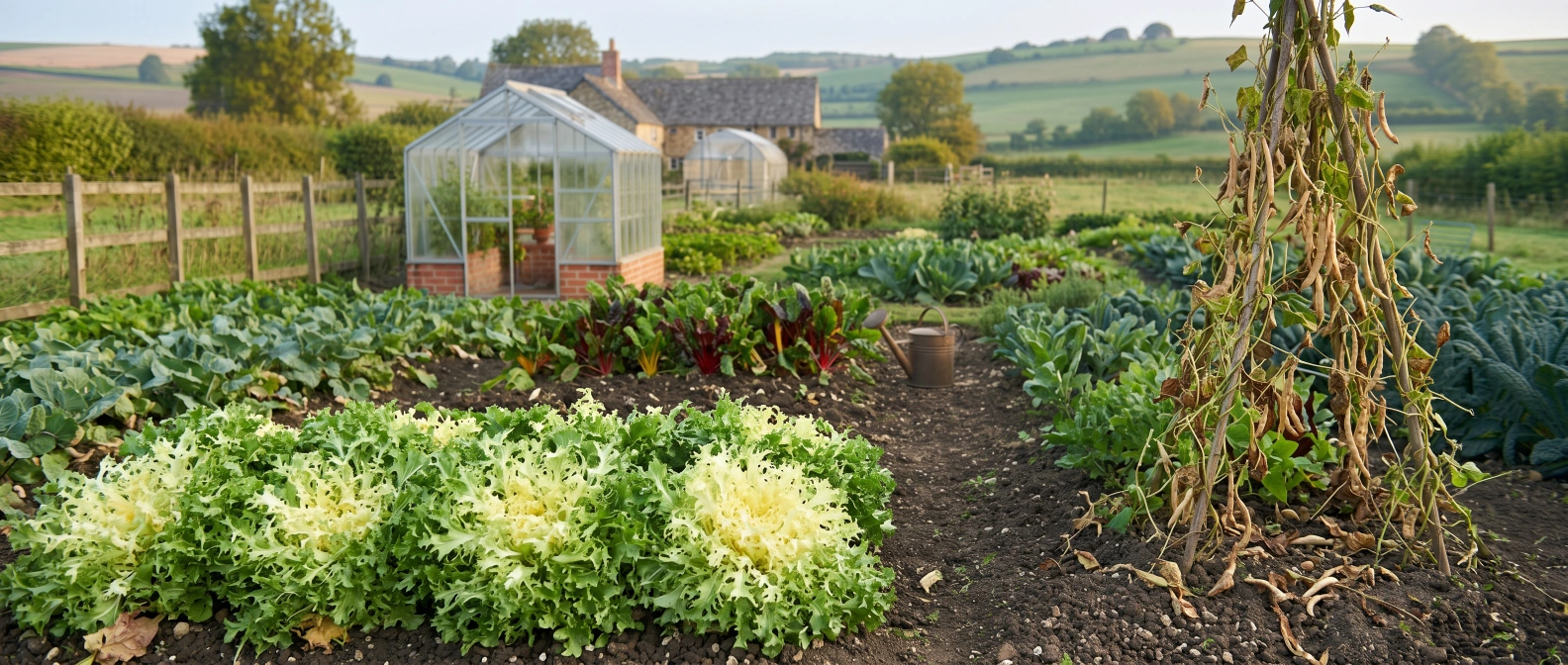
This site's crop database treats endive and chicory as one combined crop, but botanically they're two related Cichorium species with a genuinely lopsided relationship: endive can pollinate chicory, but chicory can't pollinate endive back. Both share the same real strength -- hardiness that fills a genuine hungry-gap window when little else in the garden is producing -- and the same natural bitterness, which is exactly why blanching matters for both.
Water need
Genuinely low-fuss once established -- reasonable watering through dry spells is enough, without lettuce's fussiness about bolting.
Calories at a glance
170 kcal/kg -- one of the lowest-calorie crops on this entire site (scale is log-based across all 55 crops in the calculator).
Temperature Range by Month
Month on the bottom, temperature up the side. The pale green background is what the plant can survive at all -- fatal above or below it, labelled directly on the chart where that applies to your zone. The coral band is its ideal range, and only fades in during the months this zone would actually have the crop in the ground -- reusing the exact same sowing/harvesting data as the calendar further down the page. The blue line is real monthly climate data (not a modelled estimate) for a representative rural/agricultural location in this zone -- a small farming town or agricultural research station rather than a major city, to avoid the warmer bias city weather stations have. For the actual verdict on how well this crop does in your zone, see the badge at the top of the page -- that's based on the site's own researched yield figures, not this chart.
Quick Start: Sowing to Harvest
- Sow direct in early summer. Sow direct for an autumn-winter harvest -- sowing earlier than this risks bolting in summer heat before the plant has bulked up.
- Thin to final spacing. Thin seedlings once they're large enough to handle, giving each plant enough room to form a full head.
- Blanch before harvest to reduce bitterness. A week or two before you plan to harvest, exclude light from the head (tying outer leaves over the centre, or covering with a pot) to soften the natural bitterness.
- Harvest through autumn and into winter. This is a genuinely hardy crop -- keep harvesting well into the colder months in most zones, exactly when little else in the garden is producing.
- Eat fresh. Endive and chicory don't store the way root crops do -- pick as needed and eat within a few days for the best texture.
Sowing & Harvesting Calendar
Pick your zone under "Temperature Range by Month" above and this updates too. Notice the harvest window sits later in the year than most crops on this site -- endive/chicory is deliberately sown for an autumn-winter harvest, filling the hungry gap most other crops here have already finished by.
Calories & Yield
Endive/chicory is a nutrition and hungry-gap crop, not a calorie one -- about 170 kcal per kg. Subtropical, Mediterranean, Maritime and Continental zones all give the same best yield here.
| Climate Zone | Yield per plant | Calories per plant | Viability |
|---|---|---|---|
| Tropical / Humid | 0.25 kg | 42.5 kcal | Viable |
| Subtropical | 0.30 kg | 51 kcal | Viable -- best yield |
| Mediterranean | 0.30 kg | 51 kcal | Viable -- best yield |
| Temperate Maritime | 0.30 kg | 51 kcal | Viable -- best yield |
| Temperate Continental | 0.30 kg | 51 kcal | Viable -- best yield |
| Cool / Boreal | 0.20 kg | 34 kcal | Viable |
| Arid / Semi-Arid | 0.10 kg | 10.2 kcal | Viable -- challenging (60% yield) |
| Highland / Alpine | 0.20 kg | 34 kcal | Viable |
Figures per plant sown, from the site's own crop database. Arid's yield already reflects the 60% penalty the calculator applies where a zone is rated "challenging" rather than fully viable. Endive/chicory is viable in every one of this site's eight zones.
Varieties Worth Knowing
Endive splits into two distinct leaf types -- finely curled and more bitter, or broad and milder. Both below are open-pollinated (OP), meaning seed saved from them breeds true and is worth keeping under this site's seed-saving approach; neither is an F1 hybrid.
Seed Saving -- Quick Guide
Endive is insect-pollinated with high outcrossing risk between varieties -- but it does not cross with chicory, a different species despite the family resemblance.
SERVINGS, NOT DAILY CALORIES This works out plate-sized servings of endive from your seed during its fresh harvest window only, not your group's full daily calorie needs. For that, use the main calculator.
BIENNIAL Endive is a biennial, not an annual -- it doesn't produce seed in its first year. Plants grow through year one, a few overwintered plants flower and set seed in year two, and that seed is only ready to sow in year three. If you're starting from scratch with no ongoing seed supply, that means having enough seed on hand for both year one's and year two's sowing up front. Plan for roughly double the seed quantity below if that's your situation.
Estimated for your selected zone above, using this site's own germination, loss and yield figures for endive -- a helping is roughly what you'd put on a plate as part of a meal with other veg. Treat it as a planning estimate, not a promise.
Storage & Preservation
Endive/chicory isn't described as a storage crop in the site's own crop data -- its value is genuine cold-season hardiness, providing fresh leaves through late autumn and winter when little else is producing.
There's no meaningful way to preserve it for the long term the way root crops or dried pulses store -- it's harvested and eaten fresh through its own naturally extended, cold-tolerant season instead.
Growing Endive/Chicory Without Bought Inputs
Endive and chicory are relatively trouble-free crops -- slugs are the main threat, especially to young seedlings, similar to lettuce.
Beer traps, crushed eggshell barriers, or hand-picking at dusk are all genuinely effective input-free defences against slugs.
Blanching itself doubles as a practical technique, not just a flavour improvement -- covered, light-excluded heads are somewhat less exposed to some leaf-feeding pests during the blanching period.
Frequently Asked Questions
Are endive and chicory really the same crop?
Closely related but not identical -- this site's crop database models them as one combined entry, but botanically endive (Cichorium endivia) and chicory (Cichorium intybus) are two different species within the same genus. They can cross with each other, but not quite symmetrically.
What's the asymmetric part of their cross-pollination?
Endive can pollinate chicory, but chicory cannot pollinate endive back. Endive is self-compatible and largely self-pollinating without needing insects; chicory is self-incompatible and genuinely needs another chicory plant (or endive pollen) to set seed at all.
How cold and hot can endive/chicory survive?
Roughly -6°C to 27°C, with light frost improving flavour rather than harming the crop. Curly varieties in particular tolerate heat into the mid-20s°C with some afternoon shade, better than lettuce manages at the same temperatures.
Why does the crop database recommend blanching?
Because both endive and chicory are naturally quite bitter, and blocking light from the leaves for a week or two before harvest (blanching) noticeably softens that bitterness -- the same principle as forcing rhubarb or leeks, applied to a leafy crop instead of a stem or root.
Is endive/chicory a good calorie crop for self-sufficiency?
No -- at around 170 kcal per kg, it's one of the lowest-calorie crops on this site. Its real value is filling a genuine hungry-gap window when little else is producing, since it's hardy enough to provide leaves through the colder months.