
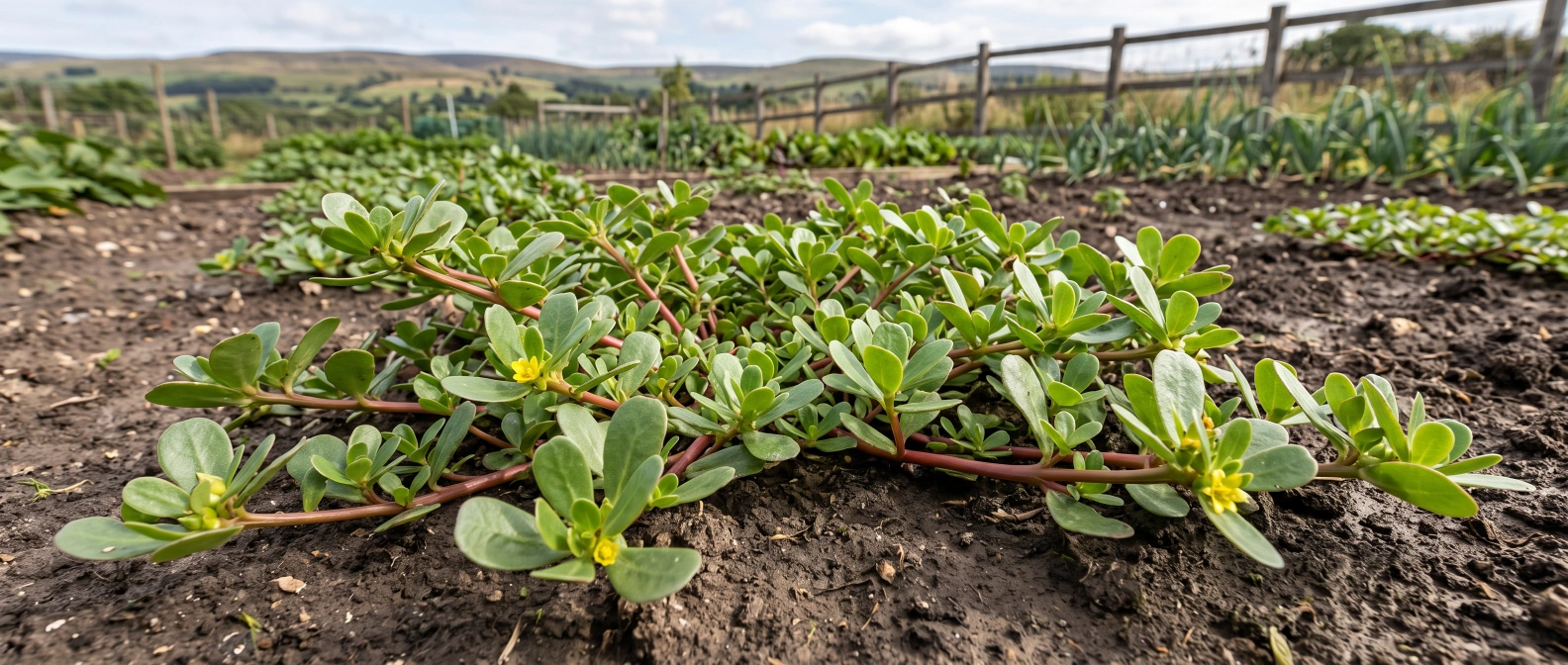
A genuine heat-tolerant succulent, per the crop database's own description, and one of the few plant sources with real omega-3 content. It's also a rare full-yield performer in Arid zones -- most crops on this site take a penalty there, but purslane's succulent, water-storing habit means it doesn't.
Water need
Genuinely one of the most drought-tolerant leafy crops on this whole site -- its succulent leaves and stems store their own water reserve.
Calories at a glance
200 kcal/kg -- grown for its nutrition (including genuine omega-3 content) and heat tolerance rather than calorie density (scale is log-based across all 55 core crops in the calculator).
Temperature Range by Month
Month on the bottom, temperature up the side. The pale green background is what the plant can survive at all -- fatal above or below it, labelled directly on the chart where that applies to your zone. The coral band is its ideal range, and only fades in during the months this zone would actually have the crop in the ground -- reusing the exact same sowing/harvesting data as the calendar further down the page. The blue line is real monthly climate data (not a modelled estimate) for a representative rural/agricultural location in this zone -- a small farming town or agricultural research station rather than a major city, to avoid the warmer bias city weather stations have. For the actual verdict on how well this crop does in your zone, see the badge at the top of the page -- that's based on the site's own researched yield figures, not this chart.
Quick Start: Sowing to Storage
- Sow once it's genuinely warm. Sow direct once frost risk has fully passed and the soil is warm -- purslane is a genuine heat-loving summer crop.
- Thin to final spacing. Thin seedlings once established, though purslane's low, spreading habit means it tolerates closer spacing than most leafy greens.
- Let it establish before heavy picking. Give plants a few weeks to bulk up before harvesting heavily, so they have enough growth to keep regenerating.
- Harvest stem tips regularly. Pinch or cut succulent stem tips as needed -- this both provides a harvest and encourages the low, spreading plant to bush out further.
- Use fresh -- it doesn't store. Use purslane fresh soon after picking -- its succulent leaves wilt quickly once cut and don't keep well.
Sowing & Harvesting Calendar
Pick your zone under "Temperature Range by Month" above and this updates too. Notice Arid shows a genuinely full window here, unlike most crops on this site where Arid is marked challenging.
Calories & Yield
Tropical gives the best yield here, with Arid genuinely tying with Subtropical and Mediterranean -- a rare zone-fit pattern on this site.
| Climate Zone | Yield per plant | Calories per plant | Viability |
|---|---|---|---|
| Tropical / Humid | 2.5 kg | 500 kcal | Viable -- best yield |
| Subtropical | 2.0 kg | 400 kcal | Viable |
| Mediterranean | 2.0 kg | 400 kcal | Viable |
| Temperate Maritime | 1.5 kg | 300 kcal | Viable |
| Temperate Continental | 1.5 kg | 300 kcal | Viable |
| Cool / Boreal | 0.6 kg | 120 kcal | Challenging (60% yield) |
| Arid / Semi-Arid | 2.0 kg | 400 kcal | Viable |
| Highland / Alpine | 0.6 kg | 120 kcal | Challenging (60% yield) |
Figures per plant sown, from the site's own crop database. Boreal and Alpine already reflect the 60% penalty applied to challenging zones.
Varieties Worth Knowing
Purslane has two main forms in cultivation -- the wild-type green and a larger, bred-up golden variety. Both below are open-pollinated (OP), meaning seed saved from them breeds true and is worth keeping under this site's seed-saving approach; neither is an F1 hybrid.
Seed Saving -- Quick Guide
Cultivated purslane and the "weed" purslane that grows uninvited in most vegetable gardens are the exact same species -- a genuine, easily missed crossing risk if you're saving seed from a named variety.
SERVINGS, NOT DAILY CALORIES This works out plate-sized servings of purslane from your seed during its fresh harvest window only, not your group's full daily calorie needs. For that, use the main calculator.
Estimated for your selected zone above, using this site's own germination, loss and yield figures for purslane -- a helping is roughly what you'd put on a plate as part of a meal with other veg. Treat it as a planning estimate, not a promise.
Storage & Preservation
Fresh purslane keeps only a few days refrigerated -- its succulent leaves wilt and soften relatively quickly once picked.
For longer-term preservation, pickling is a traditional and genuinely effective route, and it can also be blanched and frozen, though texture suffers more than with sturdier greens.
Growing Purslane Without Bought Inputs
Genuinely one of the toughest, lowest-maintenance crops on this entire site -- its weed-like vigour in the right conditions means it often thrives with no attention at all.
Few pests bother it seriously -- slugs on young seedlings are about the only real early-stage risk.
Hand-picking slugs at dusk while plants are small is a simple, genuinely effective input-free measure.
Frequently Asked Questions
Is purslane really a good source of omega-3?
Yes -- the crop database calls it out directly: high in omega-3. Purslane is genuinely one of the few plant leaf sources with meaningful omega-3 fatty acid content, most of which usually comes from oily fish or specific seed crops rather than leafy greens.
Why does purslane do so well in Arid zones?
Because it's a genuine succulent, storing water in fleshy leaves and stems the way a cactus does. This site's yield data marks Arid as a fully viable zone for purslane, not a challenging one -- an unusual distinction, since most crops here take a real yield penalty in Arid conditions.
Is purslane a weed or a crop?
Genuinely both, depending on where you are -- purslane grows wild as a common garden weed across much of the world, and the same plant is deliberately cultivated and eaten elsewhere. If it's already appearing uninvited in your garden, there's a good chance you can eat what you're pulling.