
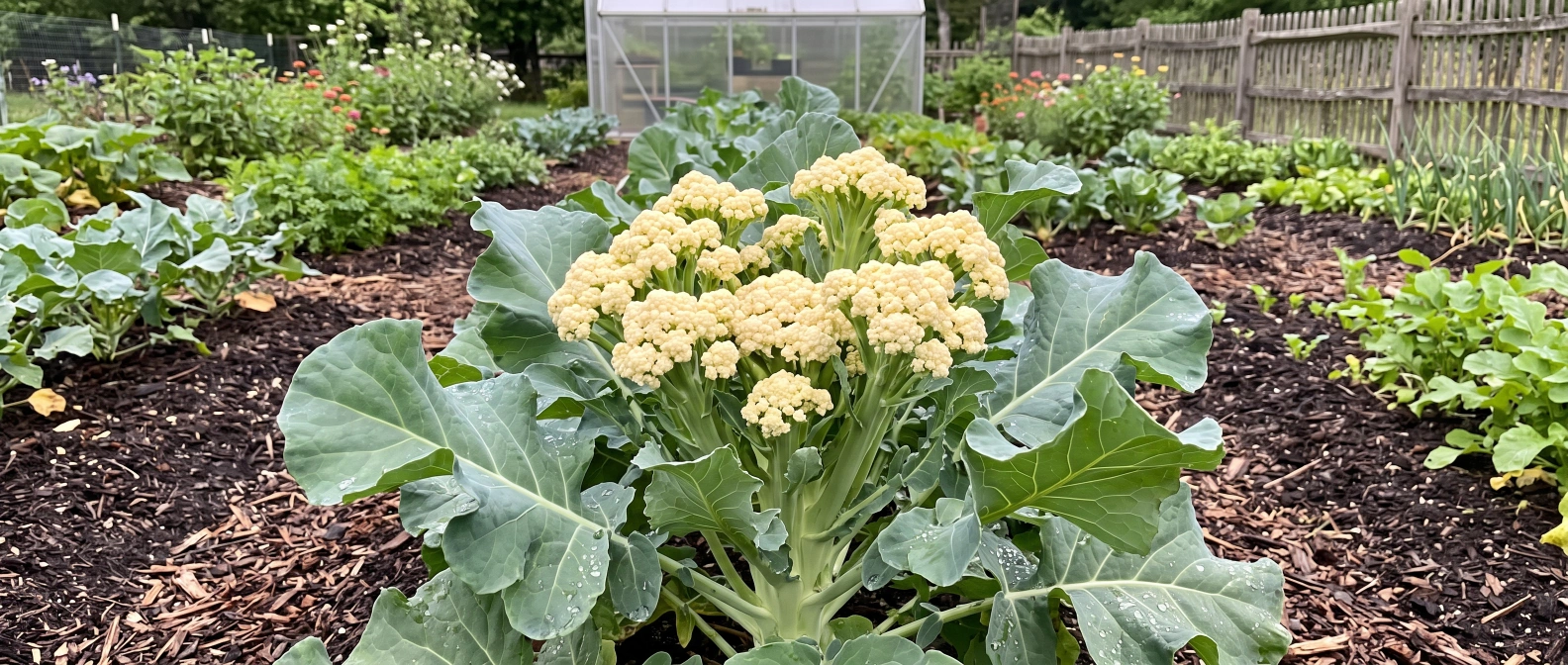
A genuine perennial broccoli, per the crop database's own description -- multiple small heads, productive for 4-5 years from one planting, instead of the single large head and annual replant cycle of ordinary broccoli. It's filed here under Perennial Vegetables for that multi-year cropping habit, but botanically it belongs squarely with the Brassicas hub.
Water need
Wants consistently moist soil to keep producing new heads, much like ordinary broccoli -- a genuinely thirsty crop through its main cropping months.
Calories at a glance
340 kcal/kg -- broadly in line with ordinary broccoli, grown as much for its multi-year convenience as for calorie density (scale is log-based across all 55 core crops in the calculator).
Temperature Range by Month
Month on the bottom, temperature up the side. The pale green background is what the plant can survive at all -- fatal above or below it, labelled directly on the chart where that applies to your zone. The coral band is its ideal range, and only fades in during the months this zone would actually have heads being harvested -- reusing the exact same calendar data as further down the page. The blue line is real monthly climate data (not a modelled estimate) for a representative rural/agricultural location in this zone -- a small farming town or agricultural research station rather than a major city, to avoid the warmer bias city weather stations have. For the actual verdict on how well this crop does in your zone, see the badge at the top of the page -- that's based on the site's own researched yield figures, not this chart.
Quick Start: Sowing to Storage
- Sow under cover in late spring. Sow seed under cover in late spring, in the same style as ordinary annual broccoli or cauliflower.
- Transplant to a permanent position. Transplant young plants to their final growing position, allowing extra spacing since these plants will remain in place for years.
- Harvest the first heads the following spring. Cut the small creamy-white heads as they form, encouraging the plant to keep producing more over an extended season.
- Keep cropping for 4-5 years. Continue harvesting heads each year from the same established plants, per the crop database's own multi-year cropping window.
- Replace plants once cropping declines. Raise replacement plants from seed as older ones decline after several seasons, keeping a rolling succession going.
Sowing & Harvesting Calendar
Pick your zone under "Temperature Range by Month" above and this updates too. Once established, the same plants keep cropping across this window every year for 4-5 years running.
Calories & Yield
Mediterranean gives the best yield here, and it's not viable outdoors in the Tropical, Boreal, Arid or Alpine zones.
| Climate Zone | Yield per plant | Calories per plant | Viability |
|---|---|---|---|
| Tropical / Humid | 0.00 kg | 0 kcal | Not viable outdoors |
| Subtropical | 0.90 kg | 306 kcal | Challenging (60% yield) |
| Mediterranean | 2.50 kg | 850 kcal | Viable -- best yield |
| Temperate Maritime | 2.00 kg | 680 kcal | Viable |
| Temperate Continental | 0.90 kg | 306 kcal | Challenging (60% yield) |
| Cool / Boreal | 0.00 kg | 0 kcal | Not viable outdoors |
| Arid / Semi-Arid | 0.00 kg | 0 kcal | Not viable outdoors |
| Highland / Alpine | 0.00 kg | 0 kcal | Not viable outdoors |
Figures per established plant per year, from the site's own crop database. Subtropical and Continental already reflect the 60% penalty applied to challenging zones.
A note on varieties: "Nine Star Broccoli" is itself a single named heirloom perennial variety, rather than a crop with its own range of named varieties.
Seed Saving -- Quick Guide
Nine star broccoli genuinely crosses with every other Brassica oleracea crop -- kale, cabbage, broccoli, cauliflower, Brussels sprouts, kohlrabi. Since one planting crops for years, most growers keep the plants rather than saving seed every season.
SERVINGS, NOT DAILY CALORIES This works out plate-sized servings of nine star broccoli from your seed during its fresh harvest window only, not your group's full daily calorie needs. For that, use the main calculator.
ONE PLANTING, 4-5 YEARS Unlike ordinary broccoli, nine star broccoli crops normally from its first year and then keeps producing from the same plants for 4-5 years without replanting. That means you need far less seed overall than an annual crop grown at the same scale -- the figures below are a single year's servings from an established planting, not a one-off harvest.
Estimated for your selected zone above, using this site's own germination, loss and yield figures for nine star broccoli -- a helping is roughly what you'd put on a plate as part of a meal with other veg. Treat it as a planning estimate, not a promise.
Storage & Preservation
Fresh heads keep for about a week refrigerated, similar to ordinary broccoli.
For longer-term storage, heads blanch and freeze well -- a genuinely practical way to bank a glut from a heavy cropping season.
Growing Nine Star Broccoli Without Bought Inputs
A yearly mulch of garden compost or well-rotted manure worked around established plants keeps them productive across their multi-year lifespan.
Cabbage white caterpillars and flea beetle are the main pests, exactly as for every other Brassica oleracea crop on this site.
Fine insect mesh over young growth is a simple, genuinely effective input-free measure against both.
Frequently Asked Questions
Does nine star broccoli cross-pollinate with the Brassicas hub?
Yes -- genuinely, and this is the real story here. Nine star broccoli is Brassica oleracea, the exact same species as every crop on this site's Brassicas hub: kale, cabbage, broccoli, cauliflower, Brussels sprouts, kohlrabi and the rest. If you let it flower near any of them in the same season, treat it as part of that same shared isolation problem, not a separate one.
How is nine star broccoli different from ordinary broccoli?
It's a genuine perennial, staying productive for 4-5 years per the crop database, where ordinary broccoli is grown as an annual and replanted every year. Instead of one large central head, it produces multiple smaller creamy-white heads across each season.
Do you need to replant nine star broccoli every year?
No -- that's the whole point of choosing it over annual broccoli. A single planting keeps cropping for 4-5 years before it needs replacing, though most growers do let one flower and go to seed periodically to raise replacement plants.