
Where a heap goes and what it's built from matter more here than almost anywhere else in this guide. Wind, not simply cold, is the force most likely to strip a heap of the heat and moisture it needs, and the ground itself is more often steep and rocky than flat and forgiving. Getting the site and the structure right from the outset saves a season of fighting conditions a better choice would have avoided entirely.
Wind Shelter Comes First
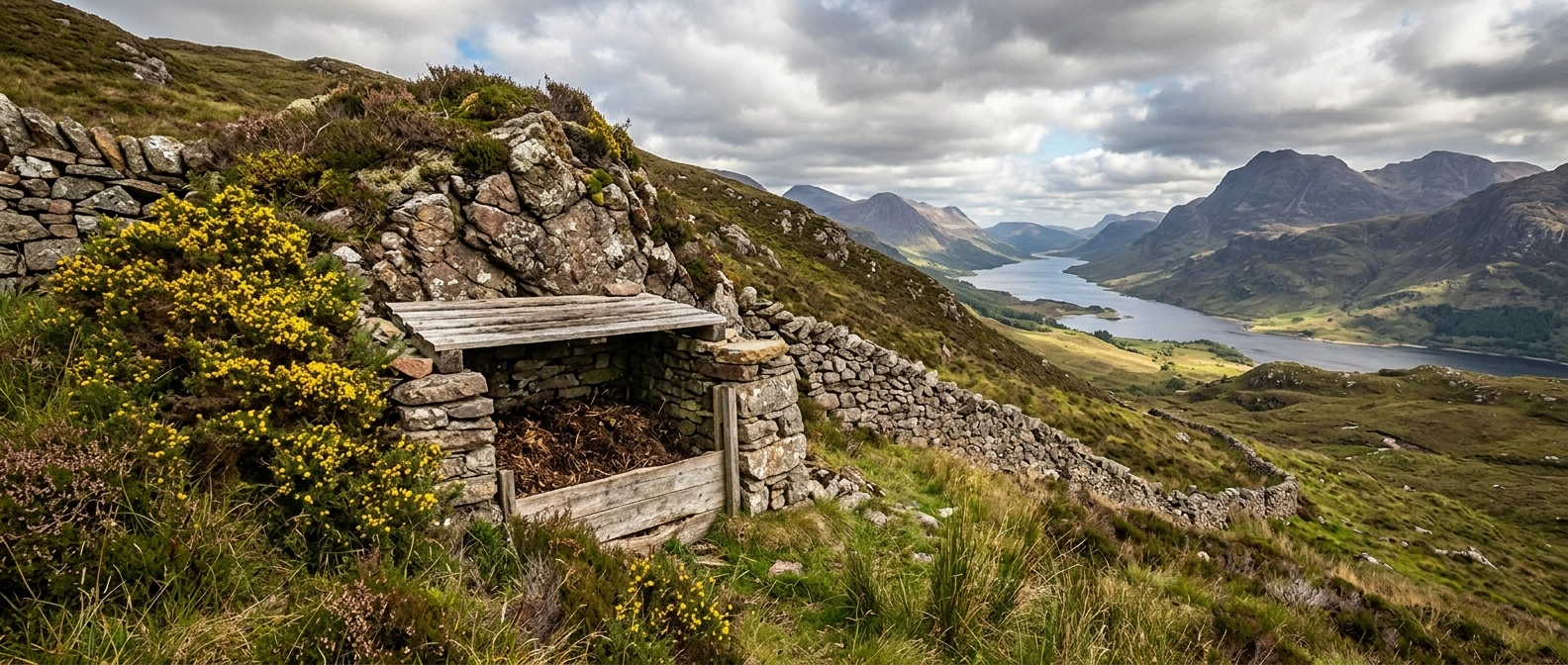
Wind exposure is the single biggest site-selection factor at altitude, more important even than sun exposure. A heap sitting in full sun but exposed to constant wind loses heat and moisture faster than a sheltered heap getting noticeably less direct light, because wind accelerates both processes far more aggressively than still cold air ever would (see Chapter 1).
Look for genuine shelter before anything else: behind a building, tucked against a rock outcrop, behind a stone wall, or behind dense vegetation where any is available. A site that feels merely "a bit less breezy" usually isn't sheltered enough. The difference between a heap in the lee of a real windbreak and one just a few metres away in the open airflow can be the difference between a heap that holds warmth and one that never does. Chapter 3 goes into the structural side of building that shelter in detail.
Using the Sun You Do Get
Once shelter is settled, sun exposure becomes the next real consideration, not because it outranks wind protection, but because intense, if brief, daily sun is a genuine resource worth using deliberately rather than leaving to chance. An east- or south-facing site (adjust for your hemisphere) that catches sun as early and for as long as possible each day gives a sheltered heap a real head start on warmth once the sun does rise.
The two priorities work together rather than against each other in practice: a spot tucked behind a rock outcrop or wall on the windward side, but still open to the sky on the sunward side, is usually achievable with a little care in choosing exactly where the structure sits relative to whatever is providing the shelter.
Working With Sloped, Rocky Ground
Much of this terrain is naturally sloped, and waiting for flat ground before starting is often unrealistic. A level shelf cut into a slope, or building directly into an existing terrace, generally makes more practical sense than fighting the terrain to force a flat footprint that may not exist nearby.
Terraced and stone-walled construction is a genuine, ancient mountain building tradition in its own right, and it happens to solve the wind-shelter problem at the same time as the ground-levelling one. Chapter 3 covers this approach as the guide's core structural chapter for this climate.
Building Materials for Wind and Freeze-Thaw
- Solid stone or heavy timber -- construction that won't be moved or damaged by wind, unlike light panel or mesh systems that can flex, rattle loose or fail outright in strong gusts.
- A secure, weighted-down lid -- rather than anything that could blow off. Given how strong mountain wind can be, a light tarp alone is not a reliable cover here.
- Freeze-thaw-tolerant joints and materials -- daily freeze-thaw cycling stresses any structure that traps and re-freezes water in its joints, so dry-stone or well-drained timber construction holds up better than anything that seals water in (see Chapter 11).
- A partly-sunken footprint -- using the surrounding earth or rock itself as insulation against both wind and cold, similar in principle to an arid climate's below-ground siting against evaporation, but here aimed squarely at wind and temperature protection instead.
Frequently Asked Questions
What matters more when siting an alpine compost system, wind shelter or sun exposure?
Wind shelter, genuinely, ahead of sun exposure. A heap sitting in full sun but exposed to constant wind will still lose heat and moisture faster than a sheltered heap getting less direct light. The single biggest site-selection decision at altitude is finding real shelter, behind a building, a rock outcrop, a stone wall, or dense vegetation where any is available, before anything else is considered.
Is flat ground necessary for a compost system in this climate?
No, and it's often unrealistic to wait for it. Much of this terrain is naturally sloped, so working with a level shelf cut into a slope, or building directly into an existing terrace, generally makes more sense than searching for flat ground that may not exist nearby. Sloped, rocky ground is the normal starting point here, not an obstacle to solve before beginning.
What should an alpine compost structure actually be built from?
Solid stone or heavy timber construction that genuinely won't shift or be damaged by strong wind, with a secure, weighted-down lid rather than anything that could blow off. A partly-sunken design, using the surrounding earth or rock itself as insulation, adds real wind and temperature protection on top of that, similar in principle to how an arid climate uses below-ground siting against evaporation, but here the goal is buffering against wind and cold.