
A highland or alpine climate -- the high-altitude growing regions of the Alps, the Andes, the Himalayan foothills, the Rockies, and the Ethiopian and East African highlands -- is defined by elevation rather than latitude, and that distinction changes almost everything about how a heap behaves here. Understanding this properly, not just as a list of tips but as the actual physics behind it, is the foundation everything else in this guide builds on.
The Challenges
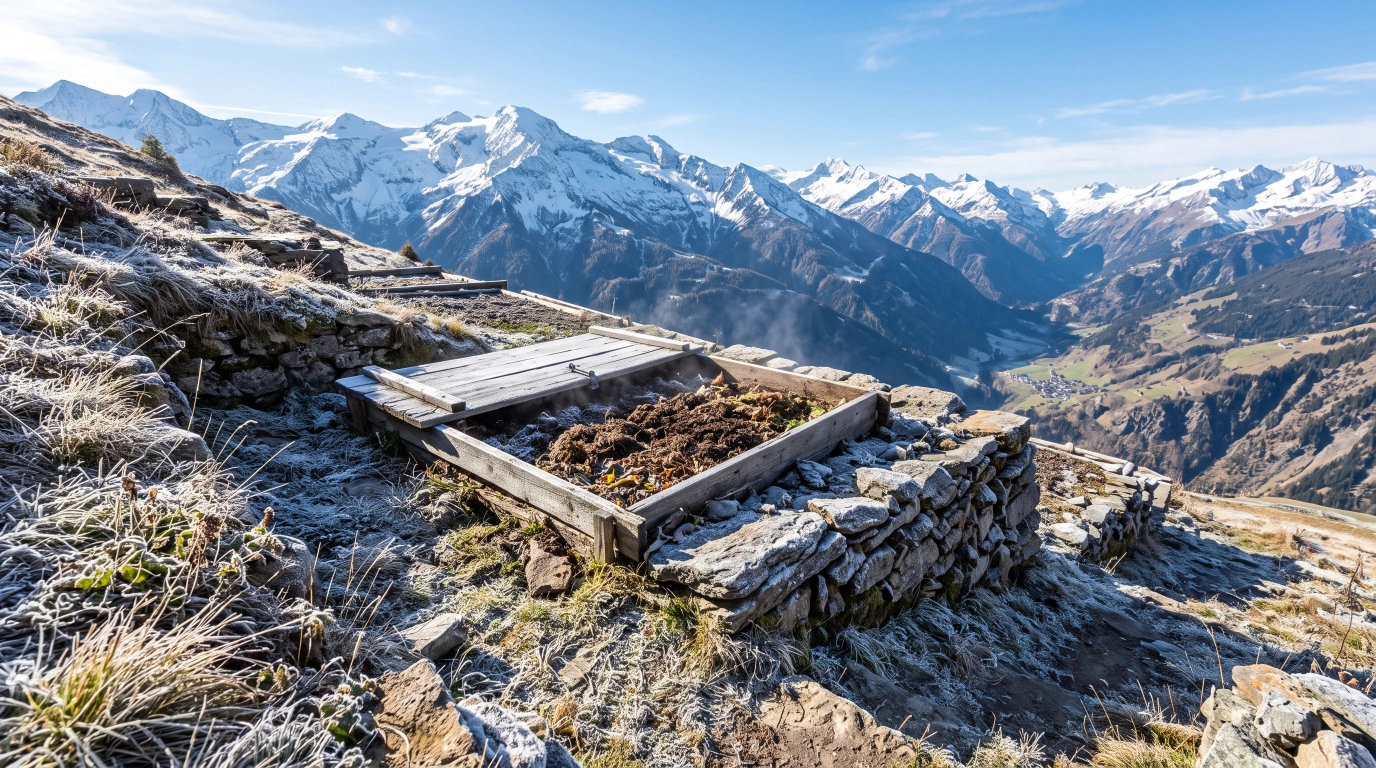
A freeze-thaw cycle that can repeat every single day
This is the central challenge, and it's a genuinely different pattern to any single seasonal extreme. At real altitude, clear skies and thin air mean heat radiates away fast overnight, often producing a hard frost even in mid-summer, while the same thin air lets intense sun warm exposed surfaces quickly once it rises. A heap can freeze solid overnight and sit in strong midday sun a few hours later, day after day through the growing season. This is why daily protection and monitoring run through this guide as their own core skill (see Chapter 11).
Relentless wind strips heat and moisture fast
Exposed high ground is windy ground, and wind accelerates both heat loss and evaporation from an exposed heap far more aggressively than the same conditions would at lower elevation. An unsheltered heap can lose warmth and moisture to wind alone even when the air temperature itself isn't especially extreme, which is why real, deliberate wind shelter is treated as essential rather than optional here (see Chapter 2).
A short, frost-bounded growing season limits everything
Unlike a boreal climate, where the short summer is driven by high latitude and long daylight, an alpine growing season is bounded by frost risk that can arrive on almost any night, cutting the reliably workable window short from both ends regardless of daylight hours. Both the material available to feed a heap and the time it has to process it are genuinely limited as a result.
Thin, rocky, often sloped soils start from a low baseline
Mountain soils are frequently young, thin and stony, having had less time and less vegetation cover to build organic matter than soils at lower elevation. This raises the value of consistent composting here rather than lowering it, which is exactly why Chapter 19 treats it as a genuine, patient soil-building project.
The Advantages
- Intense daytime sun -- once harnessed with proper shelter rather than fought -- can drive real warmth into a well-sited heap despite the thin, cold air around it.
- Lower pest and disease pressure than a warm lowland climate, thanks to consistently cool conditions and cold nights that limit what can thrive here.
- Genuinely abundant meadow hay and livestock manure across long-established mountain pastoral farming traditions worldwide, from Alpine dairy country to Andean and Himalayan grazing land (see Chapter 6).
- A real payoff for consistency -- thin mountain soils respond significantly to even modest, well-protected compost applied patiently over years.
Frequently Asked Questions
Why is altitude a different challenge to a cold winter climate?
Because the timescale is different. A cold-winter climate deals with one long seasonal freeze, with a genuine warm season either side of it where a heap can work steadily. A high-altitude climate can deliver a hard overnight frost and intense midday sun within the same 24 hours, repeated day after day through the growing season, which is a fundamentally different pattern to plan around than a single seasonal swing.
Why does thin air matter for composting?
Lower atmospheric pressure at altitude means less oxygen available in a given volume of air, which affects anything relying on efficient combustion or airflow, most directly biochar-making, where sustaining a hot, clean burn is genuinely harder at altitude than at sea level. It also means intense, less-filtered UV radiation reaches the ground, since there's less atmosphere to absorb it, which dries and degrades exposed organic material faster than the temperature alone would suggest.
Does a highland or alpine climate actually have any advantages for composting?
Genuinely a few, though this is a harder climate overall than most others. Intense daytime sun, once harnessed with proper shelter, can drive real warmth into a well-sited heap. Cold nights and generally cooler conditions mean lower pest and disease pressure than a warm lowland climate, and long mountain pastoral traditions mean livestock manure and meadow hay are often genuinely abundant and free where grazing is part of local life.