
Composting worms -- typically red wigglers or brandling worms, Eisenia fetida -- can absolutely work in an arid climate, but they need real, ongoing intervention to survive here in a way a cool, wet climate simply doesn't demand. Get the shade and moisture right and they'll reward you with some of the most concentrated fertility this guide covers.
Why This Climate Fights the Worms
Worms are extremely moisture- and temperature-sensitive
Composting worms breathe through their skin, which has to stay moist to function at all, and they have almost no tolerance for heat. Let the bedding dry out, or let internal bin temperatures climb much past 30°C, and the worms will die rather than simply slow down. In a hot dry climate both of these things happen fast and often, which is exactly why an exposed open system that would be fine in a cool climate is a death trap here.
Shade is non-negotiable in peak summer
The bin must be kept in shade, or moved somewhere cooler such as indoors or a cellar, through the hottest part of the year (see Chapter 11 for shading techniques that apply just as well to a worm bin as to a heap). A bin left in full summer sun can cook its occupants within a single hot afternoon.
Bedding needs regular checking, not occasional glances
Check bedding moisture often, ideally every few days in hot weather, using the squeeze test: a handful should feel like a wrung-out sponge, not dry and crumbly and not dripping wet. Rewet with a light sprinkling whenever it drifts dry, rather than waiting for visible distress in the worm population.
Choosing the Right Bin
Skip the open, well-ventilated worm systems often recommended in wetter climates -- they dry out or overheat here far too fast to be workable. Instead:
- Use a properly enclosed bin with a tight-fitting lid, rather than an open bay or exposed heap of bedding.
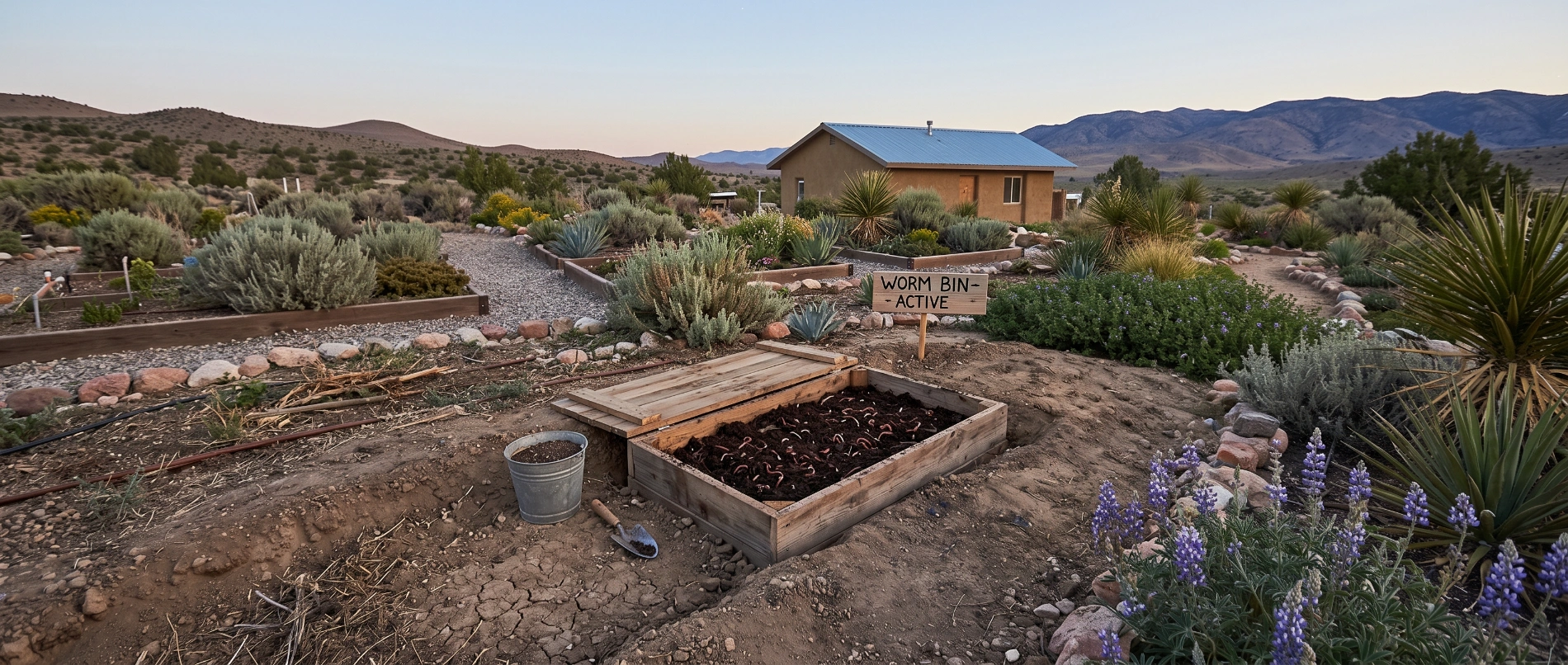
- Partially bury the bin in the ground where practical. This uses the same insulating-soil principle behind the trenches and pits in Chapter 3: the surrounding soil buffers both temperature swings and moisture loss far better than anything sitting above ground in the open air.
- Site the bin in permanent shade, ideally under tree canopy or against a shaded wall, and add extra shading during the hottest months regardless.
- Keep a loose lid or breathable cover on at all times to slow evaporation from the bedding surface while still allowing some airflow.
Frequently Asked Questions
Can composting worms survive in a hot, dry climate at all?
Yes, but only with real intervention. Red wigglers and other composting worms are extremely moisture- and temperature-sensitive, and will die if their bedding dries out or if temperatures climb much past 30°C. In a hot dry climate that means the bin has to be kept in shade or even brought indoors or into a cellar during peak summer heat, and the bedding needs regular checking and rewetting rather than being left to manage itself the way it can in a cool, wet climate.
How do I know if my worm bedding is too dry or too wet?
Squeeze a handful. It should feel like a wrung-out sponge, damp but not dripping. If it feels dry and crumbly, the worms are already under stress and need rewetting straight away. If water runs out when you squeeze it, the bedding is too wet and needs more dry bedding material mixed through before it turns anaerobic.
Is vermicomposting worth the effort in an arid climate?
Yes, but go in with the right expectations. It's more labour-intensive here than in a wet climate, not a low-effort default option, because the worms depend entirely on you for shade and moisture that a cool climate would provide for free. In return they produce a small volume of extremely concentrated, high-quality worm castings, valuable precisely because compost overall is harder-won in this climate.