
This is arguably the single most important chapter in the whole guide for this climate. Everything else -- the inputs, the timing, the ratios -- only works if the heap actually retains enough moisture to let its microbes function. Master shade, cover and watering technique, and the rest of this guide becomes far easier to put into practice.
Why an Exposed Heap Loses Water So Fast
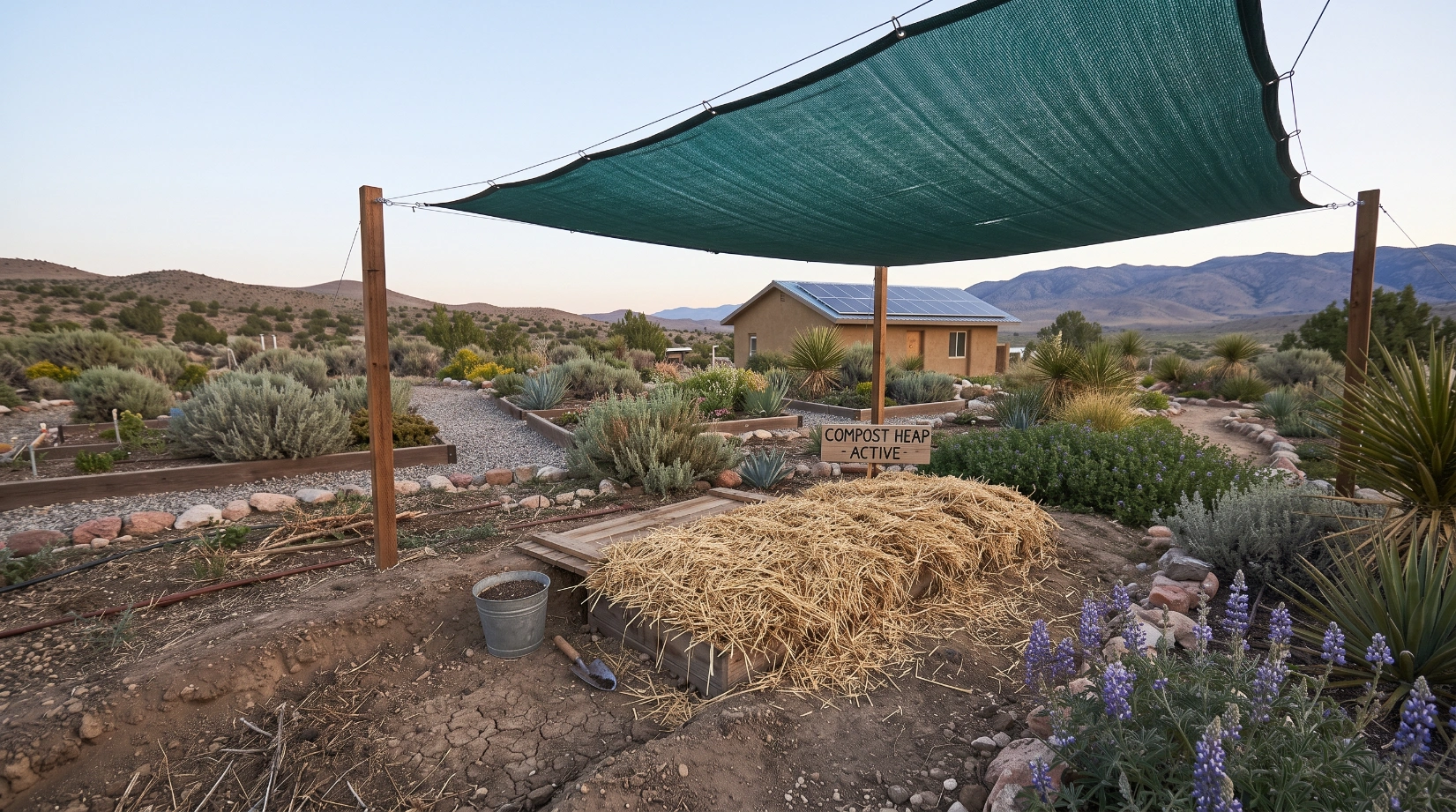
Three factors compound against an open heap at once. Direct sun heats the surface material well past ambient air temperature, driving off moisture fast. Wind, common across most dryland regions, continuously carries that evaporated moisture away rather than letting humidity build up near the heap. And low ambient humidity means there's no equilibrium point where evaporation naturally slows the way it might in a damper climate -- the drying pressure stays high hour after hour.
Left unmanaged, this combination can dry out an uncovered heap within days, stalling decomposition until someone deliberately rewets it (see Chapter 1). Everything below exists to break this chain.
Shade Strategies
- Site under tree canopy where possible -- covered in more detail in Chapter 2 -- since dappled natural shade cuts both direct heat gain and evaporation without any extra materials or labour.
- Rig shade cloth over an exposed heap using stakes or a simple frame, angled to block the harshest midday and afternoon sun.
- Improvise with what's on hand -- an old sheet, palm fronds, or salvaged shade netting all work if rigged with enough clearance for some airflow underneath.
Cover Materials and Their Trade-Offs
A dry-mulch cap is the everyday choice
A thick cap of straw or dry leaves laid over the top of a heap dramatically cuts surface evaporation while still allowing some airflow through to the material below. This is the simplest, lowest-effort cover and should be the default on most above-ground heaps.
Solid covers cut evaporation further, but watch oxygen
Old carpet, tarps or plywood laid over a heap reduce evaporation even more than a mulch cap, but they can also choke off oxygen if left in place too long, pushing the heap toward anaerobic conditions. Use them intermittently, or lift and vent the heap periodically, rather than sealing it under a solid cover permanently.
Below-ground methods are the most effective cover of all
The trench and pit methods in Chapter 3 outperform any above-ground cover material because the soil itself becomes the cover, insulating against both heat and evaporation on every side, not just the top. Where the effort of digging is practical, this is the single most effective evaporation control technique available.
Moisture Checks and Watering Technique
Build a habit of checking moisture with a simple squeeze test: grab a handful of material from a few inches inside the heap, not just the dried surface. It should hold together like a wrung-out sponge, damp but not dripping. If it crumbles apart dry, it's time to water. If water runs out when squeezed, it's too wet and needs more dry material mixed through.
When watering, go deep and infrequent rather than little and often. A quick surface splash tends to wet only a crust over a dry core, while a thorough soak lets water penetrate evenly through the whole heap. Poking holes into the heap before watering helps water soak in rather than run off, which matters more here than in a wetter climate where the ground itself is rarely this dry and crusted. Where genuinely available, thoughtfully directed greywater is one of the few "free" water sources worth routing toward the compost heap in a household managing scarce water.
Frequently Asked Questions
Why does an exposed compost heap lose moisture so fast in this climate?
Three things stack against it at once. Direct sun heats the surface material well past air temperature, wind carries the evaporated moisture away continuously rather than letting it linger near the heap, and low ambient humidity means there's no point at which evaporation naturally slows down the way it would in a moister climate. Together they can dry out an uncovered heap within days.
What's the best way to check if a heap has enough moisture?
Grab a handful of material from a few inches inside the heap, not just the surface, and squeeze it. It should hold together and feel like a wrung-out sponge, damp but not dripping. If it crumbles apart dry, the heap needs watering. If water runs out when you squeeze, it's too wet and needs more dry material mixed through.
Should I water a compost heap little and often, or deeply and infrequently?
Deeply and infrequently. Frequent light watering tends to wet only the surface, leaving a damp crust over a dry core, while a deep soak lets moisture penetrate the whole heap evenly. Poking holes into the heap before watering also helps water soak in rather than run off the surface, which matters more in dry, often crusted ground than it would in a wetter climate.