
This final chapter is about the years, not just the seasons. Nineteen chapters of technique only pay off if they add up to something lasting, and in this zone that's a genuinely bigger task than in younger, less heavily worked soils elsewhere.
A Soil Shaped by Thousands of Years of Farming
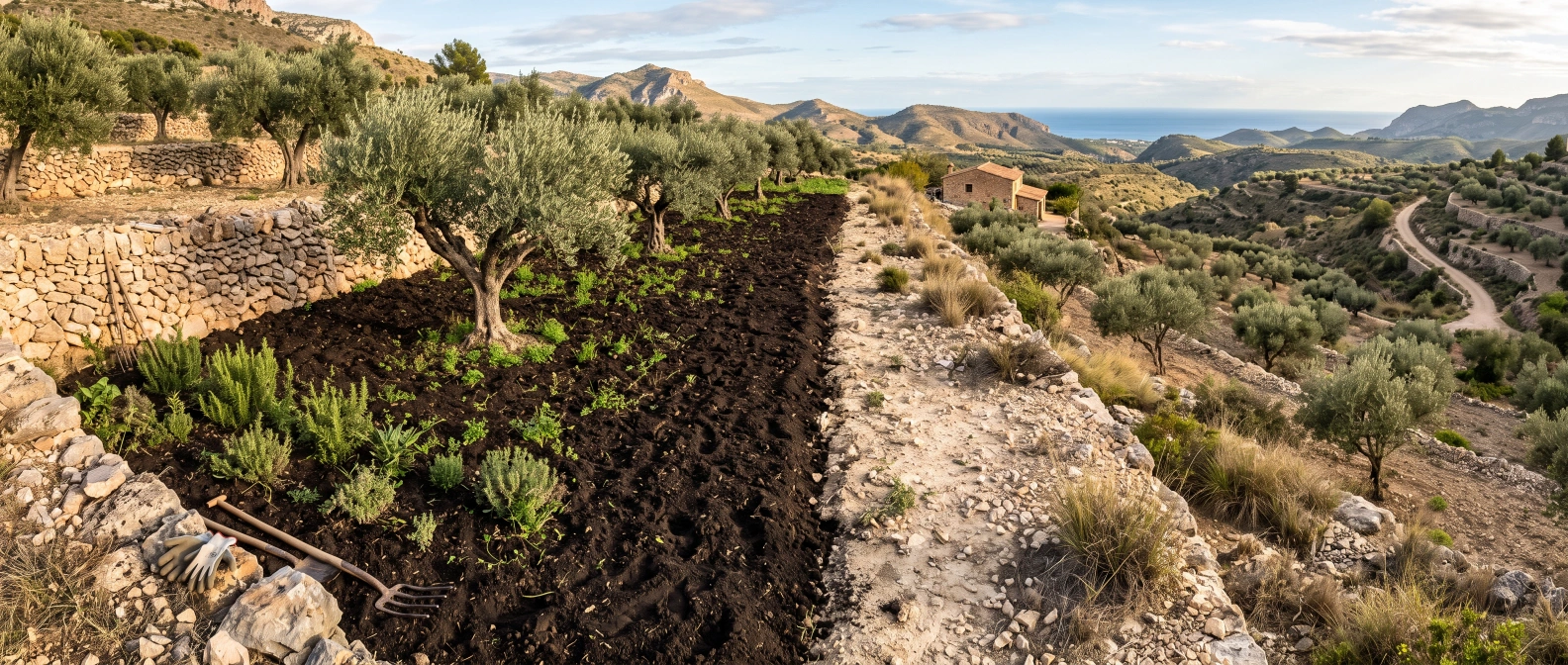
Much of the soil across this zone has been farmed, often intensively, for thousands of years. Olive and grape cultivation in particular have genuinely ancient roots around the Mediterranean basin, and that long history means many of these soils start from a lower baseline of organic matter and structure than soil in younger or less heavily worked regions, simply because there has been so much more time for both to be worn down.
This isn't a reason for pessimism, it's the reason consistent, seasonally-timed composting is one of the few practical ways to meaningfully rebuild that depth over years rather than a single season.
Diversity of Inputs Still Matters Here
No single input rebuilds soil on its own. Olive, grape and orchard prunings covered back in Chapter 6, biochar as discussed in Chapter 9, winter green manures chopped and dropped per Chapter 12, along with humanure and everyday kitchen scraps, all feed different parts of soil biology and structure. Leaning on just one source, even a genuinely abundant local one, leaves gaps a mixed approach fills.
The Terra Preta Parallel
The same historical principle behind terra preta, that sustained, long-term additions of charcoal and organic matter can genuinely transform poor soil, applies here too. It's arguably a particularly natural fit for this climate, given how much woody pruning material this zone already produces every single year, material that can be converted into biochar and worked back into the soil rather than burned off or thrown away.
Working With the Rhythm, Year After Year
The closing principle of this whole guide is simple: build hard through the wet season, protect what you've built through the dry one, and repeat that same cycle deliberately, year after year, rather than treating each season as its own isolated effort.
Done consistently, thin, worked Mediterranean soil genuinely does become richer, hold more water and cope better with the summer drought that defines this climate. And there's a real payoff loop here worth naming: soil that holds more moisture makes the following summer's drought stress a little less severe, which in turn makes the following wet season's rebuilding work a little easier again. That compounding is the actual reward for the seasonal discipline this whole guide has been asking for.
Frequently Asked Questions
Why does this zone's soil often start from a lower baseline than elsewhere?
Because much of the Mediterranean basin, in particular, has been under intensive cultivation for thousands of years, olive and grape growing especially have genuinely ancient roots here. That long history means a much longer time for organic matter and structure to have been depleted, compared to younger or less intensively farmed soils elsewhere, which is exactly why consistent, seasonally-timed composting matters so much in this zone.
Does biochar have a genuine place in a Mediterranean soil-building strategy?
Yes, and it's arguably a natural fit here. The terra preta principle, that long-term charcoal and organic matter additions can transform soil, applies just as much in this climate, and this zone already produces a large volume of woody pruning material every year that can be turned into biochar rather than burned or simply discarded.
What's the single biggest principle for building soil health here over years?
Work with the seasonal rhythm rather than against it, year after year. Building fertility hard through the wet season and protecting it through the dry one compounds over time, and thin, worked Mediterranean soil genuinely can become richer, more water-retentive and more resilient to summer drought through years of this kind of disciplined composting. Better soil even makes the following summer's drought stress somewhat less severe, a real positive feedback worth working toward deliberately.