
Biochar is stable, porous charcoal made specifically for soil improvement rather than fuel, and unlike compost it doesn't break down and disappear over a season, it persists in soil for years, even decades. In this climate, that permanence matters more than most, because the soil problem it addresses, low water-holding capacity in thin, worked ground, is precisely what this zone's long dry summer makes so costly.
Why Biochar Matters in This Climate
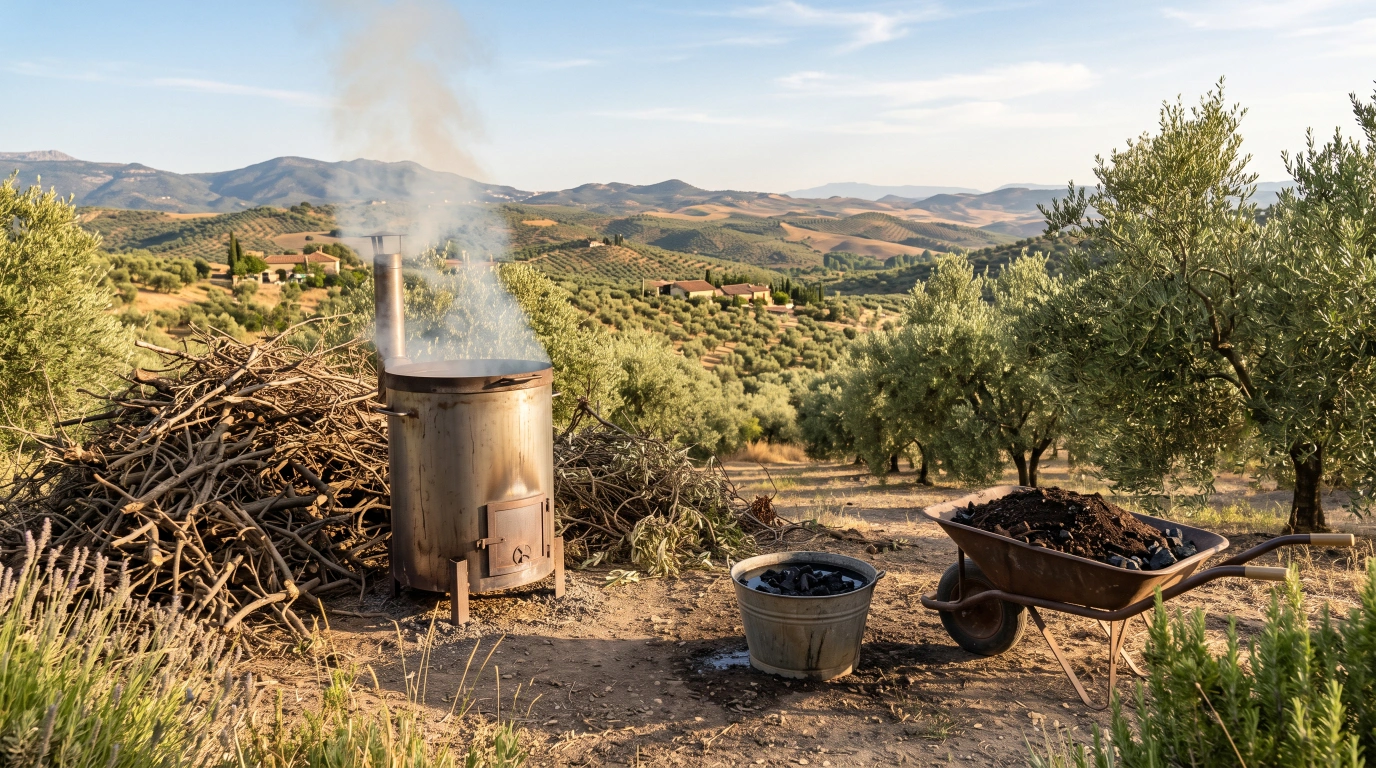
Much of this zone's soil is thin, calcareous and has been under cultivation for thousands of years, as covered in Chapter 1, and that long history leaves both organic matter and water-holding capacity depleted. Biochar's porous structure directly addresses the water retention side of that problem, holding moisture and nutrients in a soil that would otherwise let both drain or evaporate away quickly, which matters enormously given how long and rainless the summer here is.
It also helps slowly improve structure in soils that are often stony or compacted from millennia of tillage, work that ordinary compost also does but that biochar sustains for far longer once it's incorporated. Soil amended with biochar over time needs less frequent irrigation once established, directly easing the summer drought challenge that defines this climate (see Chapter 11).
How Biochar Is Made
Biochar is produced through pyrolysis, burning woody material with restricted oxygen so it chars rather than burns fully to ash. A simple kiln or pit works well at smallholder scale: the wood is lit, the fire is managed to limit airflow once it's well underway, and the resulting charcoal is quenched with water to stop the burn at exactly the right point. Done properly, this produces stable, porous charcoal riddled with the microscopic structure that gives biochar its water- and nutrient-holding properties.
Always Charge Biochar Before Use
Raw biochar straight from the kiln should never be applied to soil unamended. Its porous structure is so good at absorbing nutrients that, applied raw, it can actually rob the surrounding soil of them for a period before releasing anything back, the opposite of the intended effect. Charge it first by soaking it in compost tea or urine-diluted water, or by mixing it directly into finished compost before it goes into the soil. Charged this way, biochar enters the ground already carrying nutrients rather than competing with plants for them.
Feedstock Is Genuinely Abundant Here
This climate produces an unusual amount of woody pruning waste every year from olive, grape and orchard management (see Chapter 6), and material that's too woody, resinous or slow to break down through ordinary composting is often the ideal biochar feedstock. Where shredding and composting woody prunings isn't practical at the volume produced, turning that surplus into biochar is a genuinely productive alternative, converting a material composting struggles with into a permanent soil amendment instead.
Frequently Asked Questions
Why does biochar matter so much in a Mediterranean climate specifically?
Because much of this zone's soil is thin, calcareous and has been under cultivation for thousands of years, leaving both organic matter and water-holding capacity depleted. Biochar's porous structure directly addresses the water retention problem that matters so much given the long dry summer, while also slowly improving structure in soils that are often stony or compacted from millennia of tillage.
Can biochar be added to soil straight after it's made?
No, raw biochar should never be applied unamended. Fresh from the kiln, it can actually rob soil of nutrients as it absorbs them into its pores before releasing anything back. It needs to be charged first, soaked in compost tea or urine-diluted water, or mixed into finished compost, so it enters the soil already carrying nutrients rather than pulling them away from plants.
Where does biochar feedstock come from in this climate?
It's genuinely abundant here, thanks to how much woody pruning waste this zone produces every year from olive, grape and orchard management. Material that's too woody, resinous or slow to break down through ordinary composting is often the ideal biochar feedstock, turning exactly the input that composting struggles with most into a permanent soil amendment instead.