
The biology doesn't change with climate: microbes need carbon for energy and nitrogen for growth, and the target ratio is the same everywhere, roughly 25-30 parts carbon to 1 part nitrogen by weight. Too much carbon and a heap decomposes slowly, locking up nitrogen along the way. Too much nitrogen and it turns slimy, smelly and anaerobic. What's genuinely different in a Mediterranean climate is that neither ingredient is scarce, they simply peak at different times of the year.
A Timing Mismatch, Not a Shortage
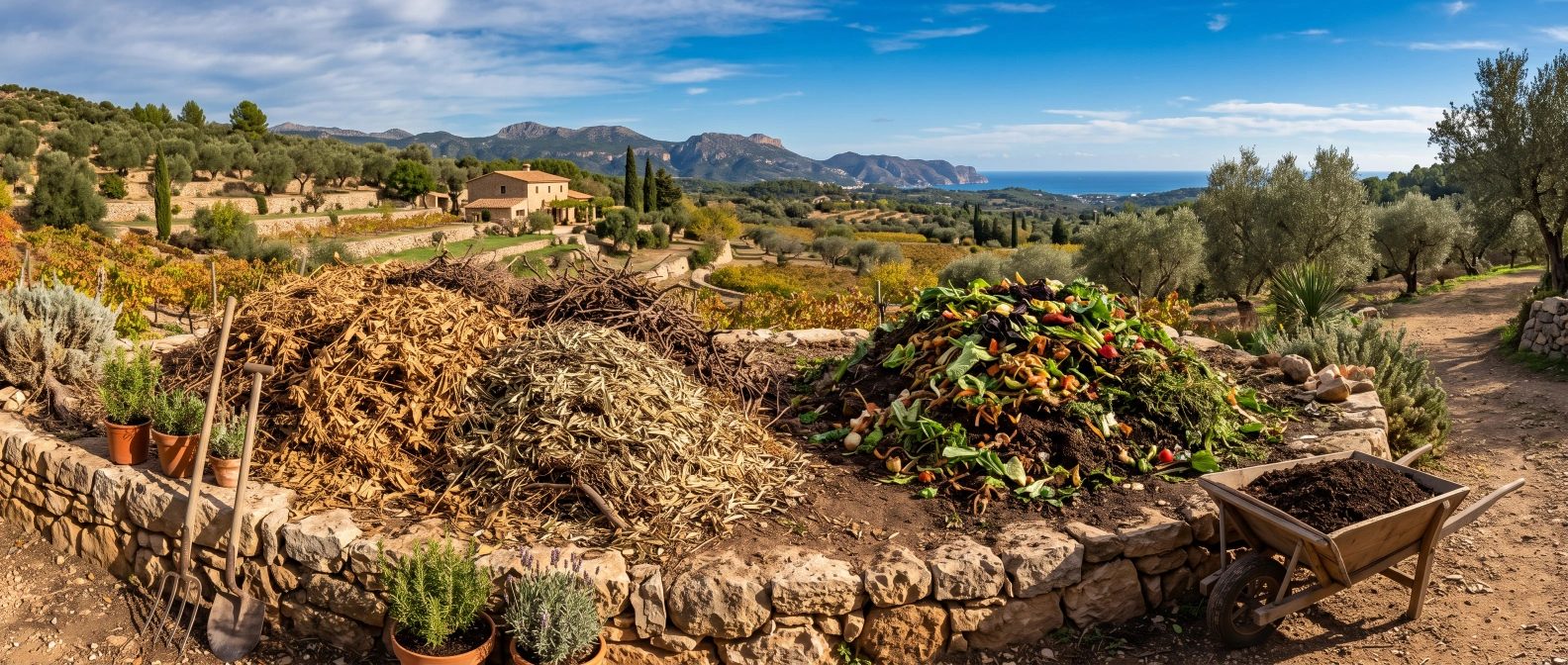
In an arid climate, nitrogen-rich material stays chronically scarce nearly year-round. In a tropical climate, it's carbon that's hard to come by, breaking down so fast it barely accumulates. A Mediterranean climate faces neither problem chronically, both types of material are genuinely abundant here, just not at the same time.
Nitrogen-rich green material peaks during the mild, wet season, when winter and spring growth is at its most active: fresh kitchen scraps, garden clippings and new growth all pile up together. Carbon-rich brown material peaks afterwards, once the summer prune and harvest are done: dried olive leaves, grape and vine prunings, dried herb trimmings and straw after grain harvest all become abundant right as the greens are tailing off.
The practical skill this creates is genuinely different from either of those other climates. It isn't chasing a scarce ingredient, it's stockpiling whichever type is currently abundant so it's ready and waiting when the other type peaks later in the year.
Carbon vs Nitrogen at a Glance
A representative spread of materials genuinely available in a Mediterranean climate, from the most carbon-heavy to the most nitrogen-heavy. The full input list, with practical notes on using each one, is in the next chapter.
| Material | Type | Approx C:N Ratio | Notes |
|---|---|---|---|
| Cardboard (plain, kept dry) | C | ~350-400:1 | Shred first; a reliable brown whenever prunings are between seasons |
| Dried olive leaves | C | ~40-60:1 | Abundant after pruning and harvest; shred or crush for faster breakdown |
| Grape and vine prunings | C | ~50-100:1 | Tough and woody; shred first or they decompose very slowly |
| Straw (after grain harvest) | C | ~50-80:1 | Excellent bulk carbon where grain is grown locally |
| Dried herb trimmings (rosemary, lavender, thyme) | C | ~40-70:1 | Essential oils slow bacterial breakdown; use as a minor component only |
| Fresh kitchen scraps | N | ~15:1 | Available year-round but peaks with the wet-season household routine |
| Fresh grass and garden clippings (wet-season flush) | N | ~15-20:1 | Genuinely abundant only while the wet-season growth flush lasts |
| Fresh-pulled weeds | N | ~15-20:1 | Pull before seed set; a strong wet-season resource |
| Legume winter cover crop trimmings | N | ~15-20:1 | Cut before the dry season sets in (see Chapter 12) |
| Manure, where available | N | ~15-25:1 | Strength varies with animal and bedding; a genuine local resource if kept |
Ratios are approximate -- real material varies with freshness, moisture content and exact species. Treat them as a guide to relative balance, not a figure to measure precisely.
Working By Volume, Not Weight
You don't need to weigh anything to get this right in practice. Browns are typically bulkier and lighter than fresh greens, so working by volume naturally lands close to the target ratio: roughly two buckets of carbon material (dried olive leaves, prunings, straw) to every one bucket of nitrogen material (fresh scraps, clippings, weeds).
In this climate the practical task is less about hitting that 2:1 ratio in any single moment and more about stockpiling across the seasons. Save dried prunings and leaves when they're abundant after the summer prune, so there's a genuine carbon reserve ready the moment the wet season's nitrogen flush arrives. The same works in reverse: keep some dried carbon held back for whenever fresh green material happens to dominate, rather than treating the two as something to balance only when both happen to be on hand at once.
Troubleshooting: The Heap Built From One Season Alone
The most common failure mode here is building a heap entirely from whichever material a single season happens to make abundant, without having stockpiled the other type in advance. The classic case is an all-fresh-greens heap built during the spring growth flush, with no dry carbon saved from the previous summer to balance it. It turns slimy, smelly and anaerobic within days.
The fix isn't scrambling to find carbon once a heap already smells wrong, by then the damage is already done. It's deliberate cross-seasonal stockpiling: treating the summer prune as a chance to build a real carbon reserve for the following winter's greens, not just a one-off cleanup task.
Frequently Asked Questions
Is nitrogen or carbon actually scarce in a Mediterranean climate?
Neither is chronically scarce here, which genuinely sets this climate apart from an arid one, where nitrogen stays scarce, or a tropical one, where carbon stays scarce. Both nitrogen-rich green material and carbon-rich brown material are genuinely abundant across the year, the real issue is that they peak at different times: greens during the mild wet season, browns after the summer prune. The skill is timing and stockpiling, not chasing a scarce ingredient.
Why do carbon and nitrogen peak at different times here?
Because the two follow this climate's genuine two-season growth pattern. Fresh green material, kitchen scraps, garden clippings and new growth, peaks during the mild, wet winter and spring when plants are actively growing. Carbon-rich material peaks afterwards, once the summer prune and harvest produce dried olive leaves, grape and vine prunings, dried herb trimmings and straw after grain harvest. The two ingredients simply aren't generated by the same seasonal events.
What's the most common carbon-nitrogen mistake in this climate?
Building a heap entirely from one season's abundant material without having stockpiled the other type in advance, most often an all-fresh-greens heap built during the spring flush with no dried carbon saved from the previous summer. It turns slimy, smelly and anaerobic fast. The fix isn't scrambling for carbon once the heap is already built, it's deliberate cross-seasonal stockpiling, saving dried prunings and leaves through summer so they're ready when the greens arrive.
Do I need to weigh my compost inputs to get the ratio right?
No -- working by volume rather than weight is accurate enough in practice, because browns are typically bulkier and lighter than fresh greens. The rule of thumb is roughly two buckets of carbon material to every one bucket of nitrogen material. In this climate the practical task is less about hitting that ratio in the moment and more about stockpiling dried prunings and leaves when they're abundant after summer, so there's a carbon reserve ready when the wet season's nitrogen flush arrives, and saving some dried carbon back for whenever fresh material dominates.