
Most climates in this guide push siting towards a single priority, but a Mediterranean climate genuinely demands two at once: a site that drains well through heavy winter downpours and holds real shade through a long, dry summer. Getting both right from the start saves months of fighting a badly placed heap later.
Choosing for Winter Drainage
After a long dry summer, winter rain in this climate rarely arrives gently. A heavy downpour on compacted, sloped or low-lying ground can pool around a heap's base or, worse, run straight through it, washing out nutrients and waterlogging the material into an airless, anaerobic mess. Avoid obvious low spots that visibly collect water, and where the ground has been compacted by foot traffic or vehicle access, break it up before building.
Terraced and hillside sites are common across this climate, and they're not a problem in themselves. Siting on relatively level ground, or building a simple contour bank or low berm on the downhill side of a sloped site, is usually enough to keep winter runoff from undermining or flooding the heap.
Choosing for Summer Shade
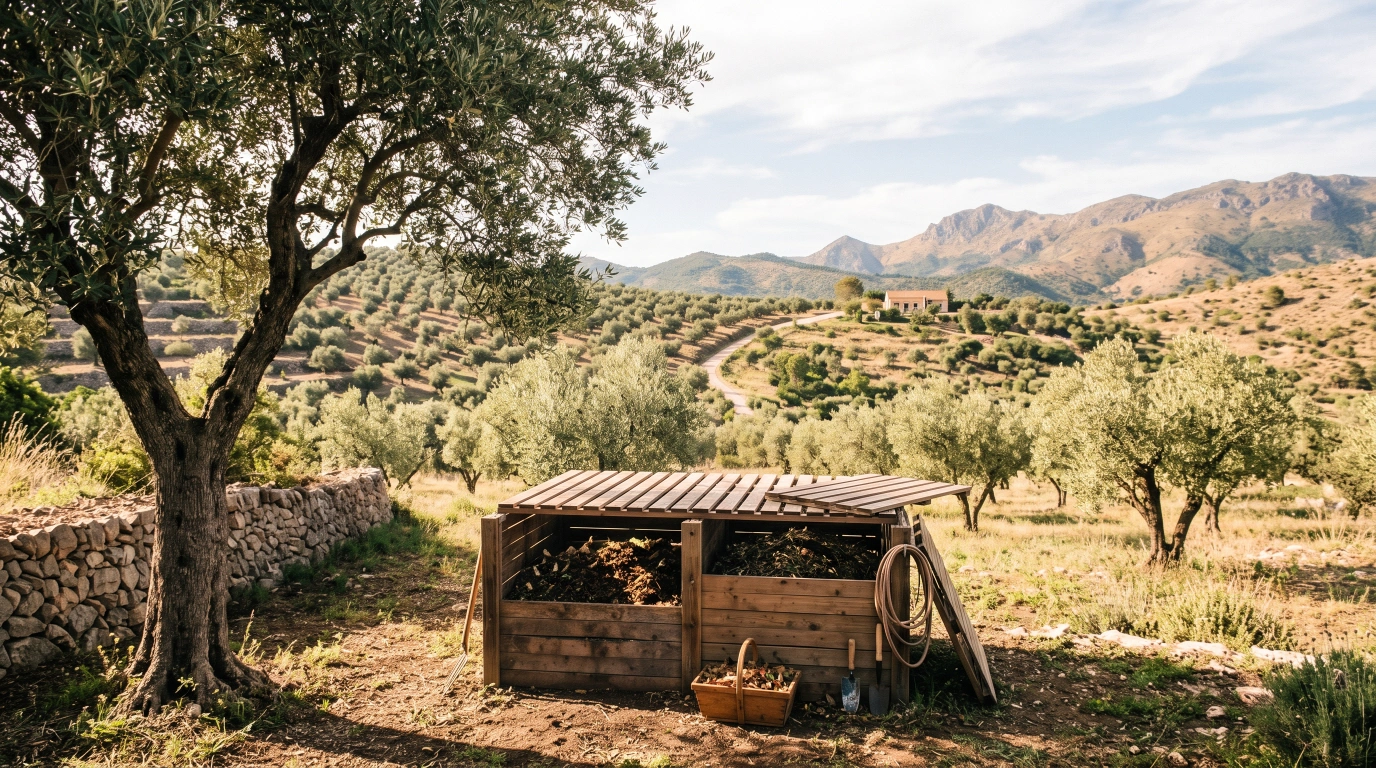
Full summer sun on an exposed heap is genuinely punishing here. Two to four rainless months combined with strong direct sun will dry out an unprotected heap far faster than most gardeners expect, even one that was working perfectly through spring. Partial shade from a tree, wall or building for at least part of the day makes a real difference, and where natural shade isn't available, choose a site where shade cloth can easily be rigged overhead through the dry months.
This is one of the reasons siting close to olive, grape or fruit trees is worth considering where practical, the seasonal shade they cast can genuinely protect a heap through the worst of summer (see Chapter 11 for full drought management).
Building a System for Both Extremes
- Timber or stone construction tends to handle both ends of this climate well, tolerating winter wet without rotting quickly, and not cracking or warping under strong summer sun the way some materials will.
- A removable or adjustable cover matters more here than in most climates: open or slatted through winter so rain can reach the heap and turning stays easy, then fitted with shade cloth or a solid roof through summer to slow drying.
- Good turning access year-round, since this climate rewards active management in both seasons, hard feeding through the wet months and careful moisture checks through the dry ones.
- Proximity to prunings is worth real weight in the decision. Olive, grape and orchard prunings are heavy and awkward to carry far (see Chapter 6), so a site close to where they're generated saves a great deal of ongoing effort.
Frequently Asked Questions
Is winter drainage or summer shade more important when choosing a site?
Neither can be skipped, which is exactly what makes siting in this climate harder than in a single-extreme one. A site with perfect summer shade but poor drainage will waterlog and turn anaerobic the first heavy winter downpour, while a site that drains beautifully but sits in full sun will dry out and stall within weeks of summer arriving. The real task is finding, or building towards, a site that genuinely satisfies both, not picking one priority and accepting failure on the other.
What if my only available site is on a slope?
Sloped and terraced ground is common across this climate, so it's rarely a reason to rule out a site entirely. Levelling a small pad, or building a simple contour or low berm on the downhill side, is usually enough to stop winter runoff from washing straight through or around the heap. What matters is deliberately managing the slope rather than assuming a bin will sort itself out once it's built.
What building materials handle both a wet winter and a dry summer?
Timber or stone construction generally copes best, since both tolerate winter wet without rotting quickly and won't crack or warp the way some materials do under strong summer sun. The more important feature is a removable or adjustable cover: slatted or open in winter so it can catch rain and still allow turning access, and fitted with shade cloth or a solid roof through summer to slow drying.