
Few practices fit this climate's genuinely two-sided character as neatly as no-dig gardening. A thick, undisturbed mulch layer works for two real reasons here at once, holding onto moisture through the dry stretches between rains, and protecting soil from being disturbed or washed out when a sudden heavy downpour finally arrives.
The Core Method
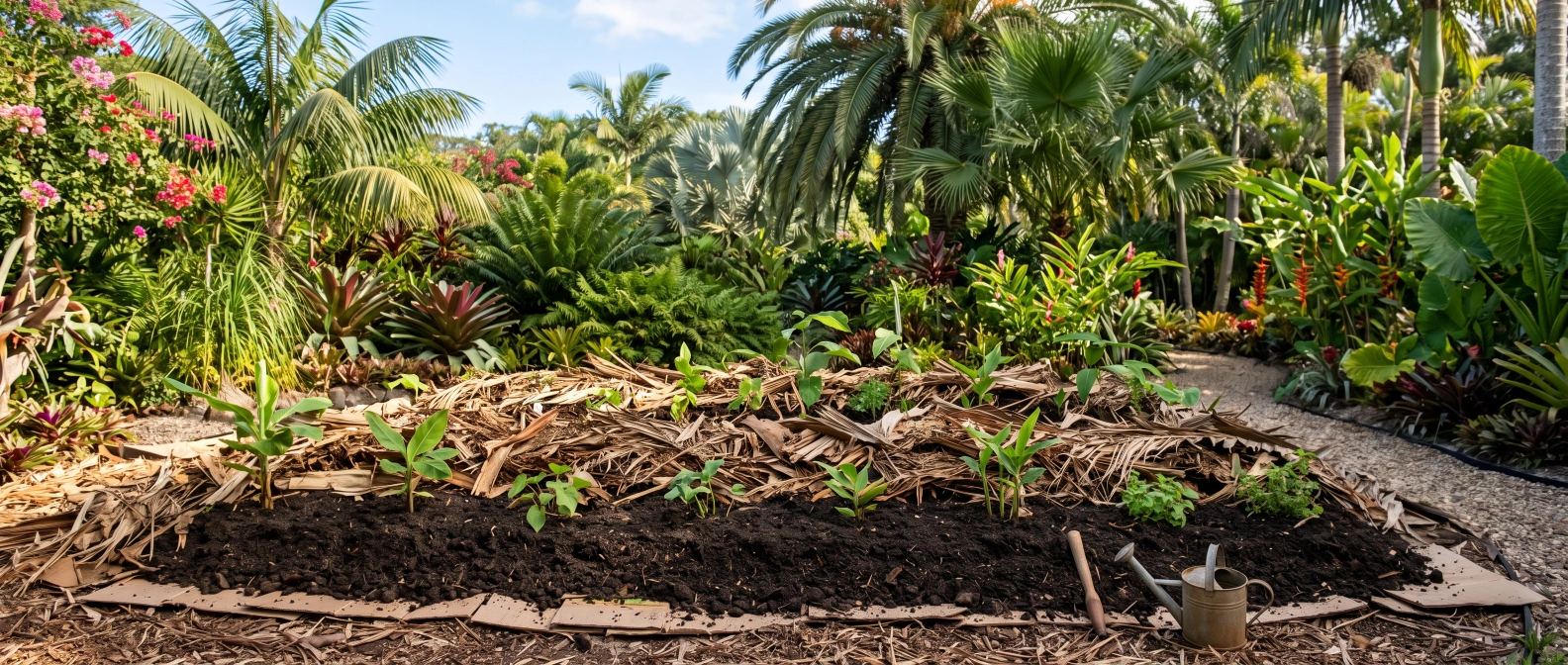
Lay cardboard directly over existing ground to suppress weeds, then build a thick layer of compost and mulch on top, deep enough to plant directly into the surface. There's no digging or turning of the soil beneath, it's left undisturbed while soil life gets on with building structure on its own, and the layer above does the immediate work of feeding whatever's planted into it.
Two Reasons This Matters Here
A mulched, undisturbed bed retains moisture during the dry stretches between rains, an argument that would feel at home in an arid climate, except here it's seasonal and episodic rather than constant. The same layer also protects soil from being disturbed or eroded by a sudden heavy downpour, a milder version of the protection a genuinely wet, tropical-style climate needs against relentless rain.
This dual role is a direct extension of the central theme running through Chapter 11, bridging dry spells and buffering sudden downpours are really the same underlying skill applied at different moments, and no-dig mulching is that skill made permanent on the bed itself rather than something you have to actively manage every time.
This Climate Grows Its Own Mulch
Because this climate genuinely produces its own abundant mulch material, dried palm fronds and citrus prunings covered in Chapter 6, stretching finished compost with generous mulch is easy and natural here. There's rarely a shortage of coarse material to keep a no-dig layer topped up, which makes this approach genuinely low-effort to sustain once it's established.
Frequently Asked Questions
How does no-dig actually work?
Lay cardboard directly over the existing ground to suppress weeds, then build a thick layer of compost and mulch on top, deep enough to plant straight into. There's no digging or turning of the soil beneath, the layer itself becomes the growing medium while soil life underneath builds undisturbed.
Why does mulch matter for two different reasons in this climate?
Because this climate itself swings between two extremes. A thick mulch layer holds moisture in the soil during the dry stretches between rain events, much like it would in a consistently dry climate, and it also protects soil from being disturbed or eroded when a sudden heavy downpour arrives, a milder version of the protection a constantly wet climate needs. No other single practice addresses both risks at once as directly as a good mulch layer does.
Where does the mulch material for this actually come from?
This climate produces its own abundant mulch material. Dried palm fronds and citrus prunings are genuinely plentiful across much of this zone's horticulture, which makes stretching finished compost with generous mulch easy and natural here rather than something that has to be sourced from elsewhere.