
This is arguably the single most important chapter in the whole guide for this zone. Sustained heat means a heap loses moisture steadily, and unlike a true arid climate's chronic dryness or a true tropical climate's chronic wetness, this climate's general humidity lulls a gardener into complacency, right up until a real dry stretch of a few weeks between storms quietly stalls a heap. The skill here isn't managing one steady condition, it's watching for and responding to change.
Why the Gap Between Rains Is the Defining Problem
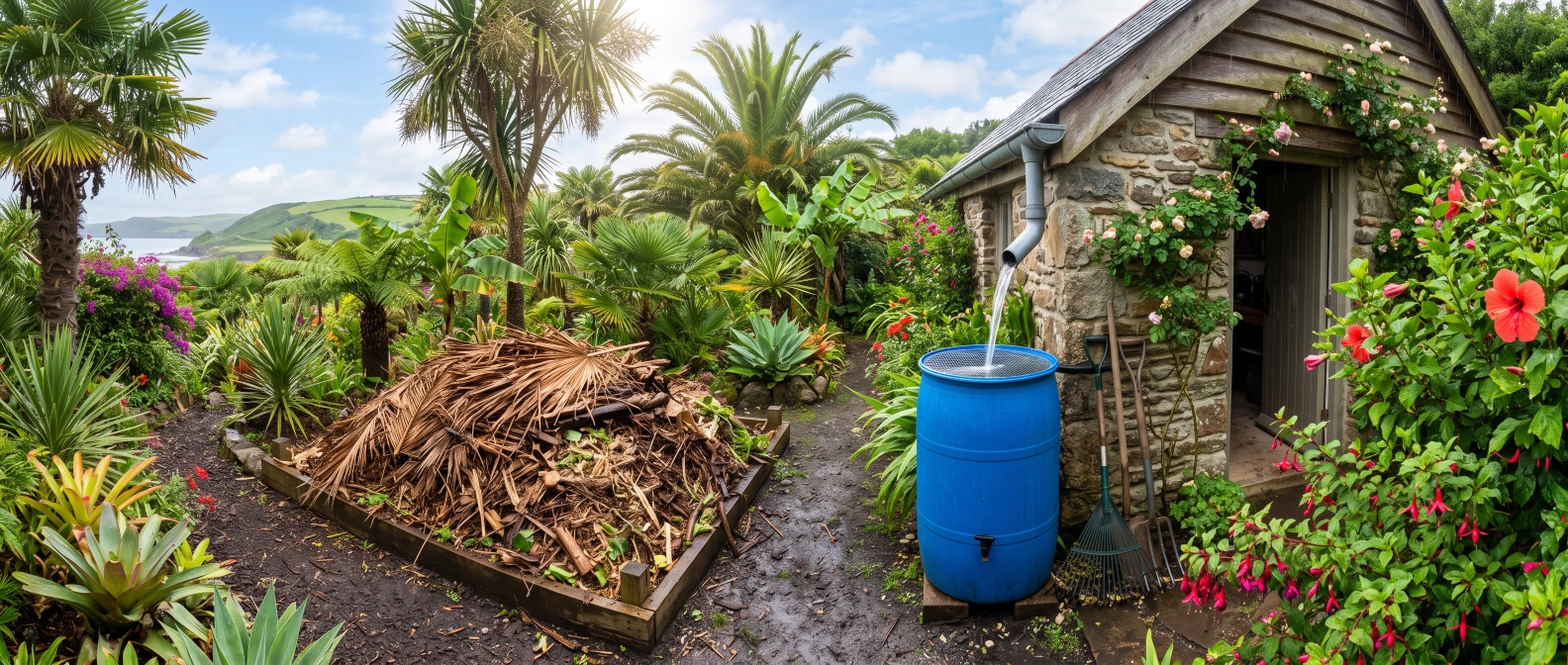
Sustained heat for most of the year means a heap loses moisture steadily, whether or not the surrounding air feels humid. That's the trap: general atmospheric humidity has nothing to do with how much water is actually held inside a heap, and a gardener used to muggy conditions can easily assume everything is fine right up until a genuine dry stretch, several weeks between storms, quietly stalls decomposition from the inside out.
This is a genuinely different day-to-day task from managing a true tropical climate's constant wetness, covered in the Tropical guide, or a true arid climate's constant dryness, covered in the Arid guide. Both of those are steady-state problems. This one is a change-detection problem: rain arrives, a heap is briefly saturated, then a countdown starts until the next one.
Practical Bridging Techniques
A thick mulch cap
A thick cap of dried yard waste over the top of a heap, dried palm frond material is a genuinely abundant option across much of this zone (see Chapter 6), cuts evaporation from the exposed surface significantly. This is the single most effective everyday technique for slowing moisture loss between rain events, and it costs nothing but the material a subtropical garden already produces.
Siting in partial shade
A heap sited in the partial shade recommended in Chapter 2 loses moisture more slowly to begin with, simply because it isn't taking the full force of direct sun through the hottest part of the day. Getting the siting right at the start reduces how much active bridging is needed later.
A moisture-check routine
The same squeeze test used throughout this guide, a handful of material should feel like a wrung-out sponge, needs to be checked more often during a dry stretch specifically, not assumed fine because the air outside feels humid. A quick check every few days during a genuine gap between rains catches a heap drifting toward too dry long before it actually stalls.
Capturing and Using Rain When It Comes
Since rain itself is the most reliable moisture source this climate offers, it's the gaps that need bridging, not the rain that needs replacing, a simple catchment set-up under a roof or other covered structure captures the runoff from a downpour rather than letting it run off and be lost. Storing that water for use during the following dry stretch turns an occasional heavy downpour into an ongoing resource, rather than a one-off event that's gone within a day.
Watering Deliberately During a Genuine Dry Stretch
Once a dry stretch genuinely extends beyond a week or two, don't wait for the next storm before acting. This climate's fast decomposition rate means a stalled heap loses real momentum quickly if left dry too long, the biological activity that was running at close to tropical pace slows sharply and takes time to recover even after moisture returns. Watering deliberately from stored catchment water, or from another source, keeps a heap active through the gap rather than letting it idle until conditions happen to improve on their own.
Frequently Asked Questions
Why is bridging dry spells the defining skill in a subtropical climate?
Because the general humidity of this climate lulls a gardener into complacency right up until a real dry stretch of a few weeks between storms quietly stalls a heap. Unlike a true arid climate's chronic dryness or a true tropical climate's chronic wetness, this zone swings between the two, and the gap between rain events, not any one steady condition, is what actually has to be managed day to day.
What's the most effective way to stop a heap drying out between rains?
A thick mulch cap of dried yard waste, such as dried palm frond material, cuts evaporation from the surface significantly and is the single most effective everyday technique. Siting a heap in partial shade reduces how fast moisture is lost in the first place, and checking moisture with a simple squeeze test more often during a dry stretch, rather than assuming a heap is fine because the air feels humid, catches problems before a heap actually stalls.
Should rainwater be captured and stored for use between downpours?
Yes, this is one of the most reliable ways to bridge a dry stretch. A simple catchment set-up under a roof or covered structure collects the runoff from a downpour rather than letting it run off and be lost, and that stored water can then be used to keep a heap properly moist during the following dry spell, since the rain itself, when it arrives, is the most reliable moisture source this climate offers.