
Humanure, properly composted human waste, is a genuinely serious pathogen-safety topic in any climate, and it deserves to be treated that way here more than almost anywhere else in this series. In a self-sufficiency context where normal sanitation systems may not be available, knowing how to process it safely is essential. The core method is the same everywhere; what changes here is a seasonal swing that cuts both ways just as sharply as anywhere in this guide, and needs careful, honest handling rather than an optimistic shortcut.
The Two-Bin or Bucket System
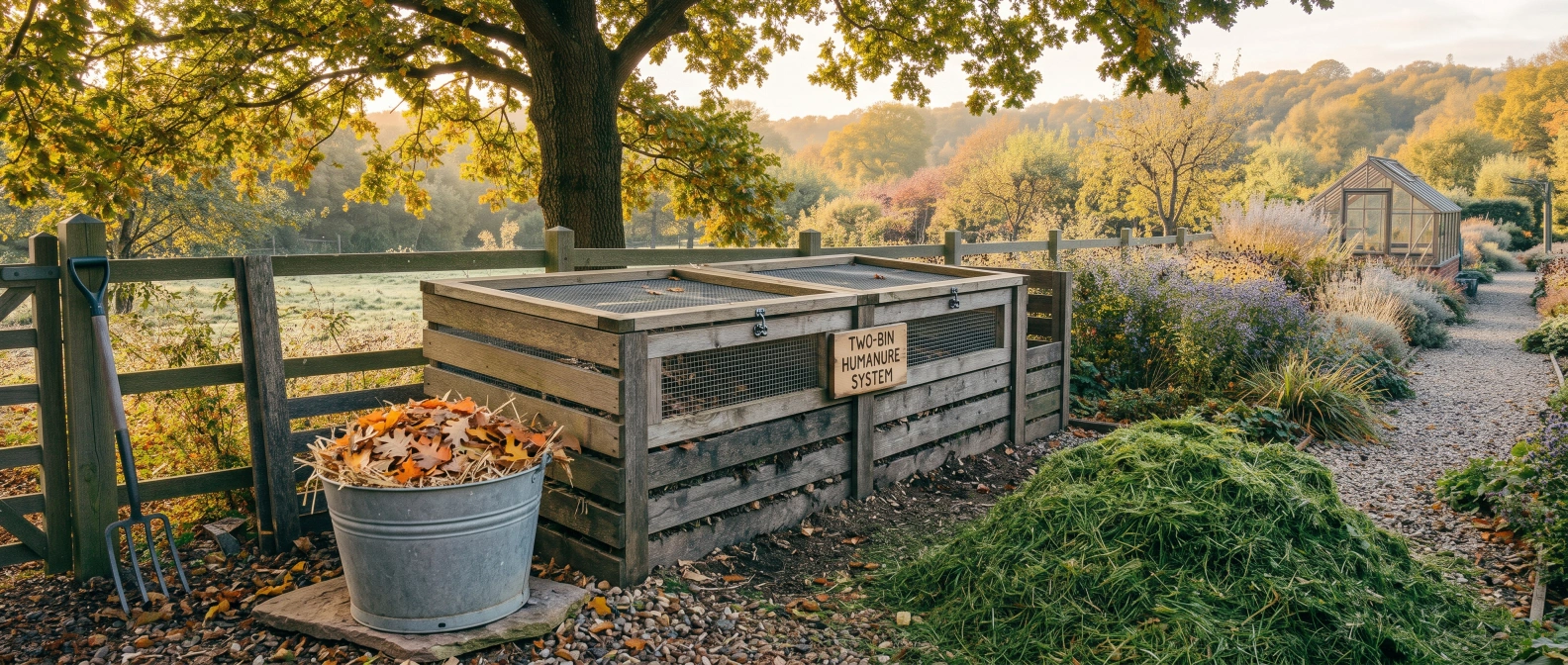
A simple bucket system, or a two-bin arrangement where one bin fills while the other processes undisturbed, is the standard low-technology approach here as anywhere. Waste is collected in a covered container, and a generous layer of dry cover material is added after every single use without exception. Once a bin or bucket is full, it's set aside to process while a second one fills, giving the first its entire processing period, however long that genuinely needs to be, before it's ever touched again.
Cover material that suits this climate well includes dried leaves, straw, sawdust, or dry soil, all reasonably available here. The cover layer does three jobs at once: it controls odour, absorbs excess moisture, and adds carbon that balances the nitrogen-rich material underneath it.
A Seasonal Swing That Cuts Both Ways
This is the single most important thing to understand about humanure in this climate, and it needs careful, honest framing rather than wishful thinking. Genuine summer heat here, sometimes well above 30°C, can speed pathogen die-off, and it's a real possibility given how hot continental summers get, more reliably achievable than a Mediterranean climate's drought-limited summer heat since moisture usually isn't the constraint in the same way. As long as a pile can be kept properly active and warm through those months, real progress happens.
But that's only half the year's story. The hard winter freeze, covered in Chapter 1, pauses microbial activity almost completely for a real stretch of months, similar in principle to, though shorter than, a boreal winter's much longer pause. A pile that's frozen through isn't processing at all, whatever progress it made over summer simply holds in place until it thaws and warms again.
Because the pile won't be consistently active for the full twelve months of the year, the honest, conservative approach is a processing minimum of around two years, similar to a temperate maritime climate, rather than assuming summer heat alone justifies a shorter timeline. Only count the months the pile was genuinely active and warm toward that processing clock, not calendar time elapsed, similar reasoning to the boreal humanure chapter, though this zone's active season is meaningfully longer than boreal's short one. When in doubt, wait longer.
Safe Use Guidance
- Never on or near root vegetables -- direct contact risk is too high regardless of processing time.
- Never on leafy greens eaten raw -- splash contamination and surface contact make this a genuine risk.
- Fine for fruit trees and ornamentals -- where there's no direct contact with edible plant surfaces.
- Fine for soil-building beds well after the conservative minimum -- fully cycled-through compost dug into a bed that then grows a further season of other crops before anything is eaten from it.
- Never used fresh, under any circumstance -- and never on the assumption that a single hot summer alone has done the safety work.
Frequently Asked Questions
Does the real summer heat here mean humanure processes faster than in a milder climate?
Only for the months a pile is genuinely active and warm, and that's real progress here, more reliably so than in a drought-limited Mediterranean summer since moisture usually isn't the limiting factor in the same way. But it's only half the year's story. The hard winter freeze pauses microbial activity almost completely for a real stretch of months, so the summer heat advantage has to be weighed against a genuine winter pause, not treated as proof the whole year processed quickly.
How long should humanure process safely in a temperate continental climate?
A genuinely conservative minimum of around two years, similar to a temperate maritime climate, rather than assuming a hot summer alone justifies a shorter timeline. Because the pile won't be consistently active for the full twelve months of the year, only the months it was genuinely active and warm should count toward the processing clock, not calendar time elapsed, similar reasoning to the boreal humanure chapter, though this zone's active season is meaningfully longer than boreal's.
Is finished humanure compost safe to use on vegetables here?
Never on or near root vegetables or leafy greens eaten raw, regardless of how long it has processed. Fully cycled-through humanure compost, held for this zone's conservative two-year minimum, is appropriate for fruit trees, ornamentals, or soil-building beds that will grow a further season of other crops before anything from them is eaten.