
Unlike most of the other zones in this guide, the two-chamber system is kept here, not swapped for something else, because it genuinely fits how this climate behaves across a real four-season year. The classic problem it solves, fresh material needing somewhere to go while an older batch needs to be left undisturbed to finish, maps almost exactly onto this climate's real spring-through-autumn growing season and its one clear, hard winter dormancy.
The Problem It Solves
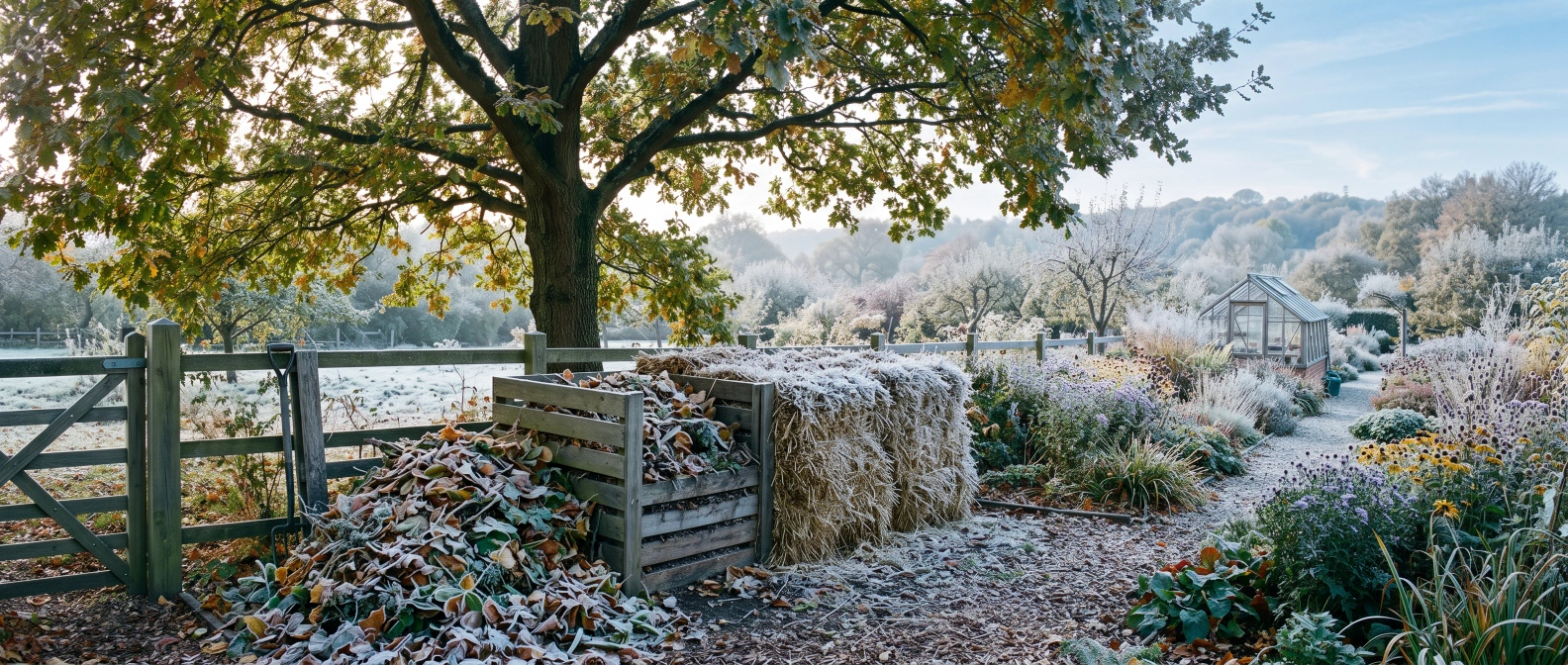
Any active heap eventually reaches a point where it needs to stop receiving fresh material and simply be left alone to finish maturing, but fresh material rarely stops arriving on that same schedule. A single-bin system forces an uncomfortable choice: keep adding to a heap that's trying to finish, disrupting it, or stockpile fresh material with nowhere to put it while waiting.
Two adjoining bays solve this cleanly. One chamber is actively fed while the other rests undisturbed, and the two swap roles once a full cycle completes. It's a simple idea, but it only becomes genuinely elegant when the timing of "actively fed" and "resting" lines up with a real seasonal pattern, which is exactly what happens here.
Why the Timing Fits This Climate So Well
The long spring-through-autumn growing season is when fresh material genuinely piles up: garden waste, crop residue and a steady supply of kitchen scraps all arrive while growth is active and there's plenty to feed a heap with. This is exactly the period one chamber should be actively receiving material, building through spring, thickening through summer and taking a final autumn rush before the ground begins to freeze.
Once autumn ends and the freeze sets in, that chamber is typically full and ready to switch to resting for the winter. Meanwhile the second chamber, having spent the previous winter resting and now finished, is emptied and starts receiving new material as soon as spring growth resumes, ready to repeat the cycle.
In a climate with less distinct seasonal boundaries, this handover wouldn't line up nearly as cleanly. Here, a full calendar year per chamber maps directly onto one clear growing season and one clear winter dormancy, a cleaner one-to-one fit than climates without such a sharply defined line between the two, which is the entire reason this chapter is kept rather than swapped for something else.
Practical Construction
- Two equal-sized bays, side by side, simple to build from timber or concrete block, whichever is most readily available locally.
- The same dual heat-and-cold consideration as Chapter 2 applies to both bays: some summer shade, reasonable winter wind shelter, and construction sturdy enough to flex between a real freeze and real heat without degrading (see Chapter 2).
- A removable insulating wrap for whichever bay is resting through winter, straw bales, bagged leaves or similar loose material stacked around its sides once the hard freeze sets in, then removed again in spring.
- Clear access for barrows or baskets to both bays, since the active bay will be fed regularly through the long growing season and the resting bay will need an eventual full harvest each spring.
The Annual Cycle in Practice
Roughly: Chamber A fills through spring, summer and autumn, the genuine growth window here. As the ground begins to freeze, Chamber A stops receiving fresh material and rests, sitting largely dormant through the hard winter while Chamber B, now finished after its own winter rest, is harvested and starts filling with the new season's material.
The following spring, once thaw is complete, Chamber A is emptied and ready to refill, while Chamber B, now full after a full growing season, switches to resting through the next winter. Each chamber runs on a genuine one-year rhythm, matching this climate's real one-growing-season, one-winter annual pattern about as cleanly as any climate in this guide.
Frequently Asked Questions
Why does the two-chamber system suit a temperate continental climate so well?
Because it solves a problem this climate genuinely has every year: continuous fresh input needing somewhere to go while an earlier batch needs undisturbed time to finish. The long spring-through-autumn growing season delivers abundant fresh material that needs active feeding, and the hard winter freeze that follows is exactly when an already-started batch needs to be left alone to finish. One chamber can feed hard through the growing months while the other rests through the freeze, which maps directly onto this climate's real four-season rhythm rather than being an arbitrary technique.
How long does each chamber take to complete a full cycle here?
Roughly a year, which is what makes this climate a cleaner fit for the method than climates with less distinct seasonal boundaries. A chamber fills through spring, summer and autumn while fresh material is genuinely abundant, then rests frozen through winter while the second chamber, having rested the previous winter, takes over active feeding. By the following spring the first chamber is finished and ready to empty and refill, and the two chambers stay in that alternating rhythm indefinitely.
Do I need to insulate the resting winter chamber?
It genuinely helps. A removable insulating wrap, straw bales, bagged leaves or similar loose material stacked around the resting chamber once the hard freeze sets in, following the same dual heat-and-cold approach covered in Chapter 2, helps the material inside finish a little further before it goes fully dormant, and protects it from the harshest of the winter wind chill. It isn't essential, a heap will simply pause and resume without it, but it gives the resting chamber a genuine head start.