
Leafmould is one of the most underrated soil amendments available and one of the easiest to make. In a temperate maritime climate with abundant deciduous trees, it's a completely free resource requiring almost no management -- just patience. It's a distinct product from compost, made by a different biological process.
How Leafmould Differs from Compost
Regular compost is produced primarily by bacteria in a hot, fast process. Leafmould is produced primarily by fungi in a slow, cool process -- the same process creating the rich duff layer on a forest floor. Because fungi break down the complex lignin in leaves rather than bacteria, the end product differs:
- Lower nutrient content than compost (not primarily a fertiliser).
- Exceptional soil conditioning properties, improving structure in both clay and sandy soils.
- Very high water retention -- can hold several times its own weight in water.
- Ideal pH -- slightly acidic, suiting most vegetables.
- Superb seed sowing and potting medium when well rotted.
- Rich in fungal networks -- inoculates soil with beneficial mycorrhizal relationships.
Making Leafmould
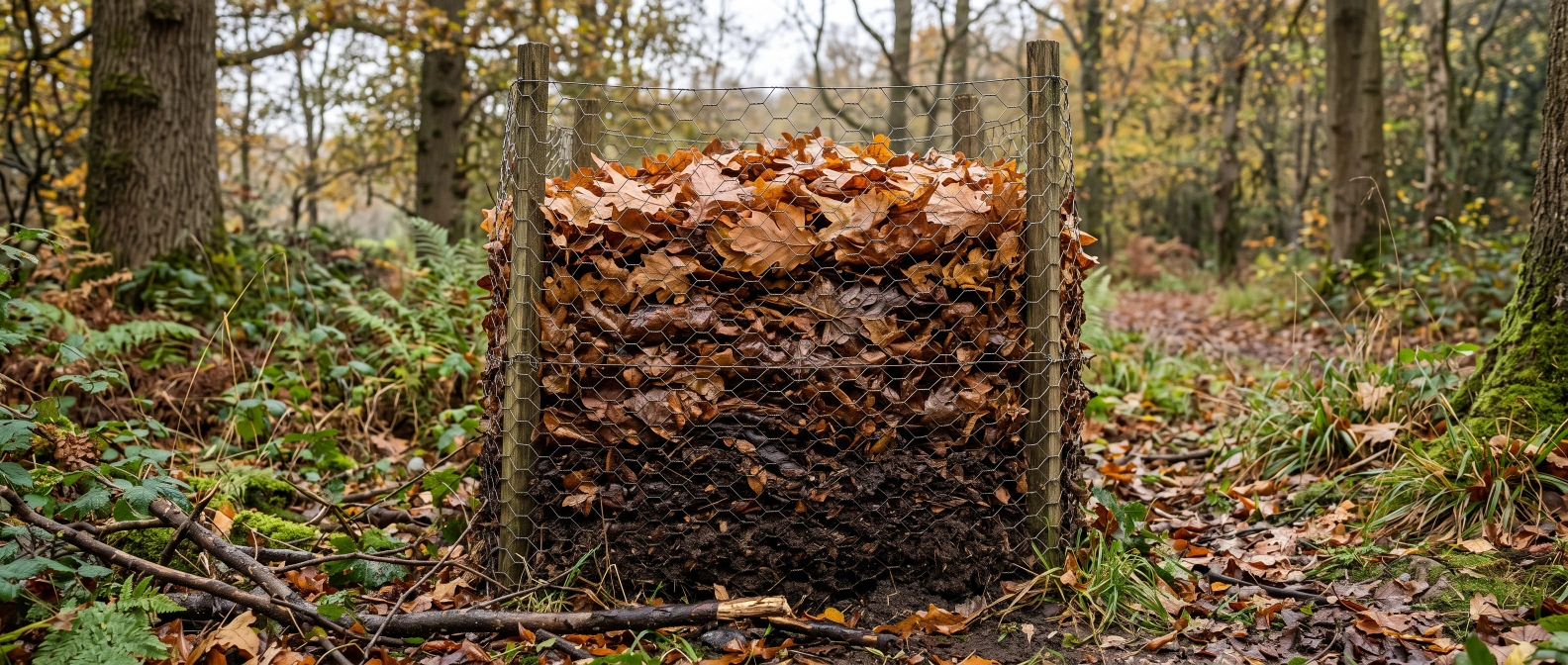
- Collect autumn leaves -- all deciduous leaves work; oak and beech take longer but produce the finest end product. Avoid broadleaf evergreens such as rhododendron, laurel, camellia and holly -- their thick, waxy leaves resist the fungal breakdown leafmould depends on and can take years rather than the usual one to two, and holly's spines are an extra reason to shred it first, not just toss it in whole. Pine and other conifer needles are similarly slow and acidic; small amounts are fine mixed in, but don't rely on them for bulk leafmould. Leylandii is worse again -- its dense, resin-heavy clippings barely break down at all even in an active hot heap, so keep it out of leafmould entirely -- either pile it separately to rot down very slowly over years, or better, burn it for biochar (Chapter 9) so at least the carbon it contains ends up back in the soil rather than going to waste. Eucalyptus is its own case: leathery and slow like the others, but its aromatic oils are genuinely allelopathic too, well documented to suppress germination of other plants -- shred well, use only in small amounts, and keep it well away from any seed-sowing leafmould batch. Avoid walnut entirely too, for the same allelopathic reason as eucalyptus, via a different compound: it contains juglone, which actively inhibits the growth of other plants.
- Pile into a simple wire mesh cage, or fill black bin bags with a few holes pierced for air.
- Keep moist -- the fungal process needs moisture, rarely an issue in this climate but check bags don't dry out.
- No turning required -- this is a passive, fungal process; turning actually disrupts it by introducing bacteria and cooling the mass.
- After one year -- rough leafmould suitable for mulching and digging in.
- After two years -- fine, crumbly, dark leafmould suitable for seed sowing and potting mixes, the finest you can make.
Using Leafmould
- Seed sowing medium -- two-year leafmould mixed 50:50 with sharp sand or coir makes a superb, low-nutrient seed compost (high nutrients inhibit germination).
- Potting mix base -- combine with vermicast and garden compost for a rich, well-structured potting medium.
- Soil mulch -- a 5cm layer around any crop improves moisture retention dramatically and suppresses weeds, ideal under soft fruit.
- Clay soil improver -- dug into heavy clay opens structure over several seasons without the compaction risk fresh organic matter can cause.
- Sandy soil improver -- exceptional water retention makes it particularly valuable on free-draining soils.
Frequently Asked Questions
What's the difference between leafmould and ordinary compost?
Regular compost is produced primarily by bacteria in a hot, fast process, while leafmould is produced primarily by fungi in a slow, cool process -- the same process that creates the rich duff layer on a forest floor. The end product differs too: leafmould has lower nutrient content than compost and isn't primarily a fertiliser, but it offers exceptional soil conditioning, very high water retention, an ideal slightly acidic pH, and rich fungal networks that inoculate soil with beneficial mycorrhizal relationships.
Why shouldn't I turn a leafmould pile?
Leafmould is a passive, fungal process, and turning actually disrupts it by introducing bacteria and cooling the mass. Unlike a hot compost heap, which needs turning to stay aerobic, a leafmould pile just needs to be kept moist and left alone -- no turning required.
Can I use any type of fallen leaves for leafmould?
Most deciduous leaves work well -- oak and beech take longer but produce the finest end product. Avoid broadleaf evergreens such as rhododendron, laurel, camellia and holly -- their thick, waxy leaves resist the fungal breakdown leafmould depends on and can take years rather than the usual one to two, and holly's spines are an extra reason to shred it first, not just toss it in whole. Pine and other conifer needles are similarly slow and acidic; small amounts are fine mixed in, but don't rely on them for bulk leafmould. Leylandii is worse again -- its dense, resin-heavy clippings barely break down at all even in an active hot heap, so keep it out of leafmould entirely -- either pile it separately to rot down very slowly over years, or better, burn it for biochar (Chapter 9) so at least the carbon it contains ends up back in the soil rather than going to waste. Eucalyptus is its own case: leathery and slow like the others, but its aromatic oils are genuinely allelopathic too, well documented to suppress germination of other plants -- shred well, use only in small amounts, and keep it well away from any seed-sowing leafmould batch. Avoid walnut leaves entirely too, for the same allelopathic reason as eucalyptus, via a different compound: they contain juglone, which actively inhibits the growth of other plants.