
Carrot's biggest crossing risk isn't another carrot variety -- it's wild carrot, better known as Queen Anne's lace, which is the exact same species and grows freely as a weed across roadsides, meadows and waste ground throughout much of the carrot's range.
New to terms like isolation distance or outcrossing? See the Seed-Saving Glossary.
Seed-Saving Difficulty
How It's Pollinated
Insect-pollinated (bees, hoverflies -- high outcrossing)
(High crossing risk)
Scientific name: Daucus carota
Domestic Crops It Can Cross With
- Any other carrot variety flowering at the same time
Wild Relatives & Feral Species
- Wild carrot (Queen Anne's lace) is the same species as cultivated carrot and crosses extremely readily -- it grows as a common roadside and meadow weed across much of the carrot's range
- A cross with wild carrot typically produces a small, tough, pale or white root -- a strong sign that contamination has occurred
Separation Distances Required
Minimum: 500m between varieties
Recommended: 800m-1km, more if wild carrot grows nearby
Strict: Bag and hand-pollinate umbels for guaranteed purity
Seed-Saving Strategies
- Biennial -- overwinter roots (mild zones) or lift and store, replant in spring
- Allow the flat umbels to fully dry and turn brown
- Cut heads before seed shatters, finish drying indoors
- Store dry -- viable 3 years
Why Wild Carrot Is the Real Threat
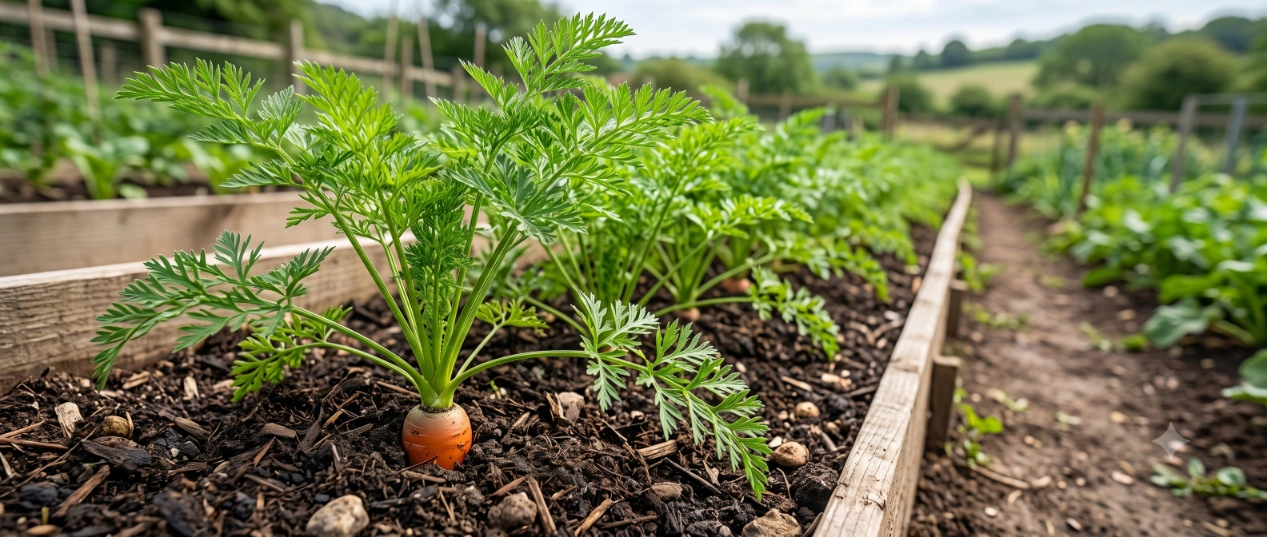
Most crops on this list risk crossing with other cultivated varieties of the same plant. Carrot is unusual because its most common contamination source is a wild weed that most people don't even recognise as the same species. If wild carrot flowers within your isolation distance -- and it often does, unnoticed, in hedgerows and verges -- your saved seed can produce pale, woody, wild-type roots the following year. Scout your isolation radius for it before you commit to saving carrot seed.